
A rare and medically delicate case of conjoined twins has been reported at the hospital in Odisha, where a newborn baby boy was born with two heads, two spinal cords and a single shared body with one heart.
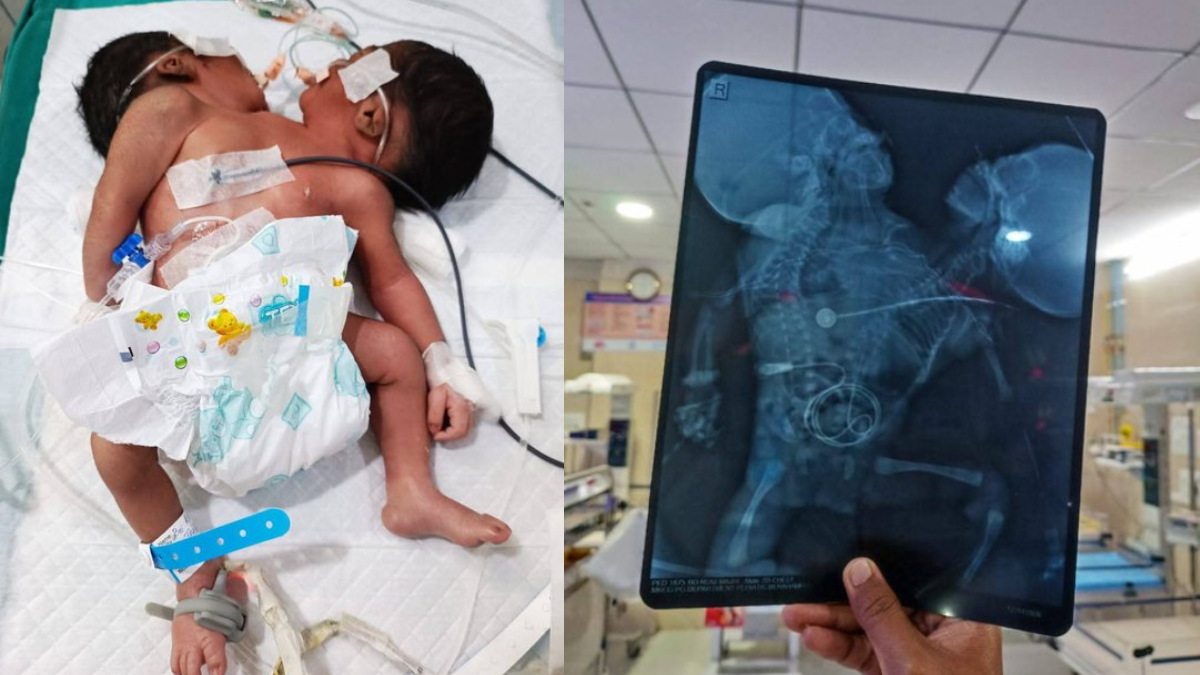
The unusual case has left the doctors in an unusual situation, and the medical staff are now investigating and trying to assess the newborn's anatomy and determine the best course of treatment. Weighing 2.6 kg at birth, he was immediately transferred to the Special Newborn Care Unit (SNCU) for intensive monitoring and medical care. Doctors are closely following the newborn's condition because the heart and other vital organs are shared.
The newborn is the first child of Trilochan Majhi and Runi Majhi, a couple from Tidipadar village in the Tumudibandh area of Kandhamal district in Odisha. The tribal family had been looking forward to the birth of their first child, but the discovery of the baby's unusual anatomy was a shock to them.

The newborn has two heads joined at the upper chest and two spinal cords associated with a single lower body. The baby was transferred to the specialised neonatal care unit at the hospital immediately after delivery so that doctors could monitor vital functions and provide the necessary support. The doctors are paying special attention to the newborn's heart and circulation because the presence of a single heart makes the condition very complicated.
Senior paediatric consultants are now performing a thorough examination in order to assess the baby. Doctors from the paediatric surgery department are examining internal anatomy to determine how major organs, blood vessels and other structures are arranged. CT scans, magnetic resonance imaging (MRI) and echocardiography have been planned or conducted to further define the baby’s condition.
Such studies are important for determining the extent of shared anatomy, evaluating heart function and assessing what treatment may be medically possible. Depending on the findings and the newborn’s clinical condition, the medical team may recommend taking the baby to the All India Institute of Medical Sciences (AIIMS) in Bhubaneswar for further specialist assessment. The immediate imperative is to stabilise the newborn and get a better understanding of the complex anatomical condition before making decisions on any major intervention.


The condition is referred to as dicephalic parapagus, a rare form of conjoined twinning that involves two heads attached to a shared torso. The arrangement of organs can vary significantly from one case to another, so the diagnosis and treatment plan are highly individual. Conjoined twins typically occur when a single fertilised egg does not fully separate in the early stages of pregnancy.
In dicephalic parapagus, the twins have two heads, and they may have separate brains and spinal cords while sharing substantial portions of the body. The number and arrangement of these shared organs differ between cases. When a single heart supports a shared body, treatment is particularly challenging because the cardiovascular system cannot be assessed as if each twin had an independent heart. Separation surgery, when considered, is based on detailed anatomical findings and may not be medically feasible in every case.
For the Majhi family, the medical uncertainty is accompanied by serious financial difficulties. They live in an economically disadvantaged tribal household and fear that prolonged intensive care, advanced diagnostic tests and any future surgery could create expenses beyond their means. Specialised treatment for complex congenital conditions can involve multidisciplinary medical teams, sophisticated investigations and long hospital stays.
If a higher-level medical centre is required, travel, accommodation and other costs may add to the family’s challenges. The parents are looking to the government and the public for financial support to secure the treatment their newborn needs. Assistance from relevant health schemes, charitable organisations and public assistance programmes may be very important in helping the family access specialist care, subject to eligibility and the medical team's recommendations.
The newborn’s prognosis is now uncertain, and the next steps will depend on the results of the specialist assessments and the baby's response to treatment. The doctors will need to assess the heart, circulation, neurological structures and other shared organs before deciding if further interventions are possible. Because dicephalic parapagus is very rare, treatment decisions will need to be made by experienced specialists rather than assumptions based solely on the baby’s external appearance.
The case also demonstrates the challenges faced by families from economically vulnerable backgrounds when a newborn requires highly specialised medical attention. Further updates on the newborn’s health, any referral to AIIMS Bhubaneswar and the availability of financial support are awaited.








Comments