
Massive, colourful aerial structures built by urban subcultures in Brazil, particularly in São Paulo and Rio de Janeiro, have become the subject of a viral video that has left social media users confused about whether what they are seeing is real or AI-generated.
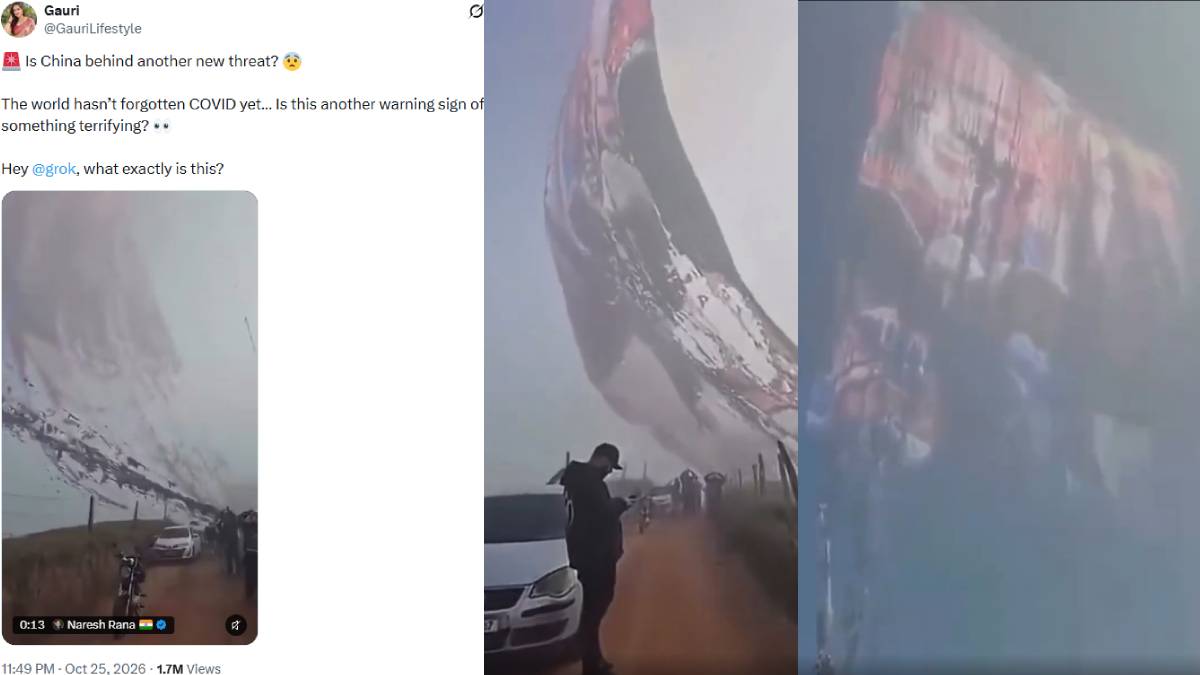
These large, decorated balloons, known locally as "balões", often feature huge banners and artwork inspired by different artistic styles. Some also carry fireworks or incendiary devices, posing serious risks of wildfires, property damage and aviation accidents. The release of balloons capable of causing fires is illegal in Brazil.
In a clip that has gone viral multiple times across social media platforms, a massive banner appears to float through the air before tearing apart and falling towards the ground. The unusual visuals have led some viewers to compare the footage to CGI from Marvel movies, while others have questioned whether it was created using artificial intelligence.
However, reports published in October 2026 describe a real incident in Brazil in which a giant banner attached to a balloon caught on obstacles during take-off and tore into pieces. The fabric broke apart and scattered as the balloon and banner struggled to rise, creating an extraordinary spectacle for people watching and recording the incident.
The visuals are breathtakingly unusual, but there is also something sad about the situation. How much of what we could once verify through video evidence has been lost as AI image generation and video editing continue to advance? Are we entering an age in which even genuine footage can no longer be trusted at first glance?
Adding to the confusion, a social media user blamed China for the situation, linking the video to broader fears about what is happening in the world and even invoking COVID-19. However, there is no credible evidence in the reporting about the balloon incident to support the claim that China was responsible. The video has also circulated multiple times over the past month, with users repeatedly trying to establish what it actually shows.
Fortunately, Brazilian users helped clarify the context of the footage, pointing out that the unusual scene was associated with the country's balloon culture rather than being proof of an AI-generated event.
The incident is a reminder that viral content can quickly become detached from its original context. A video may be genuine, but the captions, explanations and theories attached to it can still be misleading. At the same time, the existence of AI-generated videos does not mean that every strange or seemingly impossible clip is fake.
There is also a real-world concern behind the spectacle. Brazil's authorities have repeatedly warned that the release of unmanned balloons can endanger aircraft and cause fires in forests, residential areas and other properties. In 2024, more than 2,000 balloon-related incidents affecting aviation operations were recorded, according to figures cited by Brazil's Ministry of Ports and Airports.
So, while the video may look like something straight out of a science-fiction film, it raises two very different questions: how do we distinguish real footage from AI-generated content, and why do dangerous practices continue despite their potential consequences?
Perhaps the age of video as unquestionable proof is ending. But that does not mean we should stop believing what we see altogether. Instead, we need to verify the source, check the context, and avoid jumping to conclusions simply because a video looks too strange to be real.
We need to understand media and use basic logical thinking, like if the incident labeled as a Chinese threat was a real catastrophe, why would people be standing next to it and not run or move? We need to cross-verify things we see on social media across multiple sources before believing them





Comments