
A top US Army general who was fired by Defence Secretary Pete Hegseth has reportedly admitted to journalists that he had leaked classified information about the Iran war and Russia-Ukraine conflict. The allegations were made in an internal Pentagon probe into Lt Gen Brett Sylvia, who led the Strategy, Plans and Policy Directorate of the Joint Chiefs of Staff before his dismissal.
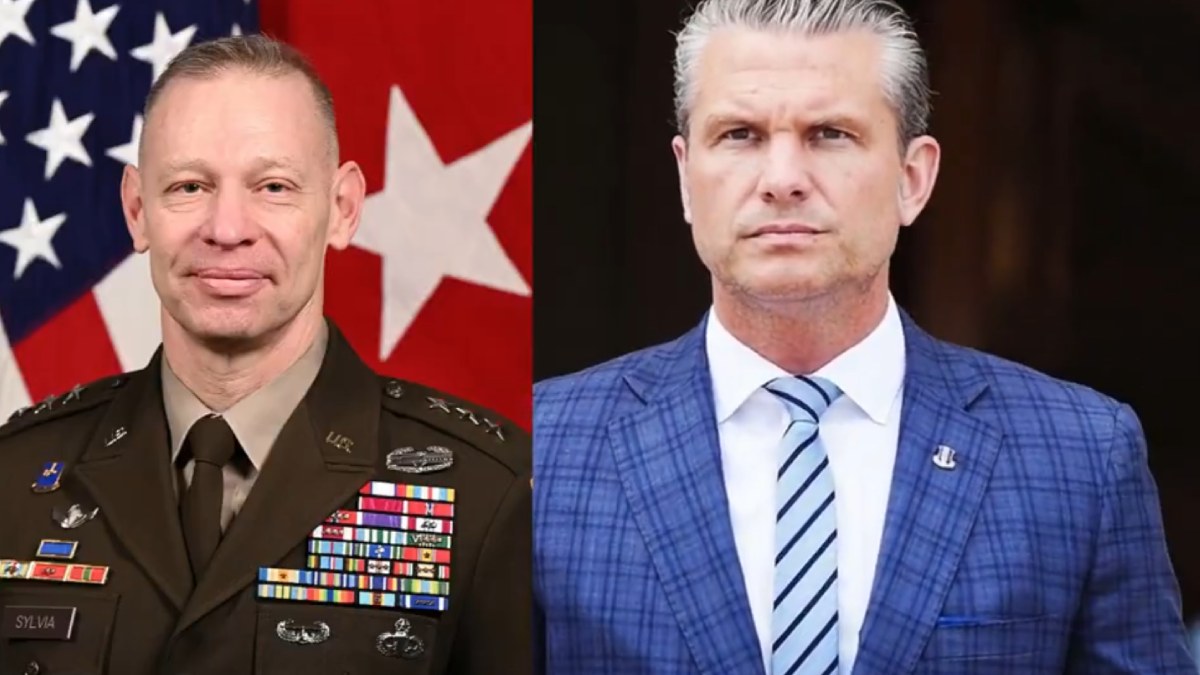
An investigation report obtained by Axios said Sylvia admitted to sharing sensitive information with two journalists from separate media organisations over about a year. A US official told the paper that the admissions were recorded on video because Sylvia failed multiple polygraph tests during the probe.
Sylvia was fired on October 28, 2026 for serious misconduct. The case has been referred to the US Department of Justice for possible further legal action.
Who Is Lieutenant General Brett Sylvia?
Brett Sylvia is a senior US Army officer who was director of the Joint Chiefs of Staff's Strategy, Plans and Policy Directorate (J5).
The position is important in developing and coordinating military strategy and planning for senior leadership of the US military.
🚨 BREAKING OVERNIGHT: SecWar Pete Hegseth has FIRED Lt. Gen. Brett Sylvia after he reportedly FAILED three polygraphs about leaking classified information to the press GOOD RIDDANCE TO ALL LEAKERS! 👋🏻 He's now under investigation over LEAKS about the Iran war, the Russia-Ukraine war and more, and the case has been referred to the DOJ Sylvia purportedly got around the Pentagon's escort rules for reporters by meeting journalists outside the building Hegseth made the right move for our country!
— Eric Daugherty (@EricLDaugh) October 29, 2026
Before taking up the Joint Staff post Sylvia commanded the US Army’s 101st Airborne Division at Fort Campbell, Kentucky; he also held other senior military appointments during his career.
His removal is significant because the J5 directorate handles sensitive military planning and strategic information related to US national security.
What Did the Pentagon Investigation Find?
As Axios reported, Sylvia admitted to giving classified information to two journalists over the course of about a year — disclosures allegedly began in June 2025 and continued after the Pentagon tightened access rules for media.
The investigation reportedly found that Sylvia communicated with journalists via Signal (an encrypted messaging application) and met one journalist in person at Silver Diner restaurant in Arlington, Virginia.
In one of these meetings Sylvia allegedly used notes she took while reading a classified report to speak about US assistance for Ukraine.
The journalist was reportedly working on a book and met Sylvia twice. According to the investigation details described by Axios, “the meetings were not coordinated with Pentagon’s public affairs office or authorized through proper channels.”
The report also raised questions about deleted Signal communications. Investigators “suspected Sylvia intentionally deleted some messages and calls” but said he claimed he accidentally erased the conversation thread (sic).
Multiple Polygraph Tests and Reported Admission
The investigation also included multiple polygraph examinations (lie detector tests).
Sylvia failed four polygraph tests according to Axios and then admitted sharing classified information in a recorded interview.
Other reports citing Pentagon officials have used the word three failed polygraph tests instead. So the number has been reported differently in different media accounts.
Polygraph examinations measure physiological responses to questioning. They are used in some government investigations but their results do not prove deception and do not establish criminal wrongdoing independently.
The recorded admission and other investigative findings are now part of a case referred to the Justice Department.
Pete Hegseth Removes General Amid Pentagon Leak Crackdown
Defence Secretary Pete Hegseth ordered Sylvia out as part of the Pentagon’s broader effort to find and investigate unauthorised disclosures of classified information.
Pentagon spokesman Sean Parnell said the department had taken personnel action to protect sensitive information after an investigation by Air Force Office of Special Investigations.
The Pentagon also said the matter had been referred to Justice Department for further legal action.
Hegseth has repeatedly said unauthorised disclosures of classified information will not be allowed and the department is working to identify people suspected of passing sensitive material on to journalists.
Sylvia’s firing is one of the most high-profile personnel moves associated with this broader effort.
Why the Leaks Are Significant for US National Security
The allegations are especially sensitive because they involve information about two major international conflicts.
Information classified about the Iran war could include military planning, operational assessments, intelligence and US capabilities. Information on Russia-Ukraine conflict could also include military aid, strategic planning and sensitive assessments.
Unauthorized release of such information could expose military operations, damage relationships with international partners and put personnel at risk in sensitive missions.
Sylvia was former head of the Joint Chiefs of Staff so the allegations are particularly serious because that directorate coordinates high level military strategy.
Officials have said Sylvia was not the central planner for the Iran war. That is US Central Command and its commander Admiral Brad Cooper.
Justice Department Investigation and Further Action Awaited
The case was referred to the US Department of Justice so that they may review the evidence and decide whether further action is needed.
Sylvia’s dismissal is a personnel decision and should not be taken as a final criminal conviction. The investigation is ongoing and the full findings have not been made public.
The Pentagon has not given an account of all the information allegedly leaked or the damage that may have been done by the communications.
The case has re-focused attention on information security in the US military (e.g. classified material being handled by senior officials who have access to sensitive strategic planning).
More details will come as the Justice Department reviews the investigation and decides what’s next.




Comments