
China is experiencing an increasing interest in a novel form of entertainment: simulated disaster experiences that enable humans to face fear, danger and uncertainty in a controlled environment. That trend, so often linked to “dark tourism,” is on the rise as younger travelers look for more than just sightseeing and have an emotional thrill.
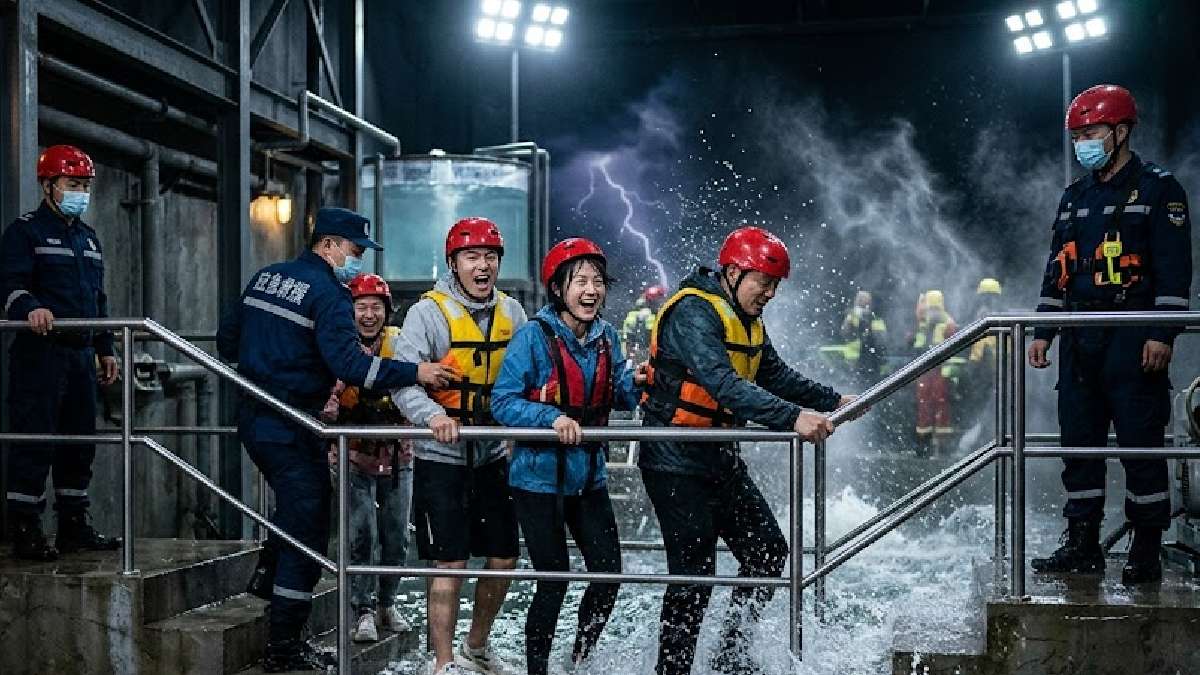
Dark tourism in general refers to travel to places in which death, tragedy, disasters and other disturbing historical events have occurred. But simulated disaster attractions provide a different kind of experience.
Rather than going to places where tragedies actually happened, we go to places where events occur and they are simulated in order to recreate the event such as an emergency or a scary situation and with no danger in them.


Those are the kinds of experiences visitors look for in a way that is more immersive than the tourist destinations. Rather than just observing a place, people go through a scenario that tests them and creates tension.
Why Are Young Travelers Interested
One of the reasons is that there is an increasing appetite for experiential entertainment for younger travelers. In fact, the younger travelers’ desire is for memorable experiences, excitement and the opportunity to share their experiences on social media. Simulated disasters combine these elements by making fear an interactive activity.
Participants may be placed in highly designed scenarios in order to mimic emergencies, uncertain situations or survival problems. The attraction is the danger of the situation while knowing that everything is safe and well put in place.

For some, the attractions also provide an opportunity to test their courage and reactions under pressure. Others may be drawn by curiosity, the novelty of the experience or the want to try something different from theme parks and conventional adventure activities.
Social media can also increase interest in unusual attractions. Dramatic visuals, emotional reactions and first-person accounts can make such experiences appealing to people looking for distinctive travel activities.
Entertainment Meets Fear
The popularity of simulated disaster experiences is indicative of a larger trend in tourism toward interactive attractions. Tourists want to be able to participate rather than simply watch. Immersive exhibitions, escape rooms, horror-themed attractions and survival challenges work in a similar manner.
Simulated disaster attractions take this concept further by using realistic settings and carefully planned scenarios to create suspense. The experience can make visitors confront uncomfortable emotions while being placed in an artificial environment.
But the recent increase in fear-based entertainment has also raised questions about how such attractions are designed and presented. Operators need to differentiate between a staged scenario and a real emergency. Safety procedures, trained staff and warnings are important when there’s intense psychological stress or physically demanding activities in the experience.
The Ethical Side of Dark Tourism
Dark tourism has long raised questions about the relationship between entertainment, education and human suffering. Touring historical sites associated with wars, disasters or mass tragedies can help people understand the past, but to treat real suffering purely as entertainment risks trivialising victims’ experiences.
The dangers of simulated disaster attractions pose a different ethical problem, because they recreate danger rather than do so just based on actual historical events.
Their value is largely dependent on how responsibly they are designed and how visitors understand the difference between simulation and reality.
China’s interest in these experiences shows how tourism is evolving as tourists seek more intense, interactive and unconventional activities. For younger visitors, the appeal might be less about seeing tragedy and more about facing fear in a context where the consequences are manageable.
Whether this interest will become a trend in tourism will depend on the demand, design, and quality of the experience for the visitor. But for now, simulated disasters show how the travel industry is finding new ways of turning emotion, suspense and participation into attractions.







Comments
Leave a Comment