
On October 22, 2026, French health and agriculture ministries announced a major moment in epidemiology history: the world’s first case of the Shamonda virus in human beings at a hospice in Lyon, where a patient died earlier this month due to severe neurological and cerebral complications. And even though a headline with a new virus and a fatality is all too easy to sell to the public, global health authorities have had a very clear message: there is no known health threat to the general public.

What is the Shamonda Virus?
When scientists are curious but not panicking, they should start with the biology of the virus. Shamonda belongs to the Orthobunyavirus family. It is an insect-borne pathogen that never spreads from person to person.
Instead, it is carried by small flying insects called biting midges (specifically the Culicoides genus) from host to host. Shamonda was thought of as an agricultural issue for over six decades.


First isolated from cattle in Nigeria in 1965, the virus has sprouted up in occasional animal outbreaks throughout Africa and Asia (especially Japan). In animals like cattle, sheep, goats, and horses, it mainly causes short-term fever, acute diarrhoea, lethargy, and loss of dairy production. Until now, medical databases had never seen a case of it crossing to humans. So how did a livestock virus enter a human patient?
Epidemiologists know that the patient was bitten by an infected midge in eastern France, where a "Shamonda-like" variant had been circulating among local livestock during the spring and summer of 2026.
However, French health agencies stressed that this was an exceptional case of a severely immunocompromised person who was already suffering from a serious, pre-existing disease.

For people with severely suppressed immune systems, opportunistic pathogens that would otherwise be totally harmless to the public can occasionally strike. Preliminary reports suggest that the patient's neurological complications in the period before death were “very likely” linked to the infection.
But, because the virus has no history or structural ability of aggressive human-to-human transmission, the incident is being treated as an isolated medical anomaly and not a sign of a public health crisis.
Agricultural Landscape in Europe
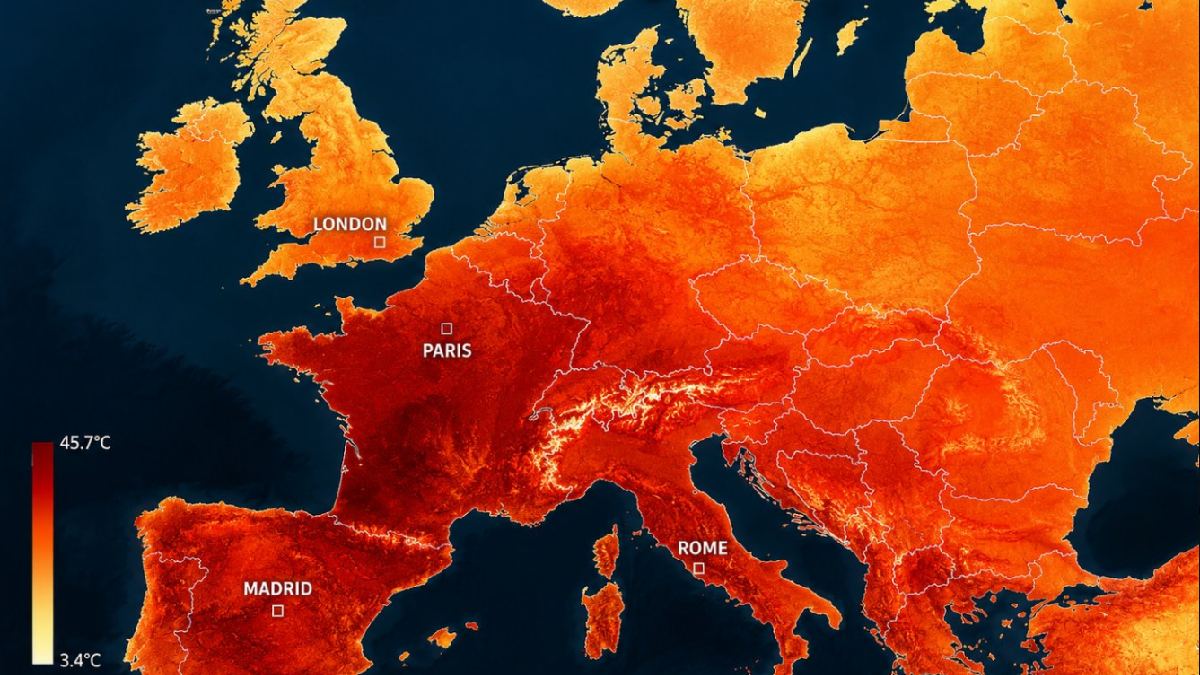
Although the human risk is small, the broader context is why scientists have been monitoring the pathogen from the beginning. Shamonda was first detected in continental Europe in 2026. So far, since genomic sequencing detected it in late July on farms in Germany, Switzerland, and eastern France, the virus has spread to 14 Western European countries.
Because the European strain has very few genomic differences from traditional African strains, researchers are working with the WHO (World Health Organization) and the ECDC (European Centre for Disease Prevention and Control).
The current academic, biological, and environmental studies of the virus are mainly concerned with midges and how to understand the virus in its environment.
France’s discovery is, in the end, another illustration of the hyper-vigilance of modern medical surveillance, proof that even the rarest biological anomalies are recognized, studied, and managed.











Comments
Leave a Comment