
Germany is now one of many Western countries that are toughening up their attitude towards Chinese technology as its military decided not to use Chinese drones for national security reasons.
Questions about the security risks of Chinese tech and how many Western governments have restricted or warned against its use have been raised again.
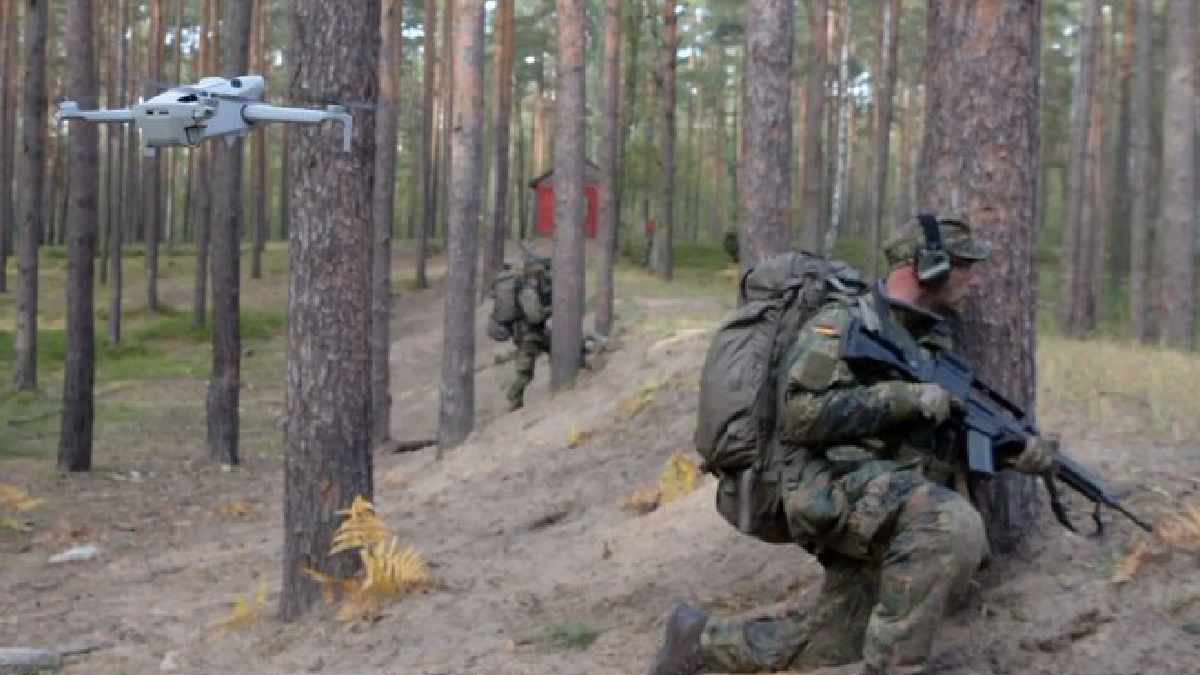
As reported on November 11, 2026 in German media the armed forces of Germany Bundeswehr will replace commercially available Chinese drones with products made in Germany or other European countries.
The decision was made after concerns that drones made by Chinese companies (such as DJI) could collect and transmit sensitive information images of military facilities; details of training exercises; information about military equipment.
Germany’s Defence Ministry said the move was to strengthen the country’s technological independence, military security and data protection but the government stressed it is not a blanket ban on all equipment from countries. Decisions will still be made based on individual security assessments.
How Many Western Countries Have Raised Concerns
Germany is not the first Western country to raise questions about security of Chinese technology. Governments in several other countries have imposed restrictions or reviewed suppliers of technology, warned about products from China being unsafe or warned of risks associated with products coming from China.
The US has taken some of the strongest actions against Chinese technology companies. It restricted Huawei’s participation in critical telecommunications infrastructure and took measures against Chinese technology products; more recently it restricted Chinese-made vehicles at a military facility in Okinawa, Japan.
The UK has also expressed concerns about Chinese technology: government departments were ordered to remove surveillance cameras made by certain Chinese companies from sensitive locations in the government. The UK decided to remove Huawei equipment from its 5G telecommunications networks.
Sweden is another European country that has restricted Chinese telecommunications suppliers. In 2020 it excluded Huawei and ZTE equipment from its 5G networks because of national security reasons.
Poland has also banned Chinese-made vehicles at military facilities because sensors in the vehicles could gather sensitive information.
Germany itself has already done things to reduce dependence on Chinese telecommunications equipment in critical parts of its 5G infrastructure. Its latest drone decision is another step towards technological independence.
The European Union has also repeatedly raised concerns about high-risk technology suppliers and urged member states to reduce dependence on companies that are considered security risks.
Why Are Western Countries Afraid of Chinese Technology
The main concern is data security. Modern drones, smartphones, surveillance cameras connected vehicles and telecommunications equipment all collect a lot of information. Governments fear that sensitive data might be accessed, monitored or transferred to foreign authorities.
There is also the issue of dependence on foreign suppliers for critical infrastructure. If a country is heavily dependent on technology manufactured overseas, supply interruptions, software updates or maintenance problems could create security problems during international tensions.
China has been accused many times before that its technology companies could be national security risks. That does not mean every Chinese product has been shown to transmit sensitive information. Chinese manufacturers (DJI for example) have disputed allegations that their products pose such security threats.
Is This the Beginning of a Wider Ban
Germany’s move reflects a wider shift in Western security policy. Governments are asking where their technology comes from; who controls the data and whether foreign-made equipment can be used safely in sensitive locations.
It’s not just telecommunications anymore. Drones, surveillance systems, connected vehicles, AI infrastructure and other digital equipment are also getting more attention.
Some Western countries have restricted Chinese technology in certain sectors but there is no single policy that applies to every product or company. Restrictions vary by country, technology and perceived security risk.
Germany’s latest move could also spur other European governments to review their military procurement policies and reduce dependence on Chinese-made equipment.
For now the growing restrictions reflect rising concerns about technology dependence, cybersecurity and national security as competition between China and Western countries continues.
Germany’s decision therefore represents another important step in the debate on Chinese technology and its role in Western security.





Comments