
India may be on the verge of experiencing the longest sustained period of annual GDP growth above 7% in decades, according to South Korean economist Kyunghoon Kim.
He says the country is likely to achieve its greatest economic success since the COVID-19 pandemic (and more recently, a record of 7% growth from 2003 to 2007) if it continues.
Kim, who coordinates South Asia research at the Korea Institute for International Economic Policy (KIEP), shared his assessment in a series of posts on X. India's economic expansion has been strong, despite global uncertainties and disruptions affecting several major economies, he said.
India matches its previous high-growth streak
According to Kim's analysis, India experienced five consecutive calendar years of economic growth above 7% between 2021 and 2025. This is in line with the record performance of India in 2003-2007 when India was gaining much international attention as one of the emerging BRIC economies.
India’s economy contracted by 5.8% in 2020 during the pandemic before recovering sharply in 2021. For four more years, growth was above 7%.
Kim estimated that India's average annual GDP growth between 2021 and 2025 was 7.83%. This was only slightly below the 7.89% average during 2003-2007, the latest five-year period he reviewed, which was the second strongest in the history of the series he examined, dating back to 1960.
If the latest growth forecasts are to come true, India could extend its current run and surpass its earlier record for consecutive years of growth above 7%.
International institutions raise growth forecasts
Another factor supporting Kim’s judgement is the much more positive outlook from major international financial institutions.
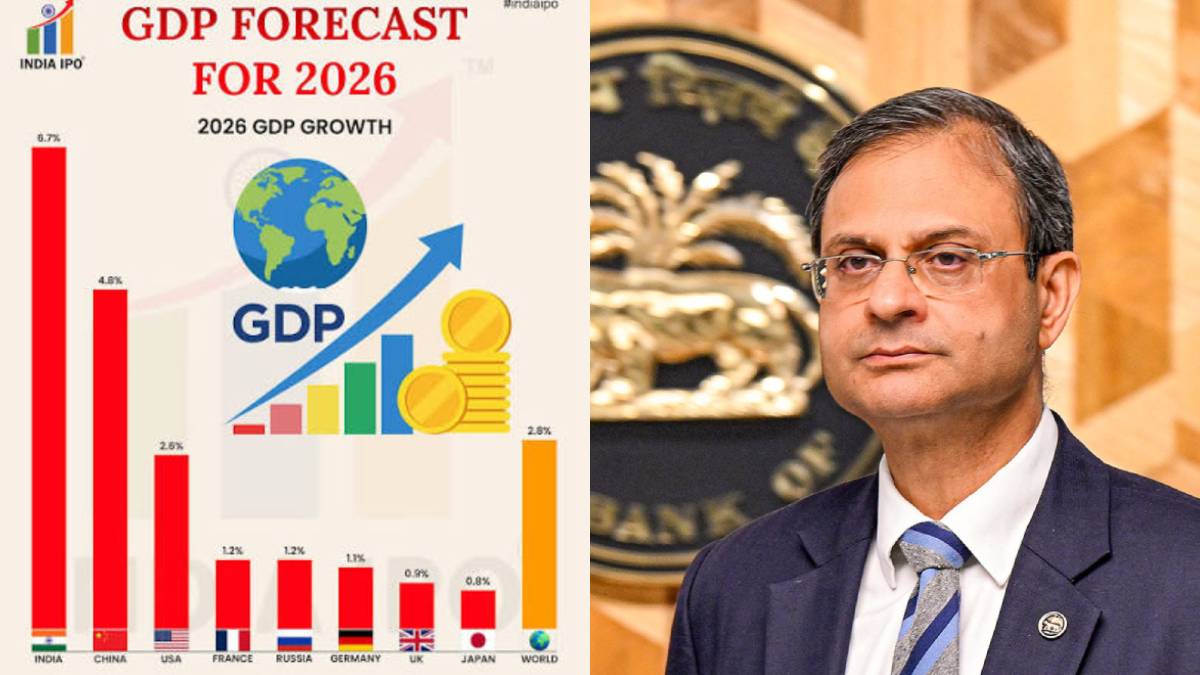
The International Monetary Fund (IMF), World Bank and Asian Development Bank (ADB) have raised their growth projections for India. The IMF’s October 2026 outlook projects India’s economy to grow by 7% in both 2026–27 and 2027–28.
And these forecasts would suggest that the momentum of recovery can continue beyond the immediate post-pandemic period. But predictions are merely estimates and can change according to domestic and international circumstances.
Kim said that the economists have also revised their expectations upwards as India's quarterly growth figures have exceeded earlier projections.
Why 7% growth matters more today
India's economic expansion is also important as the economy is much larger than it was two decades ago.
Kim said India's GDP was slightly above $1 trillion in 2007 and now approaches $4 trillion in the figures he cited. So a similar percentage growth rate today represents a much larger increase in total economic output.
Sustained expansion could support investment, business activity, infrastructure development and employment opportunities. India’s huge domestic market as well as demand for goods and services also provide important foundations for economic activity.
But strong GDP growth is not sufficient to ensure every household is getting what it wants. Job creation, wage growth, productivity and improvements in living standards are fundamental to economic growth.
Challenges remain despite strong performance
India’s future does not come without a few risks. Higher energy prices, geopolitical tension, world economy uncertainty and changing international trade conditions could affect future growth.
And the economy needs to be able to pay off in the form of employment and wider development to its population.
Kim admitted that there are still challenges but he felt India’s robust performance deserves international attention.
And if growth remains above 7% in the next few years, India will have a new landmark in the history of its economy. But whether the latest predictions are actually translating into real growth and how it will be felt by the business sector and workers and families in India is still to be seen.






Comments
Leave a Comment