
Four people had died, and two others had severe burns in a wildfire at Bromo Tengger Semeru National Park in Java today as firefighting teams were pinned down by thick smoke and fast-moving flames in a remote mountainous area of East Java, officials said.
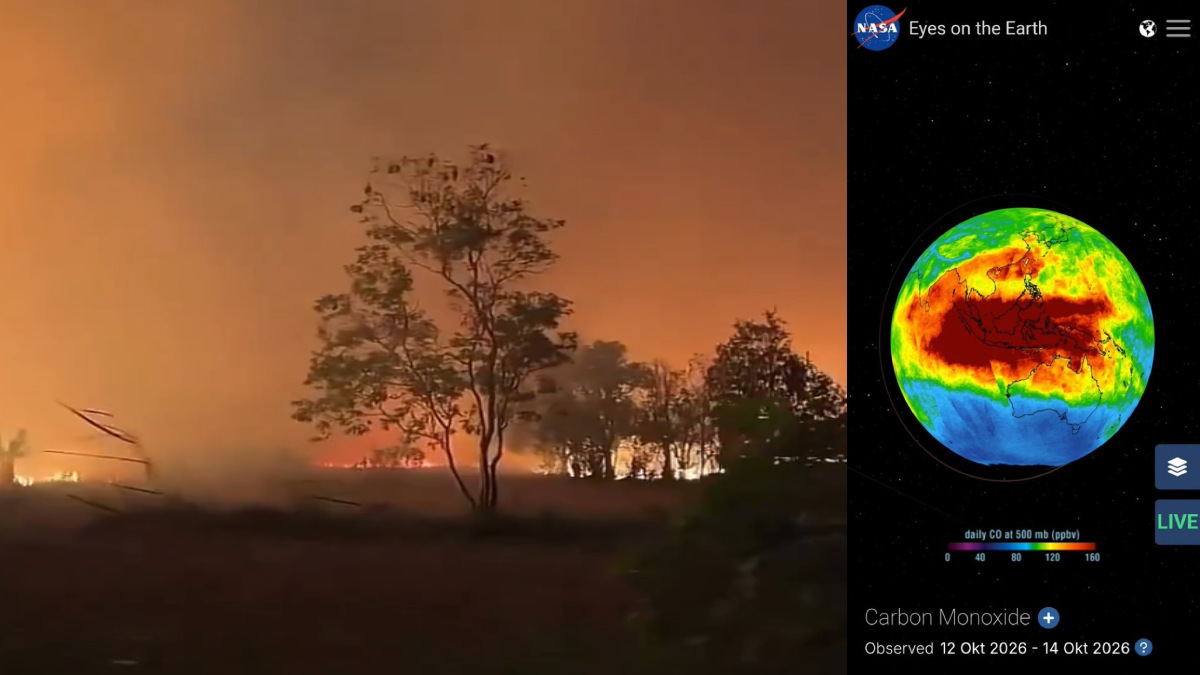
Strong winds brought the flames to a head, and vegetation rapidly spread under the strong winds, with the firefighting team not able to escape. The deaths have led to a police investigation into what was behind the tragedy, including whether negligence and other factors were a cause of the tragedy. Indonesia's worsening forest and land fires have also been a source of air pollution in Southeast Asia.
The fire broke out in the Mentigen and Pusung Lingker areas of the popular national park in Probolinggo regency. The victims were part of a 12-member firefighting team of national park staff, community fire brigade and local volunteers that were on site to tackle the fire Thursday.
Firefighters were alerted at 1:30 p.m. to the danger by fire and smoke, and firefighters in the area outside the danger zone, Jules Abraham Abast, spokesman for the East Java police, said. Strong winds and dry vegetation made the operation more dangerous, and the remote location made it hard for the injured members to reach the victims.
Rescuers found three dead and three others with severe burns at an evacuation point, Abast said. One of the injured victims died in the emergency room, bringing the death toll to four. Two volunteers remained hospitalised with serious burn injuries after being transferred to Dr Soetomo General Hospital in Surabaya for treatment.


The rest of the team escaped unharmed in the end. Probolinggo police chief Asmida Rizki Siregar said the rough terrain was one of the reasons rescue operations were slow in the mountains and even delayed the rescue operation. Emergency workers had to carry victims on stretchers for about two kilometres because of the steep mountain landscape, and vehicles were not able to get to the site. The evacuation was completed Thursday night, and authorities are looking into what caused the accident. The team is now interviewing survivors to figure out how the team was trapped and if safety protocols were followed.
The latest tragedy follows another major wildfire that hit Bromo Tengger Semeru National Park in August, destroying almost nine square kilometres of grassland and vegetation, including protected edelweiss flowers. The repeated fires have put Indonesia’s forests, grasslands and protected ecosystems at risk during periods of dry weather. Wildfires have become more difficult to control as dry weather, water shortages and strong winds make firefighting more difficult across the country.
Indonesia’s Forestry Ministry reported 799 fire hotspots nationwide Thursday night, up from 372 a day earlier. Most of the hotspots were in six fire-prone provinces in Sumatra and Borneo. We also see a large increase in fire activity, and that is what is really worrying authorities as they try to control a number of outbreaks across the archipelago.
Indonesia’s wildfire crisis is also raising concerns about transboundary haze as the smoke spreads beyond the country’s borders and affects air quality in neighbouring nations. The long dry season, which has been made worse by El Niño conditions, has made vegetation fires more likely to occur.
Land clearance in parts of Indonesian Borneo and Sumatra has also been linked to the wider fire problem. Smoke from the fires has been reported as far as the Philippines, more than 800 kilometres away. Malaysian schools have been cancelled in several states Friday because of poor air quality. Malaysian Foreign Minister Mohamad Hasan has rejected calls from some lawmakers to seek compensation from Indonesia, arguing that the situation should be addressed through diplomacy and regional cooperation under ASEAN mechanisms.
Singapore also called for greater cooperation, with Prime Minister Lawrence Wong saying authorities were investigating companies linked to forest and peatland fires in Indonesia and would take action under Singapore's Transboundary Haze Pollution Act where appropriate.
The scale of the fires has raised further alarm among environmental experts and regional authorities. Indonesia’s Forestry Ministry said more than 2,020 square kilometres of land has been burned between January and July, and the independent Nusantara Atlas initiative, which monitors fires through satellite imagery, estimated that more than 8,960 square kilometres of land had been burned by the end of August.
This data shows the immense environmental damage caused by the fires and the difficulty in containing outbreaks in the long term during dry periods. Wildfire smoke can destroy vegetation and threaten wildlife habitats, and public health hazards also contribute to respiratory problems and public health.
Firefighting teams in Indonesia are under pressure to prevent further loss of life and contain fires in the most vulnerable areas. The investigation into the four deaths at Bromo Tengger Semeru National Park will focus on the circumstances of the rescue operation, while the wider crisis is expected to keep regional attention focused on wildfire prevention, emergency preparedness and cross-border cooperation.








Comments
Leave a Comment