
A significant diplomatic development has emerged in the Russia-Ukraine war, with US First Lady Melania Trump reportedly securing a localised ceasefire between Russian and Ukrainian forces in the Russian-occupied city of Oleshky. The White House announced the agreement on October 23, 2026, as an effort to provide humanitarian assistance and allow civilians to leave Oleshky in southern Ukraine.

The ceasefire is expected to let humanitarian teams bring in critical supplies and help residents escape the worsening situation. The agreement is a humanitarian step toward the end of the war between Russia and Ukraine and has left many communities with extreme shortages of food, medicine, electricity, and clean drinking water. Melania Trump’s involvement has attracted global attention, as it is about protecting vulnerable civilians and not about reaching a permanent solution.
Melania Trump Takes Diplomatic Initiative
Melania Trump had initiated discussions about the humanitarian situation in Oleshky and worked with representatives from Russia and Ukraine to broker the ceasefire. The White House also said she was involved in trying to help the residents trapped in the occupied city.

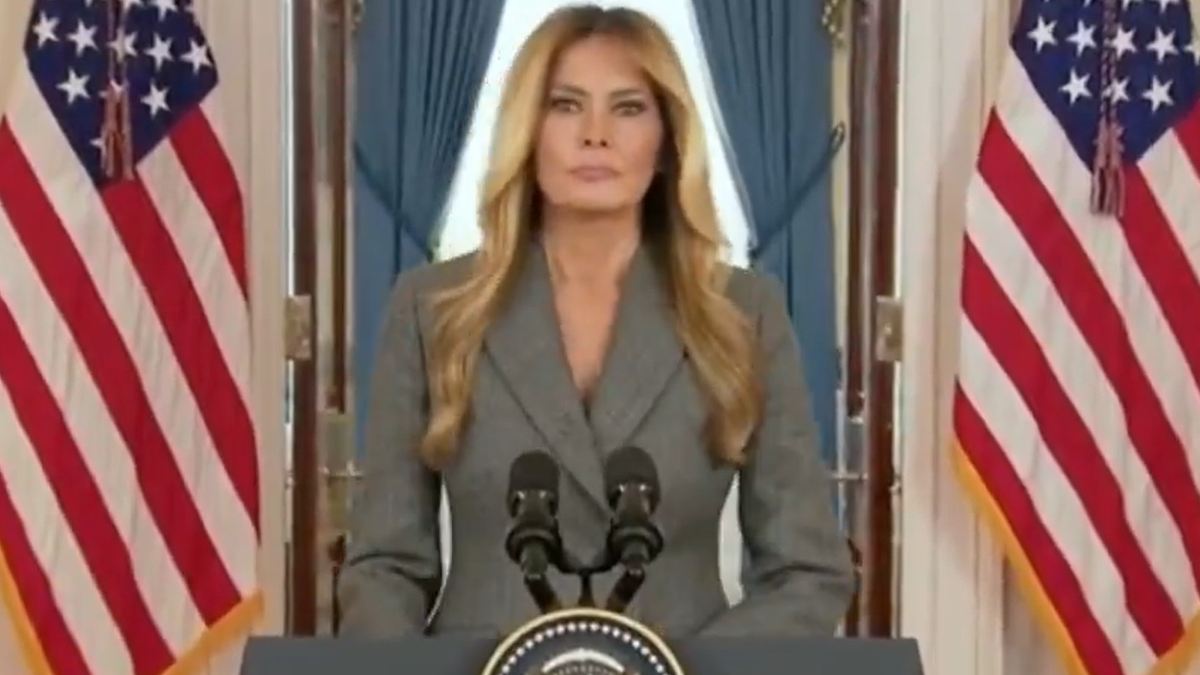
Such talk was apparently driven by the worsening humanitarian situation and the difficulties civilians face when attempting to leave the area. The agreement is designed to temporarily suspend military operations in a designated corridor so that humanitarian workers can assess residents’ needs and coordinate assistance.
There were reports that Russian and Ukrainian representatives were involved in the discussions of the arrangement. In addition, diplomatic efforts were involved in trying to get humanitarian workers into the area to help the injured and civilians and not be affected by ongoing military operations.
The ceasefire is expected to begin on October 29, local media reported at the time of the announcement. But the arrangement is localised and temporary, and not a long-term solution to the Russia-Ukraine conflict.

Oleshky Faces Severe Humanitarian Crisis
Oleshky is located in Ukraine's southern Kherson region and has been destroyed since Russian forces occupied it in February 2022.
Before the war, the town had around 24,000 inhabitants. But the population has decreased drastically. Estimates are that between 1,700 and 2,000 people remain in the area.
Most of those living in Oleshky are elderly residents who have been unable or unwilling to leave their homes, even though the dangers are so great that they can’t leave the city.
Some 50 children are also among the population, according to reports, which raises alarm among those who live there that their safety and access to essential services need to be very concerned.
The city has been further devastated after the destruction of the Kakhovka Dam in 2023, which caused widespread flooding across the surrounding region.
The humanitarian situation is worse because of continued military activity, damaged infrastructure, and problems in transporting essential supplies.
Food, medicine, and clean drinking water are not only a concern but also electricity, heating, and running water have also been shortages of food, medicine, and clean drinking water, especially with the onset of colder weather.
Humanitarian organisations and emergency workers have difficulties in reaching civilians since there is an ongoing conflict and dangerous areas around the city.
Ceasefire to enable Humanitarian Deliveries.
The central objective of the localised ceasefire is to create an opportunity for humanitarian assistance to reach the civilians trapped inside Oleshky.
Under that arrangement, humanitarian teams will also visit affected households to survey the situation, assess medical needs, and coordinate the delivery of essential supplies for the families and help with the delivery of essential goods to the people of the affected areas and to evaluate the situation.
Food, medicine, hygiene items, and other things residents who are struggling to survive under such conditions are expected to need.
But the ceasefire will also help in establishing a humanitarian evacuation corridor for civilians who wish to leave the city.
Residents will be offered options as to whether they want to move into Russian-controlled areas or areas controlled by Ukraine.
But the evacuation operation is going to be very difficult given the dangerous situation at Oleshky.
Minefields, damaged roads, military activity, and the threat of drone attacks have complicated civilian movements.
Hence, humanitarian teams will need to coordinate with authorities so that transportation routes are safe during the operation.
The agreement is intended to provide a temporary opportunity for civilians to receive assistance and leave the affected area without facing the immediate threat of military operations.
Russia and Ukraine Respond to Humanitarian Initiative
The ceasefire announcement has drawn attention from officials involved in diplomatic efforts surrounding the Russia-Ukraine conflict.
Russian military representatives confirmed plans to enable the temporary halt in fighting to support humanitarian operations.
Ukraine’s representatives also said it is important to provide aid to civilians trapped in the occupied city.
Ukrainian officials have suggested that implementing this agreement has the potential to be very difficult because of the security situation and the difficulty in reaching the affected residents.
As for the humanitarian program, António Guterres, the UN Secretary-General, welcomed the humanitarian initiative and said he hoped it would help to reduce suffering caused by the war and that it could be part of a global effort to reduce the damage of war.
International representatives’ involvement underlines the need for humanitarian coordination in conflict areas where civilians are confronted with immediate threats to their lives.
Although the ceasefire does not address the broader political and territorial issues between Russia and Ukraine, assistance to the most vulnerable communities will likely be forthcoming.
Melania Trump's previous efforts on Ukrainian Children
Melania Trump has previously expressed concern about children affected by the Russia-Ukraine war.
Her previous diplomatic efforts reportedly focused on the return of Ukrainian children displaced by the conflict and efforts to reunite them with their families.
The latest move by Oleshky is to focus on a more vulnerable group of people: civilians trapped in the midst of continued military operations.
The humanitarian agreement comes at a time when diplomacy to resolve the larger conflict continues to be a huge obstacle.
Trump has said in the past that he wants to end the war, and talks between Russian President Vladimir Putin and Ukrainian President Volodymyr Zelenskyy are complicated by the issues of security, territorial control, and the future of occupied areas.
However, the Oleshky arrangement focuses on a much more immediate task: food, medicine, and safe passage for civilians who need immediate assistance.
Ceasefire Implementation Remains Crucial
The success of the agreement will depend on whether Russian and Ukrainian forces can maintain the localised ceasefire long enough for humanitarian teams to reach residents and coordinate evacuations. Security issues will be addressed, better communication will be established, and civilians can travel according to the road network without the risk of being attacked again.
The situation in Oleshky also underscores the wider humanitarian consequences of the Russia-Ukraine war on elderly residents, children, and people unable to leave conflict areas independently.
The agreement is not a full peace settlement; however, it does provide a possibility to reduce immediate suffering in one of the affected communities.
The next few days will be crucial to determine if the humanitarian corridor can work and if residents will be given the assistance they need now.
As long as civilians are still in Oleshky, the localised ceasefire might be the only chance they have to get back some basic supplies and escape the dangerous conditions that the recent conflict has brought about.
The international community will watch for the successful implementation of the agreement, and humanitarian agencies and officials will keep looking at protecting residents and facilitating safe evacuations for civilians.



Comments