
Microsoft’s global service disruption continued for a second day today, with users in India and several other parts of the world struggling to access Outlook, Teams, Copilot and other Microsoft 365 services. The tech giant said it was still working to “find out what caused the outage and get systems back online”.
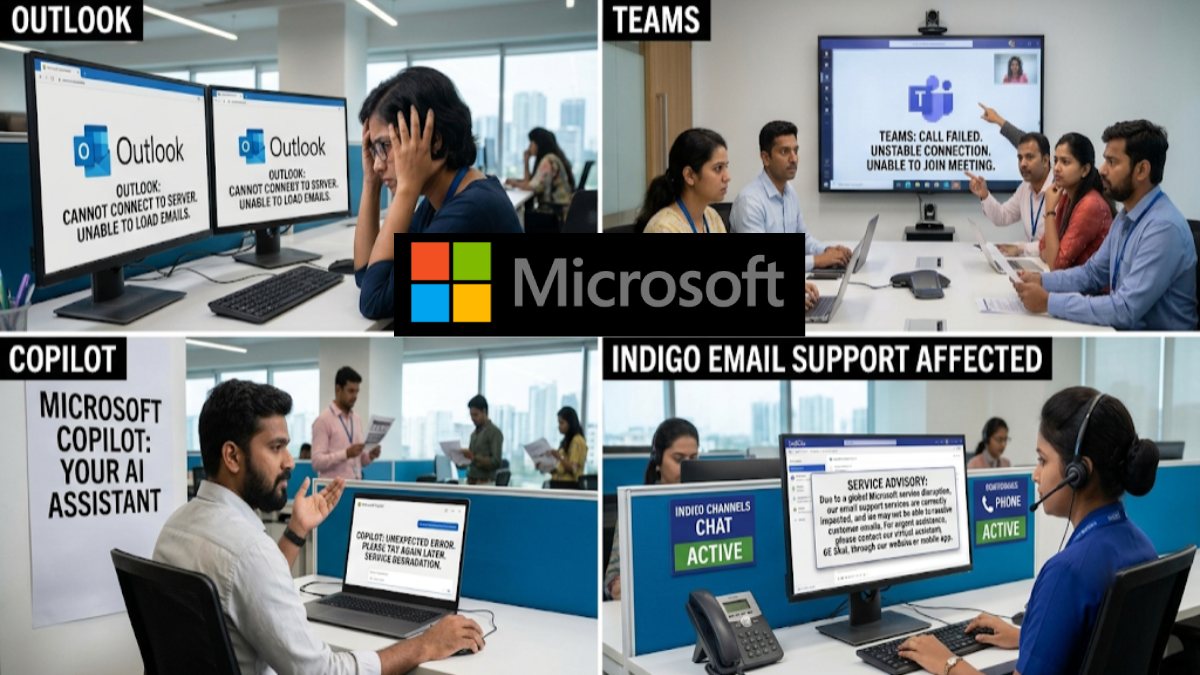
While the disruption started on Thursday, several workplace applications continued degrading on Friday; email communication, meeting schedules and access to work information were affected. On Microsoft’s service health page, issues were still ongoing, affecting Microsoft 365 business and enterprise customers as well as consumer products.
Engineering teams were taking multiple recovery measures to find out what caused the disruption, resolve traffic-related issues and restore backend servers, the company said. Businesses and individuals who use Microsoft’s cloud-based applications every day have been concerned over the prolonged outage.

In an update published at 11.16 am India time on Friday, Microsoft said some services were still degrading and that it was working through multiple technical approaches to understand the cause of the incident and recover affected infrastructure.
The disruption had been blamed initially on load on infrastructure in multiple regions, but Microsoft later said strain on its systems wasn’t due to more user traffic; a number of servers suddenly went down instead, which caused connectivity problems. Unexpected server failures have complicated the recovery process, Microsoft says (it is investigating the technical issue). They haven’t confirmed when all affected services will be restored yet.
Microsoft also addressed the possibility that a cyberattack or malicious activity caused the global disruption. In its latest update, the company said it was not aware of any malicious activity behind the incident but would provide further information about the root cause through a post-incident report (once the issue has been resolved).
The report should include more details on the technical failure, infrastructure impacted and steps taken to prevent similar disruptions in future. The company is still monitoring systems and working to get normal service back up across regions affected. Until the investigation is complete, we don’t know exactly why the unexpected unavailability of servers happened.
Microsoft services that depend on Exchange Online and email infrastructure have been most affected. Microsoft warned users may not be able to access their mailboxes through Outlook on the web or desktop application. Email delivery may also be delayed, making it harder for employees, businesses and customers who rely on timely communication.
Microsoft 365 features that depend on Exchange Online are also disrupted; applications and functions that do not depend on the affected email infrastructure may still work normally. Copilot users have also reported problems: some may not be able to load Copilot Chat or receive responses through web and desktop applications; Copilot may not be able to retrieve workplace information (emails, calendars, files) either, so it’s less useful if employees rely on the AI assistant for daily tasks.
Microsoft Teams was also affected; in part, the company said some of its core communication features are still functioning. Users can generally join calls and meetings, participate in group chats and send messages through channels, but calendar-related functions (scheduling meetings and viewing existing appointments) may not work.
That has made it harder for organisations using Teams to coordinate meetings and manage schedules. The distinction between affected and functional is important because not every Microsoft app or function has been disabled; users might be able to access certain collaboration tools even though email, calendar and other connected services remain down.
The outage has also impacted businesses in India, including the country’s largest airline IndiGo. The airline said its email support services were affected by the global Microsoft outage and warned that it may not be able to receive emails sent by customers, but that other customer support channels remained available.
Passengers needing urgent assistance were told to contact the airline through its AI-powered assistant, 6E Skai, on the official website and mobile application. It only advised email support and did not say flight operations, bookings or check-in services had been disrupted. The airline announcement shows how outages involving major technology providers can affect customer-facing services even though they are not directly responsible for the technical failure.
In India, users started reporting problems with Microsoft services at around 11 pm on Thursday, outage-tracking site Downdetector said. Complaints reportedly dropped overnight but rose again after 6 am Friday, suggesting that people were still having trouble getting to the affected applications.
The renewed complaints came as Microsoft was still recovering from the disruption (though it had been trying), so it suggested it wasn’t over yet. Other countries also reported similar problems among companies using Microsoft’s cloud infrastructure for communication, document management and business operations. The continued disruption has underlined how important digital infrastructure is, especially for companies that use interconnected applications for core workplace functions.
Outlook, Teams, Copilot and other Microsoft 365 features are still experiencing varying degrees of disruption, so users are waiting for the company to get things back to normal. Microsoft has said it is taking the incident seriously and that technical teams are still working on investigating the unexpected server failures, but also promised a post-incident report once disruption is under control: “Once disruption is under control we will share a detailed post-incident report.”
So far, users have been advised to watch official Microsoft service updates and use alternative channels where necessary. The incident has shown yet again how one technical failure at a major cloud services provider can cause widespread problems for businesses, airlines and millions of users who rely on digital workplace tools every day.






Comments