
A viral video circulating on social media claims that a Nigerian farmer poisoned and killed more than 20 cows belonging to Fulani herders after repeatedly warning them against allowing their cattle to graze on and destroy his crops.
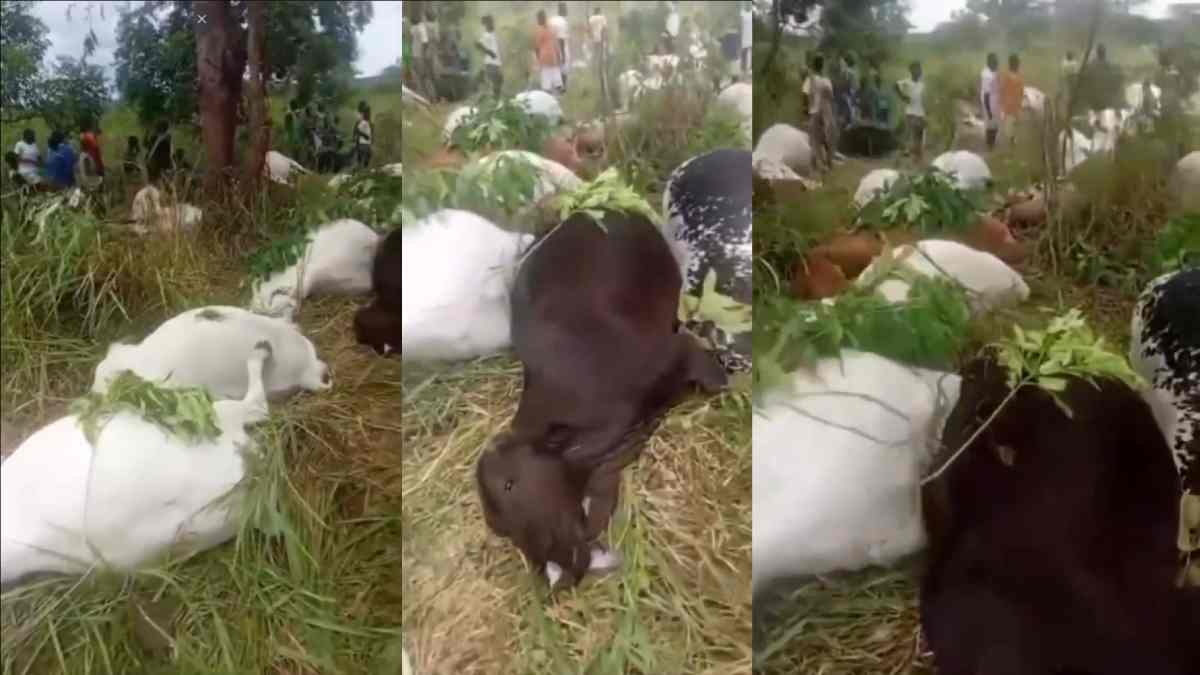
However, we could not find an official statement or credible news report confirming the incident. The video shared in the post also did not contain a verifiable date or location. Similar claims and footage of dead cattle have circulated on Facebook and other platforms in previous years, making it difficult to establish whether the video is original or connected to a recent incident.
Farmer-Herder Clashes in Nigeria
Although the specific viral claim remains unverified, disputes and violent confrontations between farmers and herders have been reported across several parts of Nigeria. These conflicts often arise when cattle enter cultivated farmland, damage crops or compete with farming communities for access to land and water. Retaliatory attacks, cattle poisoning, livestock theft and violence against people have all been reported in different incidents.
In Oct and Nov 2026, separate incidents involving suspected cattle poisoning and farmland destruction were reported in Plateau State. In one incident, three cattle reportedly died in Lafando village, Riyom LGA, while two cattle were reported dead in Rakwok village, Barkin Ladi LGA. The circumstances and responsibility for the suspected poisoning were not independently established.
How the Land Dispute Developed
The dispute over land and grazing routes has a long history in Nigeria. Grazing reserves and routes were introduced during the 1960s, including through the Northern Region's Grazing Reserve legislation in 1965, to provide pastoralists with access to grazing land and reduce friction with farmers.
The Nigerian government's Land Use Act was introduced in 1978. It vested land in each state in the governor, to be held in trust and administered for the use and common benefit of Nigerians. Researchers have argued that the changes in land administration, alongside the expansion of farming and weakening of traditional grazing routes, contributed to insecurity over land access for pastoral communities.
The Fulani are a widespread ethnic group across West Africa. Many Fulani pastoralist communities have traditionally depended on livestock rearing, particularly cattle, as a major source of livelihood. Milk and other dairy products, livestock sales and animal trading are important parts of this economy.
A Farmer who complained that cows 🐄 keeps eating his crops decided to put poison in his farm and it killed large number of cows belonging to Fulani herders https://t.co/k5kdLs2v9u
— Nigeria Stories (@NigeriaStories) November 11, 2026
Scale of Farmer-Herder Violence
The violence has had a significant impact in Nigeria's North-Central region, particularly in states such as Benue and Plateau. Nextier's Nigeria Violent Conflict Database recorded 61 farmer-herder incidents and 467 casualties in 2024. Of these, 42 incidents and 416 casualties were recorded in the North-Central region. Plateau accounted for 307 casualties, while Benue recorded 83.
The recurring disputes continue to affect farming communities and pastoralists, with competition over land, grazing areas and water remaining major sources of tension.





Comments