
A magnitude 5.8 earthquake struck the Khuzdar region of Balochistan in Pakistan on Thursday, in a region where earthquakes have been reported as seismic activity in the southwestern part of the nation, according to local authorities and seismic monitoring agencies.
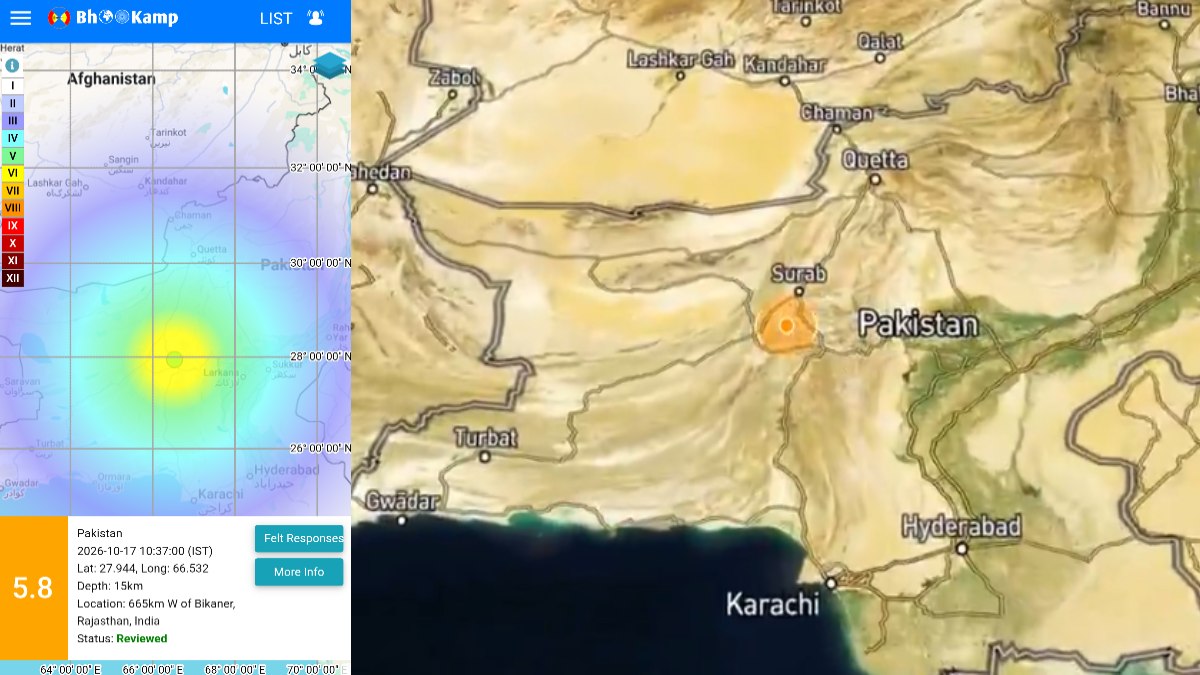
The earthquake has raised concerns about how it may affect nearby settlements, buildings and infrastructure. Khuzdar is situated in a very seismically active area of Pakistan where earthquakes are a natural hazard. The magnitude of the earthquake which was recorded is a very high earthquake but more information is required to arrive at the actual damage or casualties and how it could have happened.
The Khuzdar region is part of Balochistan - the largest province in Pakistan. Its mountainous terrain and dispersed settlements can make emergency response and damage assessment difficult in a natural disaster. The location of the epicentre of an earthquake is important, particularly when people living close to the earthquake are more prone to earthquakes and experience greater earthquake intensity than those further away.
But the impact also depends on the depth of the earthquake, the ecology of the soil and the structural strength of buildings. Without a clear picture of what is happening, it is too soon to estimate the extent of the earthquake damage. A magnitude of 5.8 on the Richter scale is considered a moderate to strong earthquake.
Depending on the depth and proximity to populated areas, an earthquake of this magnitude can cause objects to fall, buildings to be damaged, and people to suffer from it. Structures that are not designed to withstand earthquakes and structures older than the earthquake have a higher risk of damage.
Residents near the epicentre might feel there is some ground shaking and people in the surrounding areas could feel the ground shaking too. But the magnitude alone does not tell if buildings have fallen and roads have been damaged, or whether anyone has been injured. Pakistan experiences earthquakes because it is situated near the boundary of major tectonic plates. The Indian, Eurasian and Arabian plates interact to generate geological stresses that are released periodically through seismic activity.
EQ of M: 5.8, On: 17/10/2026 10:37:00 IST, Lat: 27.944 N, Long: 66.532 E, Depth: 15 Km, Location: Pakistan. For more information Download the BhooKamp App https://t.co/5gCOtjdtw0 @DrJitendraSingh @OfficeOfDrJS @tummalasrini @GSuresh_NCS @ndmaindia https://t.co/VTuQk2KDzc
— National Center for Seismology (@NCS_Earthquake) October 17, 2026
Balochistan has many active fault structures, and earthquake monitoring and disaster preparedness are also very important. Scientists can find seismic data and to identify areas with a higher risk of earthquakes but they cannot predict the nature of an earthquake at a certain time or in a given location. Monitoring networks are thus important to detect earthquakes and give warnings to authorities and the public.
The Pakistan Meteorological Department's National Seismic Monitoring Centre monitors earthquakes across the country and publishes information on their magnitude, location and depth. International seismic monitoring organisations also provide preliminary reports which can be updated as new information is available. There can be differences in initial reports when different monitoring stations are used, and agencies compare the measurements from different sites.
For this reason, the latest official bulletin should be consulted before releasing details on the earthquake. The details of the exact epicentre, depth, occurrence time and the area affected should be verified before any conclusions can be made on its severity.
Residents who have felt the tremor should take basic earthquake safety precautions. When the shaking starts, people should drop to their hands and knees, take cover beneath solid furniture if possible and stay there until it stops shaking. People should not be standing out in front of windows, glass panels and other heavy objects that can fall. Residents outdoors should stay away from buildings that could collapse or release debris.
The earthquake in Khuzdar (5.8 magnitude) was a disaster and showed Balochistan how important seismic monitoring and preparedness must continue. The first thing that needs to be done is to determine if the earthquake caused injuries, property damage or disrupted services. Information about casualties, rescue operations and structural damage was not available in the details used to prepare this article.
Residents must follow news from the Pakistan Meteorological Department, local administration and emergency response agencies. When more information is available, official assessments will be used to clarify the earthquake’s impact and whether additional safety measures are needed.





Comments
Leave a Comment