
The viral video that has resulted in dozens of rats moving through a Paris metro station platform by dozens of rats moving on what is probably a Paris Metro platform without notice on the ground of a metro station appears to be a platform, a phenomenon that has raised fresh questions about cleanliness of public transport and pest control in the city's public transport system in a video has revived some of the concerns about pest control and cleanliness and cleanliness of urban public transport networks and how to manage rats in Paris.
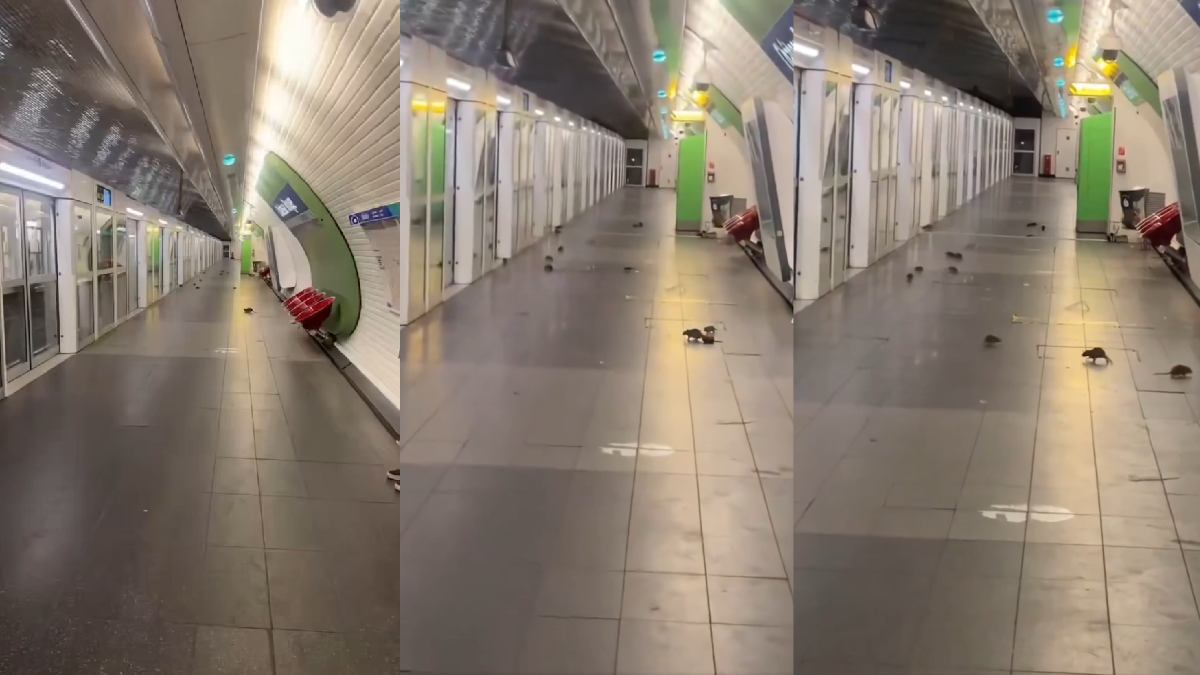
The footage of rats scattered across a tiled floor in a station corridor; some of them are seen in the video, some close to the walls and others taking off across the open walkways. The unusual scene has been spreading online and has raised questions about the sanitation, waste management and control of nuisance rodents on busy underground transport networks in the city’s busy underground transport networks.
The video shows a long, enclosed station area with rows of doors or service panels along one side, overhead lighting and a relatively open passage through the middle. Rats can be observed at different locations across the floor, and in the corridor further down the line. The number of rats in one place has made the footage so striking to social media users.
Although the video is showing a Paris Metro station, the location, date of recording and circumstances on which rodents were gathered have not been established from the footage alone. The video should therefore be viewed as a viral video rather than a manifestation of a widespread problem in the city's entire transport system.
Viral Footage Shows Rats Scattered Across Metro Platform
The footage shows rats moving around the station floor freely, with several visible in the foreground and more appearing in the distance. The rats seem to be spreading out along the walkway rather than sticking to a single corner, so their presence is hard not to be missed; they seem to be there and I just see them spread all over the floor.
The scene is so unlike the orderly appearance of public transport infrastructure in a city. Metro stations attract a lot of commuters every day and passengers rely on these spaces to be clean and hygienic.
Rats in an underground station can be especially harmful for them because rats may come into contact with discarded food, rubbish and surfaces used by commuters. But the video doesn’t indicate whether the rodents were in the area for a long period of time, whether there was a recent sanitation challenge in the area or pest control measures were already in place.
Without any verified information about the station it is difficult to determine if the incident was isolated or part of a recurring problem at that particular location.
Why Rats Are Common In Underground Transport Networks
Rodents are a big problem in many large cities and underground transport systems provide them with the conditions for survival. Metro networks often contain drainage channels, utility passages, maintenance spaces and other areas that shelter from weather and human activity.
Food waste can also attract rats. Discarded snacks, packaging and rubbish left around platforms or near station entrances might provide accessible food sources. If waste is not collected promptly or bins overflow, rodents can find opportunities to feed and remain in the area.
Pest control is difficult due to the scale and complexity of underground infrastructure. Rats can move through spaces that passengers and transport staff don’t see and transport them along different parts of a station or adjacent infrastructure.
Effective control usually requires more than the removal of visible rats. Waste management, sealing the entry points of potential pests, monitoring activity, and maintaining drainage and service areas can all help to eliminate the conditions that attract pests.
Hygiene Concerns For Commuters
A lot of rats in a public transport area naturally brings up hygiene concerns. Rodents may also distribute pathogens and may contaminate surfaces or food by their droppings, urine and contact. The risk is determined by the situation, the extent to which contamination is present and whether humans come within the affected area.
The footage is a lesson for commuters: maintain public space and respond to sanitation problems quickly. Transport operators generally need to coordinate cleaning teams, maintenance workers and pest control agents to deal with recurring rodent activity in order to keep track of this and avoid repeated rodent activity, the footage shows daily.
Passengers can also contribute by putting food packaging and other rubbish in bins rather than leaving it on platforms or in station corridors. Such actions alone won’t eradicate rodents, but restricting access to food can be part of a much broader pest-management strategy.
At the same time, a single viral clip should not be used to draw conclusions about the safety or cleanliness of an entire transport network. Assessing the scale of a problem requires verified information about the location, the duration of the incident and the response from the relevant authorities.
Questions Over Station Maintenance And Pest Control
The viral video has brought attention to the more general responsibilities of maintaining busy transport infrastructure. Major metro systems must manage passenger movement, cleaning schedules, rubbish collection and maintenance over large networks, often while services continue to operate.
Rodent control can be particularly difficult in older underground infrastructure: gaps, pipes and concealed spaces can provide pathways for pests. Regular inspections and coordinated maintenance are crucial to determining the conditions in which rodents can enter public areas.
If an unusual incident is reported, the correct response will be to confirm the location, to check the area, to explore food or shelter sources and to see if additional measures are needed. Public communication can also help commuters to get a sense of what action has been taken.
In the case of the circulating Paris Metro video, though, the footage alone does not confirm whether transport officials have investigated the scene or issued a statement about it.
Viral Videos And The Need For Verified Information
Videos filmed in public spaces can spread quickly online, especially when they reveal something unexpected. Images of tons of rats in a metro station are likely to trigger strong reactions as they question our expectations about hygiene in a major urban transport system.
🇫🇷 Un video viral muestra a decenas de ratas en los andenes de una estación de metro en París, Francia. https://t.co/PCIRSXUnQs
— Alerta Mundial (@AlertaMundoNews) October 12, 2026
However, viral circulation does not automatically establish when or where a video was recorded. And clips can be reposted without their original context, making it difficult to distinguish a recent incident from older footage.
When it comes to conclusions, viewers must verify the location of the station, when the recording was recorded and how the transport authority responded. It is also helpful to have reliable reporting to know if the situation is an isolated incident or a longer term maintenance problem.
But at least the video of dozens of rats in a Paris Metro station has brought attention to the wider problems of sanitation and rodent control in underground public spaces. The footage is impressive, but more data is needed before we claim the location, cause or scale of the incident.






Comments