
Trillionaire Elon Musk’s SpaceX has developed satellite systems Starlink and Starshield, which have become critical to Ukraine’s military communications and drone operations during its war with Russia.
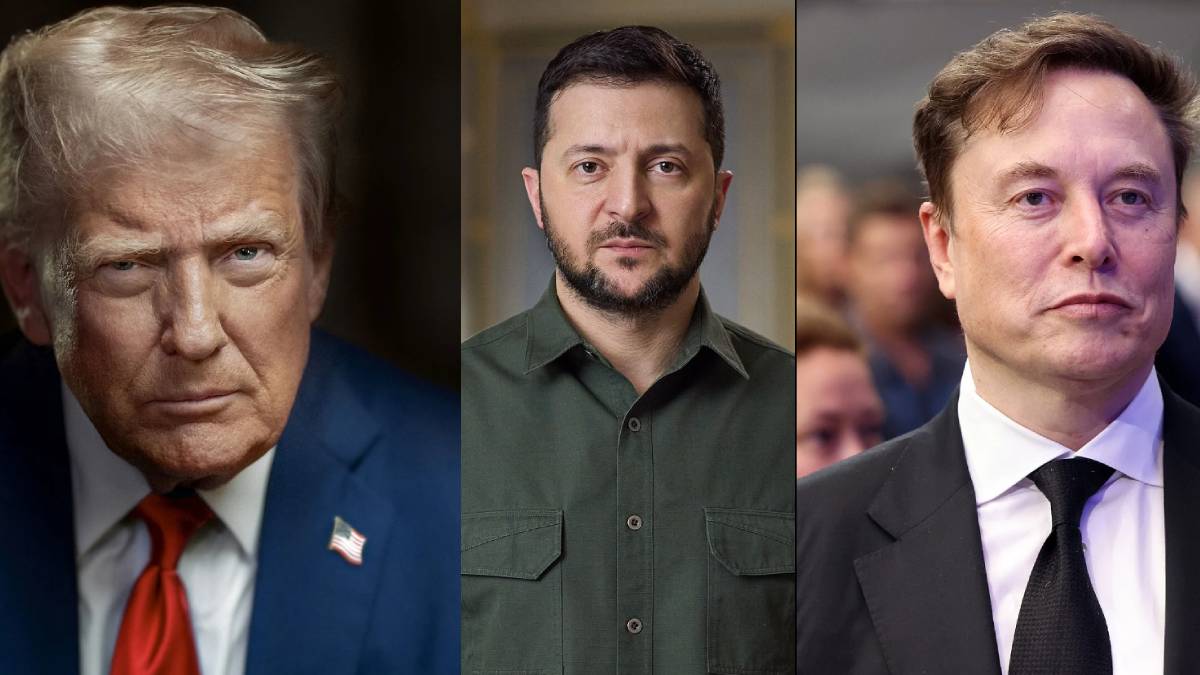
On 14 October, Ukrainian officials said that satellite service restrictions had disrupted military drone missions. The speed limit of about 160 km/h affected systems mounted on fast-moving objects, making some drones difficult to operate and forcing Ukrainian forces to cancel several missions. The restrictions were implemented without advance warning to Ukraine’s defence forces.
The situation has led to contradictory accounts of who ordered the restrictions and different organisations have different accounts of what happened.
Who ordered the Starlink and Starshield restrictions?
The Wall Street Journal, citing Unnamed U.S. officials, reported that Elon Musk led the slowdown. But the exact process has yet to be seen.
Reuters also reported that the order to limit Starshield came from within the White House. The Pentagon was informed by two U.S. officials and a Western official who was briefed on the matter, with the Pentagon receiving a command that the military-grade satellite service provided by SpaceX must be slowed down. The officials did not identify the person who made the decision.
Musk also addressed the issue in his Twitter post, saying “Starshield systems are owned and controlled by the US government. Any limits on speed or usage are decided by the US military and ultimately POTUS.”
Trump denied that he had ordered the action and cast doubt on Musk’s responsibility.
These contradictory statements have left the main question unanswered: who authorised the restrictions, and how much control did SpaceX or the US government have over that decision?
The U.S. government’s position has added a new layer of uncertainty. Starlink, SpaceX’s commercial satellite internet service, and Starshield, its military and intelligence-focused offering controlled by the U.S. government, have been distinguished from one another.
The US Secretary of State, Rubio, has also discussed Ukraine’s access to Starshield, indicating that its availability for some Ukrainian military operations is a matter of consideration.
The U.S. Secretary of War said they were not responsible for the problem and hinted that it was a compliance issue on Ukraine’s end regarding the terms and conditions.
This distinction is important since an alleged breach is different from a confirmed one. The reason for the restrictions will not be known until the terms and decision-making process are made public.
US-Ukraine relations are under strain.
The incident comes as relations between Washington and Kyiv are getting worse. Trump has said repeatedly that Ukraine needs to reach a deal with Russia and has chastised Ukrainian President Volodymyr Zelenskyy and at times threatened to remove him as head of the government. His administration has also taken steps regarding Russian energy supplies and sanctions that are also worrying Ukraine’s supporters.
On the other hand, Ukraine has continued its military campaign against Russian targets - including oil refineries that are crucial for Russia’s energy revenues and war effort. Washington has pushed Kyiv to halt such attacks as part of an energy ceasefire.
On October 20, US envoy Steve Witkoff met with Zelenskyy and European leaders in Norway. The conversations were productive, the U.S. official said, and they were about security guarantees, reconstruction after the war, and a more general way to end the conflict. Witkoff was expected to meet Russian President Vladimir Putin on Wednesday, October 21, as Trump renewed calls for Ukraine to end the war.
From this perspective, satellite restrictions have raised concerns in Kyiv about the reliability of American assistance and the circumstances under which military technology is important.
A Warning about Dependence on Foreign Technology.
This incident makes the point that with foreign-owned software, satellite networks, and digital infrastructure, national security operations are at risk.
Starlink has been instrumental in keeping Ukrainian forces connected, especially when the communications infrastructure has been damaged or disrupted. Starshield offers military and intelligence capabilities under US government control. We have to differentiate between the two systems, but they both demonstrate that military operations can be based on infrastructure that a country does not own or control.
The bigger concern is not whether Elon Musk, the White House, or the U.S. military put such restrictions in place. It is whether a country can depend on an external technology provider when access can be altered during a conflict.
The Starlink and Starshield dispute is thus much more than a dispute over satellite connectivity. It’s about sovereignty, how much power governments and technology companies have over one another and military dependence and power dynamics.
It’s not lost on critics that the episode is only one example of how powerful countries deploy technology to their advantage when their allies are fighting for their lives. And the incident should be an example to all governments that rely on foreign technology to perform critical tasks. Access is, of course, valuable, but when access is conditional on good terms, the ability to withdraw or restrict that assistance is a powerful instrument of influence.






Comments
Leave a Comment