
US President Donald Trump has once again raised the possibility of American intervention in Cuba, bringing renewed attention to Washington's approach towards the sovereign island nation. At a midterm election rally in Florida on Friday, October 23, Trump suggested that US warships returning from West Asia could stop near Cuba before sending Secretary of State Marco Rubio to “finish up the deal.” The remarks have renewed concerns about US interventionism. It can be seen remarkably how interventionism ended in Afghanistan.
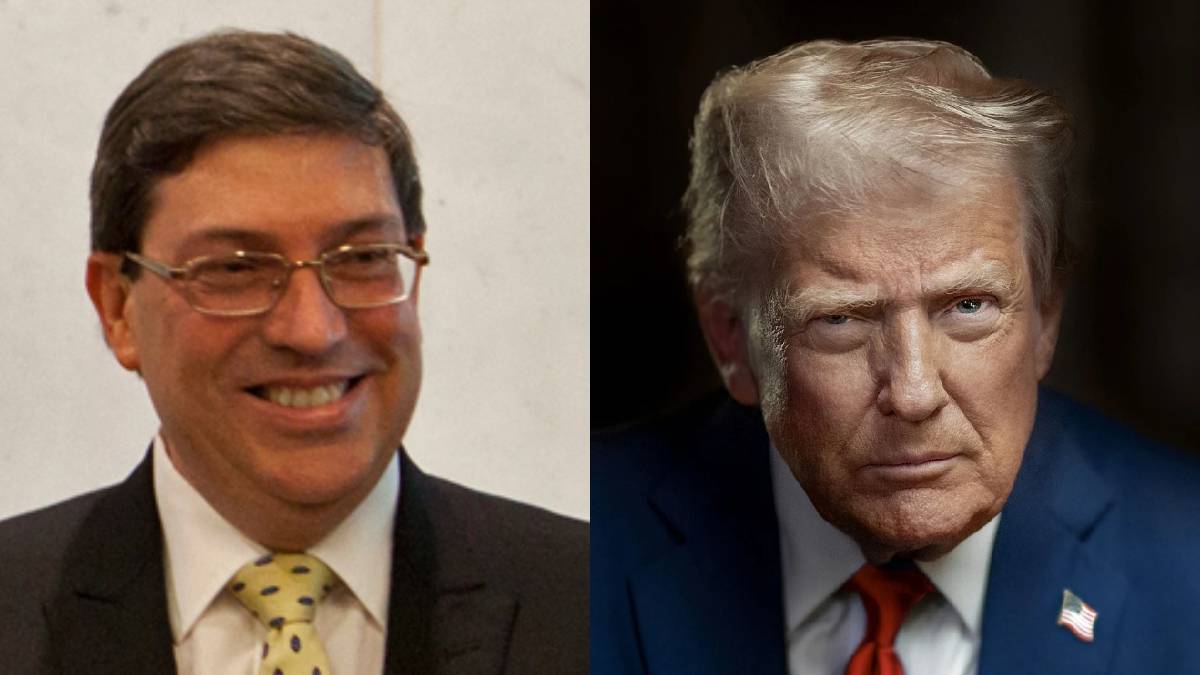
“We’re gonna come back from Iran, those beautiful ships will pass Cuba. We’ll have one of them stop about 50 yards off the coast. They’ll raise up their hands, and then we’re gonna send Marco Rubio in to finish up the job,” Trump said, according to ANI.
Trump made the remarks after a question about Cuba was shouted from the crowd.
Cuba on Trump's threats
Responding to Trump's remarks, Cuban Foreign Minister Bruno Rodríguez wrote on Twitter (X).
“We reject every threat related to US ambitions toward Cuba,”.
“Our coastline is full of beautiful beaches, but there are also razor-sharp limestone spikes, an inhospitable environment for those who make it to our shores with hostile purposes and lust for domination.”
Although Trump's comments do not amount to a formal announcement of military action, they have revived concerns about the possibility of a more confrontational US approach.
Marco Rubio calls on Cubans to work with the CIA
Adding to the controversy, Rubio took to X to address Cubans who want political change in their country.
“To those who seek to create positive change in Cuba, now is the time,” he wrote.
“The disappointment of failed promises, corruption, and the privileged lives of only a few; seize this opportunity to create the change you desire through a discreet partnership with the CIA.”
Cuban Deputy Foreign Minister Carlos Fernández de Cossío criticised the appeal, mocking Washington's public invitation for Cubans to cooperate with the CIA.
Together, Trump's remarks about American warships and Rubio's message have intensified questions about Washington's intentions towards Cuba. The developments come as the Trump administration continues to increase economic and political pressure on the Cuban government.
America playing big brother again
A sovereign nation is once again facing threats of intervention from the United States. This is not an entirely new chapter in US-Cuba relations, but still the same question arise, why does Washington continue to position itself as an authority over the political future of another country?
For decades, Cuba has faced a US economic embargo and extensive sanctions that have restricted its access to trade, finance and essential resources. The country is also experiencing a severe economic and energy crisis, with recurring power blackouts, shortages of essential goods, rising prices and growing difficulties for ordinary citizens.
The Cuban government has faced longstanding criticism over corruption, political restrictions and economic mismanagement. These concerns deserve scrutiny in their own right. However, using them to justify threats of foreign intervention raises a different question: who gets to decide the political future of a sovereign nation?
The United States argues that its pressure on Cuba is intended to address corruption, security concerns and the concentration of privileges among people connected to the country's leadership. Yet the argument invites scrutiny when considered alongside inequality and the rising cost of living within the US itself.
America has its own struggles with housing affordability, access to healthcare and the cost of essential goods. Critics of US policy have also questioned cuts to public assistance programmes at a time when many households face financial pressure. The contrast becomes striking when Washington presents itself as a force for political and economic change abroad while facing persistent challenges at home.
That comparison does not erase the problems faced by ordinary Cubans or excuse the actions of their government. Instead, it raises questions about consistency, accountability and the standards applied when powerful countries criticise others.
Sanctions, sovereignty and the cost to ordinary Cubans
Cuba's economic difficulties cannot be attributed to a single cause. US sanctions and restrictions have constrained trade and access to resources, while domestic economic policies, structural weaknesses and government decisions have also contributed to the crisis. The consequences fall heavily on ordinary people, who face electricity shortages, limited access to essential supplies and economic uncertainty.
Against this backdrop, the prospect of further confrontation raises concerns about whether ordinary Cubans could face even greater hardship. Any military escalation would carry risks extending beyond political leaders, potentially affecting civilians and regional stability.
The question is not whether Cuba's government should be beyond criticism. No government should be exempt from scrutiny. The question is whether external pressure, covert intelligence cooperation or the threat of military intervention is an acceptable way to determine another nation's future.
Trump's latest remarks do not establish that an American military operation against Cuba is imminent. Nevertheless, the rhetoric, combined with Rubio's public appeal for cooperation with the CIA, has renewed concerns about intervention and sovereignty.
The world has seen how power politics can turn smaller nations into arenas for the ambitions of larger ones. Cuba's future should not be treated as a prize to be claimed by Washington, nor should the suffering of its people become a bargaining tool in a geopolitical contest.






Comments