
Brazil’s presidential election has pointed to the increasing influence of digital communication on political campaigns.
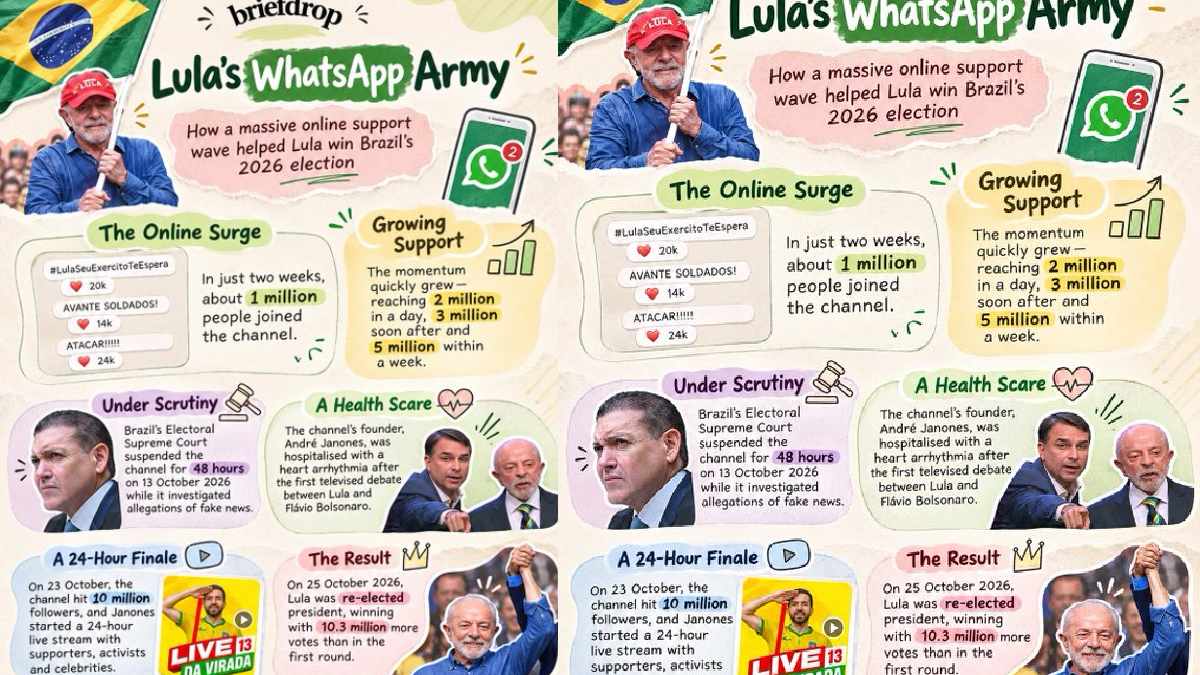
A WhatsApp-based mobilisation network called “Lula’s Army” became a case study in how messaging platforms can bring people together, circulate campaign materials, and promote political participation across the board.
But the network attracted millions of followers, but it is hard to make a firm assessment of how much the messaging system influenced voting decisions.
The initiative, also known in Portuguese as Exército do Lula, was associated with Brazilian congressman André Janones, a close ally of Luiz Inácio Lula da Silva.
The network gained momentum in the first round of voting; Lula's campaign entered the runoff against Flávio Bolsonaro and tried to increase its support ahead of the final vote.
Following the election, news on the WhatsApp channel increased from about 60,000 followers to almost 11 million by election day. This rapid increase showed how political campaigns can use digital communities to reach large audiences in such a short period of time.
How ‘Lula’s Army’ Organised Supporters
The initiative relied on a steady flow of campaign-related messages, short videos, memes, hashtags and calls for participation. Users were encouraged to share content, invite others into the network and spread campaign messages on different online platforms.
The strategy went beyond information dissemination. It was also designed to convert supporters into active participants that might be able to spread political communications within their own communities. Even a simple gesture passing on a video or sending a campaign message helped people to participate without going to rallies or joining campaigns.
The network became more visible during the first round and the runoff. With the campaign in a head-on election battle, WhatsApp was the best channel for communication with supporters and campaign discussions.
And the approach is also indicative of a broader shift in political campaigning, where digital participation has become a significant supplement to traditional rallies, television appearances and public meetings.
Why WhatsApp Has Become Important in Politics
Messaging applications offer political campaigns a way to communicate directly with audiences. Unlike public social media posts, messages shared within private groups can travel through personal networks, reaching people who may not regularly follow political accounts or news websites.
This structure can help campaigns propagate information quickly and promote community conversations for friends, relatives and community members. And supporters can tailor messages to their own and give them a personal feel when they share them with campaign supporters so that campaign communication is more familiar to them.
But the same features are also challenging. Misleading claims, unverified videos and politically charged messages can spread rapidly through private groups. These conversations are rarely visible, and the source of information or correction of inaccurate claims are more difficult.
Such concerns emphasize that we need to check the sources before forwarding political content.
Did WhatsApp Change the Election Result
Lula’s Army’s expansion demonstrates the potential of online political mobilisation, yet a large audience does not automatically translate into an equivalent number of votes. Following a channel, sharing a message and changing a voting decision are different forms of participation.
Electoral outcomes are influenced by candidates’ policies, public approval, economic conditions, campaign organisation and voter turnout. To know how much a particular digital initiative contributed, the evidence would have to be more than follower numbers alone.
However, Brazil’s experience is a great example of how messaging platforms can support political organisation and expand campaign communication.
The larger lesson is that digital tools are becoming ever more visible in all our elections. WhatsApp can help campaigns connect with supporters and distribute messages at scale, but its real electoral impact needs to be weighed very carefully. If politics gets online, transparency, factual information and responsible sharing will be the foundation of democratic participation.


Comments