
Pakistan has made history in space exploration with Muhammad Zeeshan Ali a 40-year-old former Pakistan Air Force pilot who became the country’s first astronaut to go into Earth orbit.
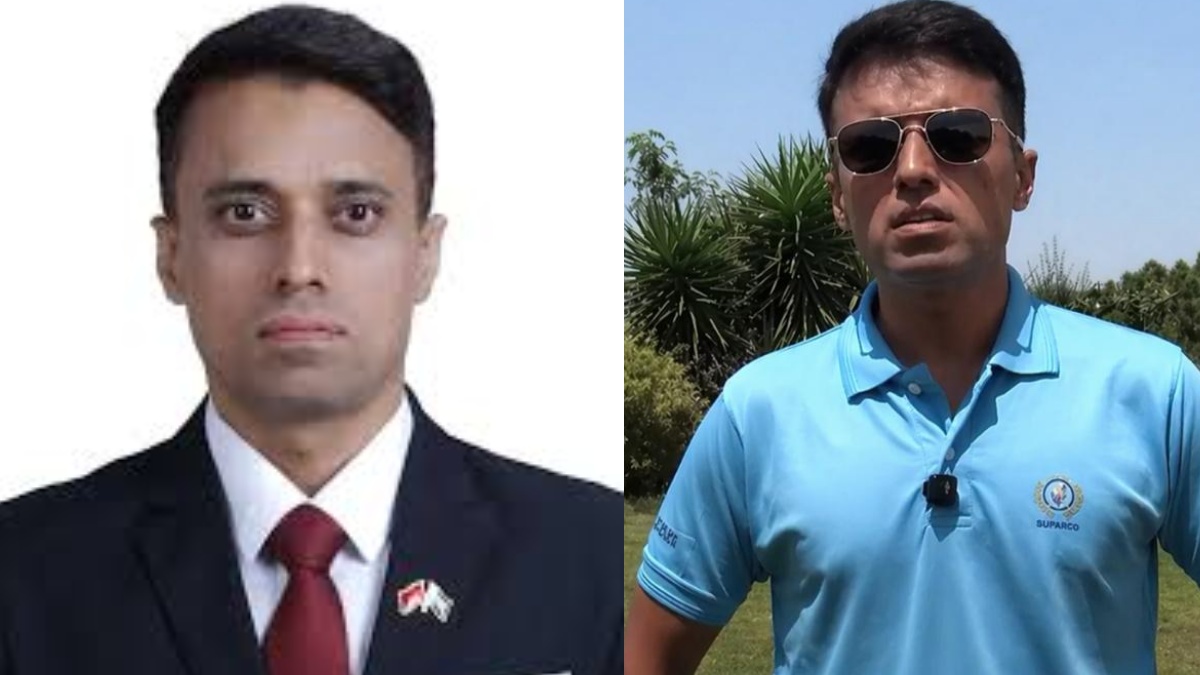
Zeeshan Ali joined China’s Shenzhou-24 crewed space mission (the largest ever for the country) and is a major achievement for Pakistan’s growing space programme as well as its scientific partnership with China.
It is also historic for China’s human spaceflight programme as Ali becomes the first foreign astronaut to visit the country’s Tiangong space station. The Shenzhou-24 spacecraft launched on Today, carrying two Chinese astronauts and the Pakistani astronaut from the Jiuquan Satellite Launch Centre in northwestern China.
Who Is Muhammad Zeeshan Ali?
Muhammad Zeeshan Ali is a 40 year old Wing Commander and pilot who was previously with the Pakistan Air Force (PAF). His aviation background contributed to his selection for the astronaut programme. Military pilots are trained in flight operations, emergency procedures, technical systems and high pressure decision making all skills needed for human spaceflight.
Ali was chosen in April 2026 along with another PAF pilot Khurram Daud as one of Pakistan's first astronaut candidates for China's human spaceflight programme. Both candidates went to China for specialised astronaut training and after selection and evaluation Ali was chosen for the historic Shenzhou-24 mission as payload specialist.
How did Zeeshan Ali become Pakistan’s first astronaut?
The road to Pakistan’s first human spaceflight started with a cooperation agreement between China and Pakistan in February 2025. The agreement set up the framework for selecting and training a Pakistani astronaut for a Chinese crewed space mission.
The selection process was done in three rounds of screening (medical, psychological and technical). Muhammad Zeeshan Ali and Khurram Daud were chosen as the two candidates for astronaut training. In April 2026 they joined Astronaut Center of China in Beijing where they prepared intensively for spaceflight.
They learned spacecraft operations, space station systems, science experiment procedures, emergency response, crew coordination and Chinese language communication. Learning Chinese was especially important because astronauts must understand technical instructions when they are operating a spacecraft and communicate with their fellow crew members during critical operations.
China’s Shenzhou-24 mission: What is Zeeshan Ali’s role?
The Shenzhou-24 mission is special because it was the first time a foreign national joined China’s crewed space programme.
The spacecraft carried three astronauts:
- Muhammad Zeeshan Ali (Pakistan): Payload specialist
- Tang Hongbo (China): Mission commander
- Wu Yi (China): Flight engineer
The spacecraft launched aboard a Long March-2F rocket from the Jiuquan Satellite Launch Centre on 25 November 2026 into its planned orbit carrying crew to China’s Tiangong space station. Ali will spend five to ten days in space then return home on Shenzhou-23 spacecraft with two Chinese astronauts. Reuters+
What scientific experiments will Zeeshan Ali do in space?
Ali’s mission is not just about going into space. He will also be involved in important scientific research between China and Pakistan four collaborative projects in biotechnology and materials science are part of the mission.
Some of the research areas include:
- Advanced materials: Looking at lightweight materials that could enhance spacecraft protection and durability
- Self-healing materials: Materials that can repair microscopic damage and thus potentially increase the lifespan of spacecraft structures
- Agricultural research: How microgravity and space radiation affect seeds and their future uses
- Biotechnology: Microorganisms (photosynthetic cyanobacteria) that could be part of sustainable life-support systems
Ali will install scientific equipment; handle experiment samples and schedule research activities on the space station. Experiments might lead to technologies for space exploration, food production, biotechnology and sustainable living beyond Earth.
Why Is This Mission Important for Pakistan?
Pakistan’s participation in the Shenzhou-24 mission is a major step towards developing human spaceflight capabilities. Pakistan has participated in satellite launches and space research before but putting a national astronaut into orbit around Earth is an entirely new milestone.
The achievement also strengthens cooperation between Pakistan’s Space and Upper Atmosphere Research Commission (SUPARCO) and China’s space programme. Pakistani scientists and research institutions can thus get more exposure to advanced space technologies, astronaut training and scientific experimentation.
The mission could also inspire young students to go into astronomy, aerospace engineering, physics, biotechnology and other scientific fields. For a country seeking to develop technological capability participation in an international human spaceflight programme would give it experience and opportunities for future collaboration.
Pakistan Prime Minister Shehbaz Sharif said it was a historic achievement and national pride. The mission also shows the growing scientific and technological relationship between the two countries.
Is Zeeshan Ali the First Pakistani Ever to Travel to Space?
There is a big difference. Ali is the first Pakistani national to go into orbit around Earth and the first foreign astronaut to visit China’s Tiangong space station but not the first Pakistani-origin person in spaceflight history.
Pakistani adventurer Namira Salim had flown on a Virgin Galactic suborbital spaceflight in October 2023. Ali’s flight was orbital but that flight was just suborbital so Ali’s is a different and more significant milestone in Pakistan’s space history.
What Is Next for Muhammad Zeeshan Ali?
Ali’s historic trip could be the start of a much bigger partnership between Pakistan and China. Talking about the future of space exploration he said “I hope cooperation between two countries from one astronaut and mission to multiple joint flights, lunar and Mars programmes too” would grow.
His journey also shows how international partnerships can open up opportunities for countries that are still developing their human spaceflight capabilities. As China expands its Tiangong space station programme, participation by international astronauts could become an important part of future missions (if it happens).
For Pakistan Muhammad Zeeshan Ali’s journey is more than an individual triumph. It’s the country’s rising ambitions in science, technology and space exploration from military pilot to first Pakistani astronaut to reach orbit around Earth, Ali has written a historic chapter that could inspire a new generation of scientists and space enthusiasts.





Comments