Smart homes are becoming more connected, and smart gadgets are not only useful for convenience. From monitoring your front door remotely to controlling lights and appliances with your smartphone, smart home technology allows for a safer, more efficient and comfortable living environment. There are numerous affordable devices available, and upgrading a home without complete automation is no longer a necessary task.
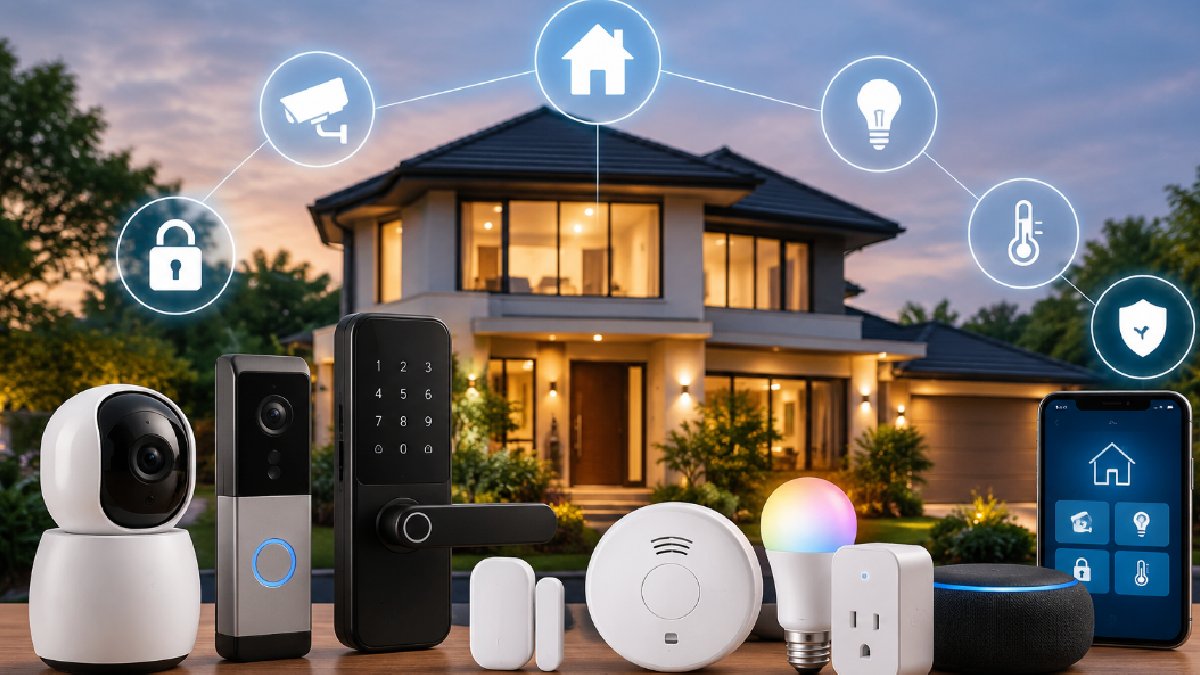
One of the most useful smart home gadgets is a smart security camera. Smart security cameras can monitor a lot of aspects of a property and also help the homeowner to see what is happening from a smartphone app. Many new models have motion-sensing, night vision, two-way audio and activity notifications.
There are also cameras that can distinguish people from other moving objects and eliminate unnecessary alerts. Remote monitoring can benefit families, elderly people, or homeowners who spend a lot of time away from home.
A smart video doorbell is another popular device. Instead of a traditional doorbell (or peephole), we can see who is outside the house with a video doorbell. Depending on the model, you can receive notifications on your phone and communicate with visitors through two-way audio. This can be useful if you are working, traveling, or just can't get to the door immediately.
Video doorbells can also record footage, depending on the device and its storage options.
Smart locks are another gadget that can make a home more convenient while adding modern access-control features. Instead of simply using a key, smart locks can support PIN codes, smartphone access, fingerprints or temporary digital access. Some models allow homeowners to check whether the door is locked remotely.
But when choosing a smart lock, be sure to consider installation costs, battery life, emergency access options and compatibility with your existing door.
For additional protection, smart door and window sensors can be useful. These small devices can detect when a door or window is opened and send an alert to a connected smartphone. They can be placed on entry points that may be hard to monitor continuously. Combined with a security camera or alarm system, they can be part of a larger home-security system.
Smart smoke and carbon-monoxide detectors are also part of home safety. Traditional detectors give an audible alarm, but connected versions can offer smartphone notifications and integration with other smart-home devices. That means homeowners might be alerted even if they are not inside the property, depending on the device and its connectivity.
Such devices are particularly useful for people who travel frequently or have multiple properties to monitor.
Smart plugs are another simple way to introduce automation into a home. Such devices can be used to turn compatible appliances on or off using a phone or in a scheduled manner. For instance, a lamp can be programmed to turn on at a specific time, and some appliances can be controlled remotely. Users should always check the plug's rated load and make sure that the connected appliance is compatible.
Smart lights can also enhance convenience and home ambience. Connected bulbs can be controlled via apps or compatible voice assistants, and users may schedule and switch on lights at will. Automated lighting can also make a house feel occupied when residents are away, but that is only one piece of a bigger security plan.
A smart home hub or voice assistant that supports the different products can bring together devices. Rather than having each device managed on its own, compatible products can be organized into routines. For example, a "leaving home" routine could turn off selected lights and appliances while activating compatible security devices. The exact features are dependent on the ecosystem and the devices used.
When buying smart home gadgets, security and privacy will be at the forefront of the equation, along with features and price. Good products from established manufacturers, firmware updates, strong and unique passwords, and two-factor authentication will be the ones to look for. A device will also need to be able to keep the data locally or send data to cloud servers.
Overall, it really doesn’t take dozens of connected products to build a smarter home. Security cameras, video doorbells, smart locks, or entry sensors can all be helpful, and it’s easy to put them into place. In later years, more connected devices like smart lights, plugs, and safety detectors can be added gradually.