India’s electric vehicle (EV) industry is expected to become one of the country’s largest employment generators in the next decade, and industry experts say the sector could generate 30 to 40 million jobs by 2030.
Hiring in the EV sector will increase by 15 to 20 per cent annually as we move towards sustainable mobility and people with engineering skills in battery technology, energy management, software development and advanced manufacturing will be in high demand.
India’s rapidly expanding EV market creates opportunities in all parts of the value chain from vehicle production and battery production, charging infrastructure, research and development, software engineering and after-sales services. Companies are hiring highly skilled professionals for the long term in order to keep the industry growing.
Experts believe that the shift towards electric mobility is not only transforming the automotive sector but also changing the employment landscape in India. The traditional automotive roles are changing rapidly and there are job profiles in battery management systems, power electronics, electric drivetrain engineering, charging infrastructure design, artificial intelligence, embedded software, data analytics, and energy storage technologies.
Battery manufacturing and battery recycling will be one of the highest employment drivers. With India investing heavily in domestic battery production in a variety of government programs, companies require specialists in lithium-ion technologies, battery chemistry, thermal management, cell manufacturing and recycling. These are job opportunities that are going to continue to be high as the country is looking to lower reliance on imported battery components.
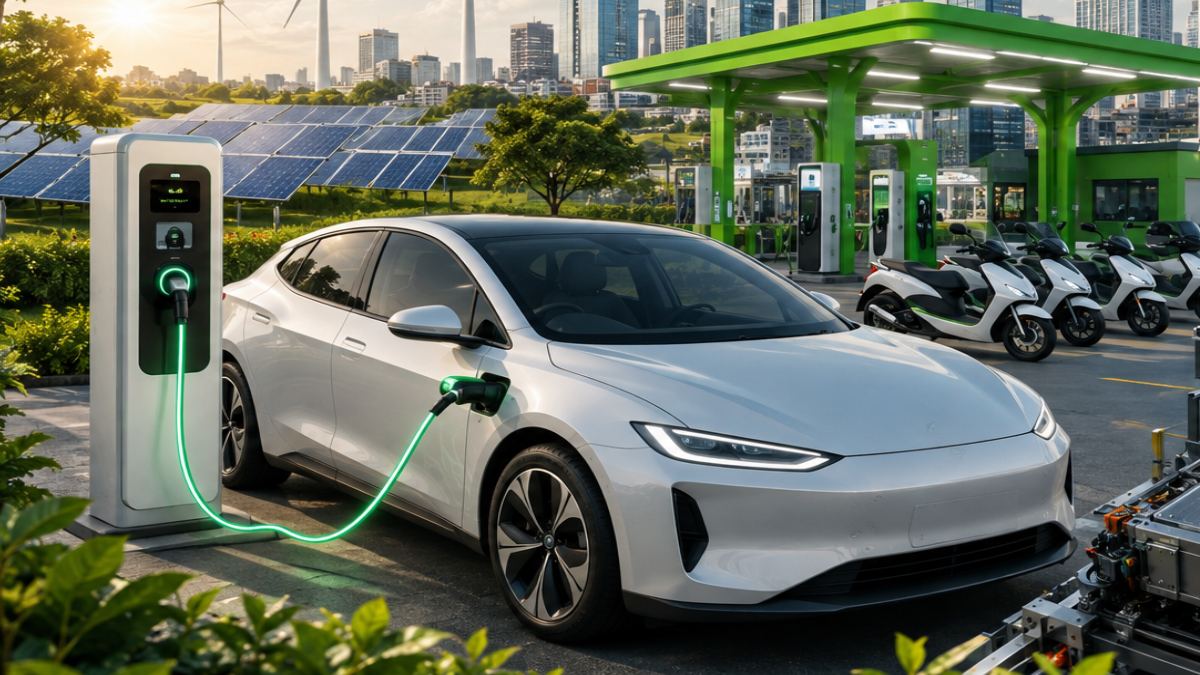
Charging infrastructure is another fast-growing sector and has many new jobs that are being created. As EV penetration increases in urban and rural markets, charging station installation, maintenance, operations and network management will require a large workforce of electrical engineers, technicians, civil engineers, project managers and renewable energy experts.
Government initiatives have played a crucial role in accelerating India's EV ecosystem. Incentive schemes for electric mobility, battery manufacturing, localisation of components and clean energy adoption have brought in major domestic and international companies to invest in the country. As manufacturing facilities grow, the demand for skilled labour in production, logistics, quality control and supply chain management will be significant.
Apart from engineering jobs, the EV sector is also creating opportunities in software development and digital technologies. Connected technologies, intelligent energy management systems, over-the-air software updates, advanced driver assistance systems (ADAS), telematics and predictive diagnostics are becoming the foundation of modern electric vehicles. Software developers, cybersecurity experts, cloud engineers, AI experts and machine learning professionals are now important to the industry.
The transition to electric mobility is also opening opportunities for startups to work on innovative mobility solutions, battery swapping, fleet management, charging software and energy optimisation systems. The increasing startup ecosystem in India will bring thousands of high-value technology jobs as well as entrepreneurship and innovation.
Educational institutions and skill development organisations are also adapting to the changing employment landscape by offering specialised courses on electric mobility, battery engineering, renewable energy, automotive electronics, and sustainable transportation. And as technology changes rapidly, as an industry expert said, upskilling and reskilling will be very important.
Small and medium enterprises (SMEs) are likely to play an equally significant role in employment generation. Component manufacturers providing electric motors, controllers, power electronics, charging equipment, wiring systems, lightweight materials and vehicle electronics will continue to expand production capacity, creating more jobs throughout the supply chain.
The environmental benefits of electric mobility in the future also boost the industry’s prospects. EVs can cut greenhouse gas emissions and improve urban air quality, reduce dependence on imported fossil fuels (and hence support India’s global climate goals) with greater adoption. This combination of economic growth and environmental sustainability makes the electric vehicle industry one of the nation’s most promising industries.
But experts also point out that addressing the skills gap remains a critical challenge. With firms looking for highly specialized technical experts, collaboration between industry, academia and government agencies will be vital to develop a future-ready workforce. Investments in vocational training, certification programs and industry partnerships can resolve this gap and make sure that India's workforce is ready for new opportunities.
The next decade will be a crucial time for India's electric mobility revolution. With more consumer adoption, expanding charging networks, supportive government policies, tech innovation and huge private investment, there are going to be big economic implications for India’s electric mobility ecosystem.
As the growth rate is now expanding, 30 to 40 million job opportunities in the future are going to emerge in the electric vehicle industry which would create jobs for manufacturing, engineering, technology, renewable energy, logistics, research and services. With growing demand for specialized skills, the EV sector is also going to be a game changer in driving the future of work in India to be cleaner, smarter, and more sustainable (and that will be an investment for the future).