
In a judgment that has drawn attention to the question of protest and dissent in educational institutions, the Kerala High Court has reiterated its 2017 observation that political activities such as dharnas, hunger strikes and other forms of Satyagraha have no place in a constitutional democracy, much less in an educational institution.
"We would like to observe is that political activities like Dharna, hunger strikes and other practices like Satyagraha have no place in a constitutional democracy, much less in academic institutions. Anyone indulging in the said activities in an educational institution would make himself liable to be expelled and/or rusticated. Educational Institutions are meant for imparting education and not politics. By their political ambition, the political parties cannot hold to ransom the educational institution or the right of the civilized students to receive education," the 2017 judgment read.
The same judgment had referred to the words of Dr. B.R. Ambedkar, who, while addressing the Constituent Assembly on Nov 25, 1949, said, "If we wish to maintain democracy not merely in form, but also in fact, what must we do? The first thing in my judgment we must do is to hold fast to constitutional methods of achieving our social and economic objectives. It means we must abandon the bloody methods of revolution. It means that we must abandon the method of civil disobedience, non-cooperation and satyagraha."
A two-judge Division Bench comprising Justice Anil K. Narendran and Justice Muralee Krishna S. set aside a Single Judge's interim order that had permitted 16 suspended students of Sree Sankaracharya University of Sanskrit, Kalady, to appear for examinations scheduled to begin on Nov 4.
The university's theatre group and student activists were involved in a protest on the campus on Aug 13, during a Syndicate meeting. According to the university, the students staged a symbolic funeral of Vice-Chancellor Ciza Thomas and allegedly obstructed and physically assaulted her as she was leaving her office. There were also allegations that the students attempted to damage her vehicle.
However, the students disputed the university's account, maintaining that the protest involved a mock funeral of the stage lights, which they claimed were not functioning. All allegations are denied by the students alleging that it was a more symbolic and interpretive protest. The incident led to the registration of two FIRs at the Kalady police station.
Following the incident, all 16 students were suspended on Sept 1, and the university initiated disciplinary proceedings against them. An enquiry committee conducted hearings on Sept 29 and 30 and submitted its report. However, the report could not be placed before the Syndicate for approval because of procedural defects.
The suspended students approached the High Court, arguing that the prolonged suspension and their exclusion from the campus were affecting their studies and preventing them from attending classes. With examinations approaching, they sought permission to appear for the papers.
On Oct 30, a Single Judge passed an interim order directing the university to accept their examination fees and allow them to appear for the examinations, subject to the final outcome of their pending petition.
The university challenged this order before the Division Bench, arguing that the students had not fulfilled the eligibility requirements, including the prescribed minimum attendance and internal assessment requirements. It also contended that the deadline for examination registration had passed on Oct 23 and that the students had not completed the required application process.
On Nov 3, the Division Bench allowed the university's appeal and set aside the Single Judge's interim order. The Bench observed that the students had not placed sufficient pleadings and supporting material before the court to establish their eligibility to write the examinations. It also held that the interim order had effectively granted the main relief sought in the petition without establishing that the students fulfilled the applicable university regulations.
The 2017 judgment and Ambedkar's words
The Division Bench referred to an earlier Kerala High Court ruling from 2017 in Dr. Antony Thomas v. V.M. Muhammed Rafique and Others, in which the court had observed that political activities such as dharnas, hunger strikes and Satyagraha had no place in a constitutional democracy, particularly within educational institutions.
The 2017 ruling had stated that educational institutions were meant for imparting education and not politics, and that students engaging in such activities could face expulsion or rustication.
The latest ruling has brought the earlier observations back into focus in the context of the suspended students' dispute with the university.
Students move the Supreme Court
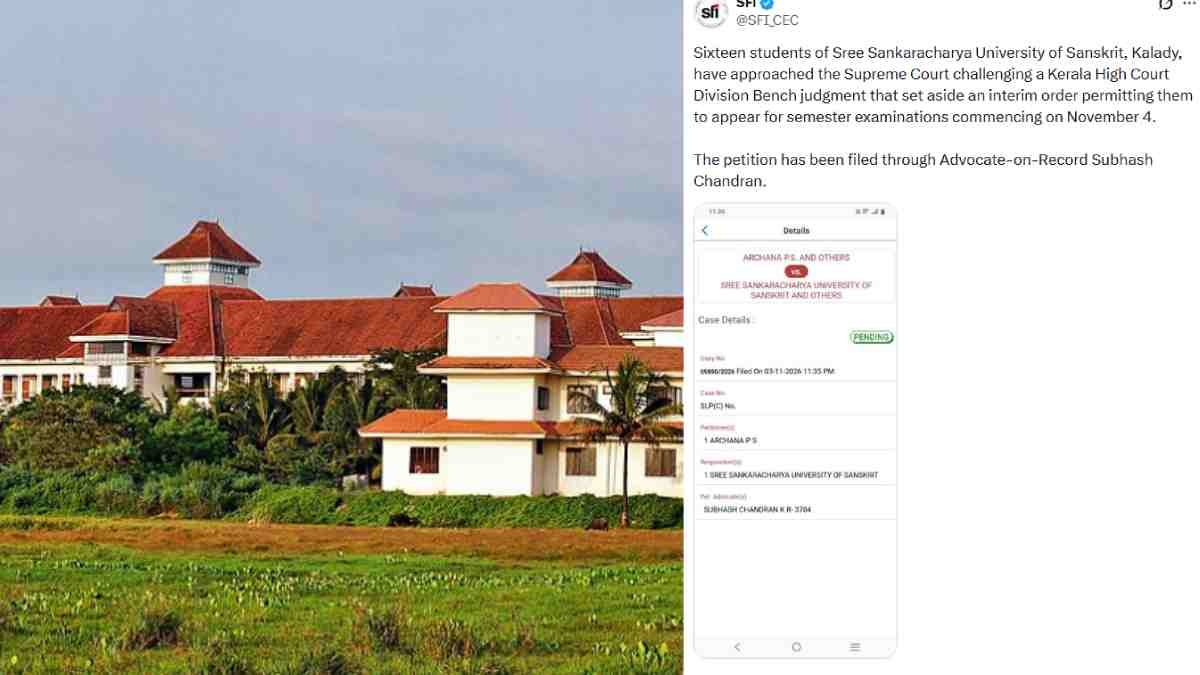
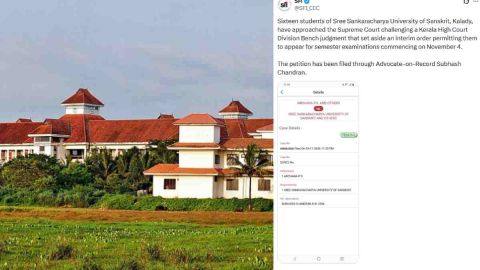
Following the Division Bench's decision, the 16 students approached the Supreme Court, challenging the Kerala High Court's order and seeking permission to appear for their examinations. They have sought interim relief, including permission to write the remaining papers and special examinations for any papers they may miss.
The students have argued that the prolonged suspension prevented them from attending classes and that the loss of attendance was a consequence of the university's own decision to keep them away from campus.
Meanwhile, the Students' Federation of India (SFI) has extended solidarity to the suspended students. The students also began a hunger strike outside the university as the dispute escalated.
Comments