A new workplace trend known as “quiet quitting” is rapidly gaining attention across India, raising concerns among employers and industry experts. Despite the name, quiet quitting does not mean employees are resigning from their jobs. Instead, it refers to a growing mindset where individuals do only the bare minimum required, without showing enthusiasm, initiative, or emotional investment in their work.
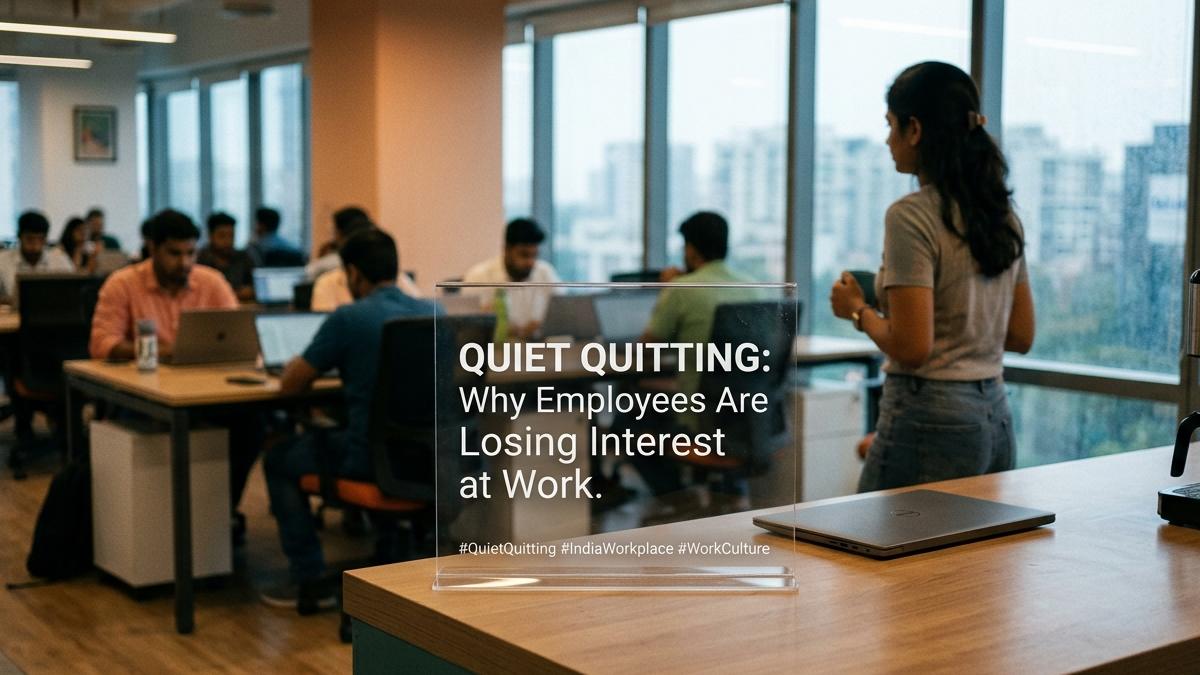
In recent times, India has emerged as one of the countries where this trend is becoming increasingly visible. Employees are still physically present at the workplace, but mentally disengaged working mechanically just to earn their salaries rather than to grow professionally or contribute meaningfully.
What is Quiet Quitting?
Quiet quitting is a behavioral shift where employees limit themselves strictly to their job descriptions. They avoid taking on extra responsibilities, decline overtime, and refrain from going beyond what is required. Psychologists describe it as a coping mechanism rather than outright laziness, often rooted in deeper workplace dissatisfaction.
Key Reasons Behind the Trend
1. Work Overload and Stress
Many employees report being overwhelmed with excessive workloads and long working hours. From early mornings to late nights, work often consumes most of their time, leaving little room for personal life. This imbalance leads to burnout, mental fatigue, and eventually disengagement.
2. Poor Work-Life Balance
A lack of time for family, hobbies, and rest is pushing employees toward emotional exhaustion. When individuals feel their personal lives are being sacrificed for work, they begin to detach mentally as a form of self-preservation.
3. Toxic Work Culture
One of the biggest contributors is unhealthy workplace environments. Employees often feel undervalued despite working hard. Lack of recognition, workplace politics, and pressure from superiors can create frustration, leading to a “just do enough” attitude.
4. Salary vs Cost of Living Gap
Rising living costs without proportional salary increases have left many employees disillusioned. When extra effort does not translate into better pay or growth, workers naturally limit their output to match their compensation.
Impact on Careers and Organizations
While quiet quitting may seem like a short-term coping strategy, experts warn that it can harm long-term career growth. Employees who disengage from their work miss out on learning opportunities, skill development, and career advancement. Over time, this can lead to stagnation and reduced employability.
For organisations, the impact is equally serious. Reduced productivity, lack of innovation, and declining team morale can affect overall performance and competitiveness.
What Can Be Done?
Addressing quiet quitting requires action from both employers and employees. Companies must prioritise employee well-being by fostering a supportive and transparent work environment. Recognising effort, offering fair compensation, and encouraging work-life balance are essential steps.
Managers should actively engage with their teams, understand their concerns, and provide opportunities for growth. On the other hand, employees should communicate their challenges openly and seek roles or environments that align with their goals and values.
Ultimately, quiet quitting is not just a trend; it is a signal that something is broken in the workplace. Fixing it requires empathy, better leadership, and a renewed focus on human-centred work culture.