India's job market is undergoing a major transformation as companies compete for skilled professionals across technology, finance, healthcare and several emerging industries. Salary levels are increasingly influenced by specialised skills, experience, location and the ability of employees to work with new technologies. While traditional high-paying sectors continue to offer attractive packages, the growing adoption of artificial intelligence, automation and digital services is creating new opportunities for professionals with in-demand expertise.
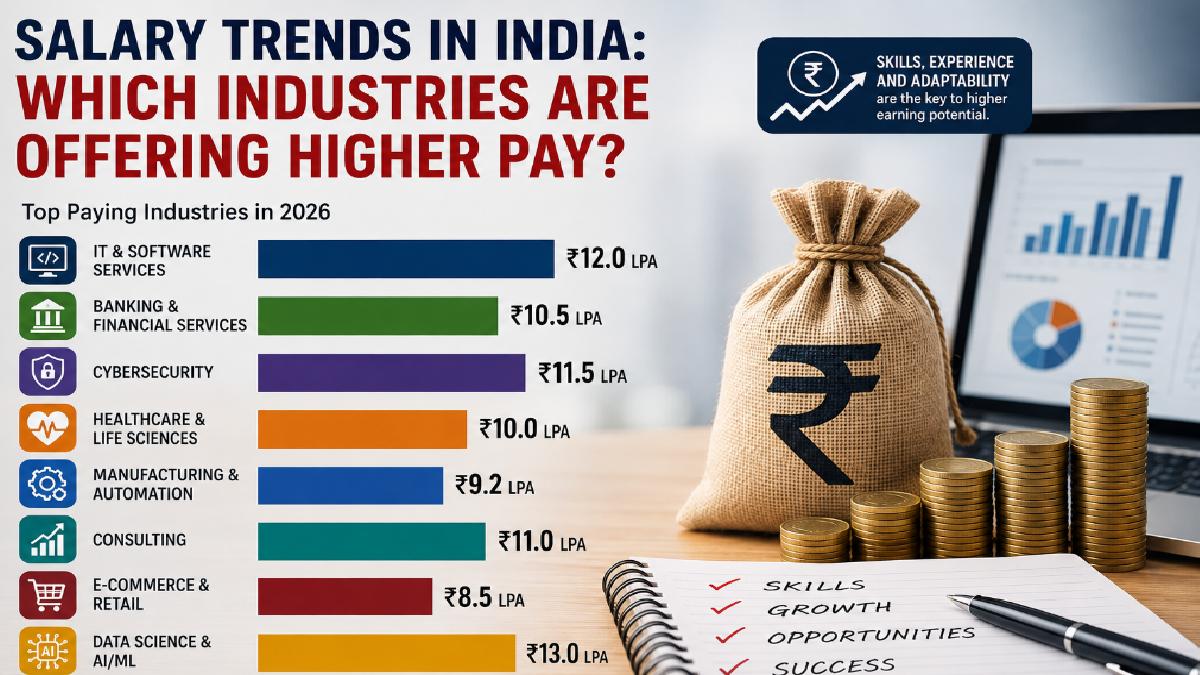
Technology remains one of the most important sectors for high-paying jobs in India. Software development, cloud computing, cybersecurity, data science and artificial intelligence continue to create strong demand for skilled professionals. Companies are looking for employees who can develop digital products, manage large amounts of data and protect organisations from growing cybersecurity threats.
Artificial intelligence and machine learning have become particularly important areas for salary growth. As businesses introduce AI-powered tools and automation systems, professionals with expertise in machine learning, generative AI, data engineering and AI product development are becoming increasingly valuable. Employees who combine technical knowledge with practical business understanding may have an advantage in the competitive technology job market.
Cybersecurity is another field offering promising salary opportunities. With companies becoming more dependent on digital infrastructure, protecting customer information and business systems has become a major priority. Cybersecurity analysts, ethical hackers, security engineers and cloud security specialists are among the professionals with skills that can command competitive salaries.
The financial services sector also remains a major source of high-paying employment opportunities. Banking, investment management, insurance and financial technology companies are increasingly investing in digital platforms. This has created demand not only for traditional finance professionals but also for specialists in financial technology, data analytics, risk management and digital payments.
Professionals working in investment banking, private equity, portfolio management and specialised financial analysis can earn attractive salaries, particularly as they gain experience. The expansion of fintech companies has also opened opportunities for software developers, product managers and data professionals interested in the financial sector.
Healthcare is another industry where demand for skilled professionals continues to grow. Doctors and medical specialists have traditionally occupied some of the higher-paying positions, but technology is also creating new roles within the sector. Healthcare data analysts, biotechnology professionals, medical researchers and specialists working with digital health platforms are becoming increasingly important.
India's pharmaceutical and biotechnology industries are also generating opportunities for professionals with specialised scientific and technical knowledge. Research and development roles can offer strong career growth, particularly for individuals with advanced qualifications and experience.
Manufacturing is changing as companies adopt automation, robotics and smart technologies. Traditional manufacturing jobs are being supplemented by roles involving industrial automation, robotics, engineering and supply chain management. Professionals who understand modern production systems and digital technologies may find improved career opportunities in this evolving sector.
The automobile industry is also experiencing a transition, particularly with the growing interest in electric vehicles and connected technologies. Engineers specialising in electric vehicle systems, battery technology, embedded software and automotive electronics could benefit from new employment opportunities. As companies invest in future mobility, specialised skills are likely to become increasingly important.
The consulting industry continues to offer competitive salaries for experienced professionals. Management consultants, business analysts and strategy professionals are hired by companies to solve complex problems and improve business performance. Consultants with expertise in technology, digital transformation and data analytics may find particularly strong demand.
Another important trend is the growing value of product management. Technology companies increasingly need professionals who can understand customer requirements, work with engineering teams and develop successful products. Product managers who combine technical awareness, business knowledge and communication skills can command attractive compensation packages.
However, salary growth is not determined by industry alone. Experience plays a major role in determining how much a professional earns. Entry-level employees may begin with moderate salaries, while professionals with several years of experience and specialised skills can see significant increases.
Location can also influence salary levels. Major technology and business centres such as Bengaluru, Hyderabad, Mumbai, Delhi-NCR and Pune often offer higher compensation because of the concentration of companies and competition for talent. At the same time, the expansion of remote and hybrid work has created opportunities for some professionals to work for organisations outside their immediate location.
Employees are also increasingly evaluating compensation beyond their basic salary. Bonuses, stock options, health benefits, flexible work arrangements and learning opportunities have become important factors when choosing a job. For professionals working in startups and technology companies, equity-based compensation can also play a significant role.
For job seekers, the key to achieving higher salary growth is developing skills that are in demand. Artificial intelligence, cloud computing, cybersecurity, data analytics, financial technology and digital product development are among the areas that could offer promising opportunities.
At the same time, employers continue to value human skills such as communication, leadership, problem-solving and adaptability. Professionals who combine specialised technical expertise with strong interpersonal abilities may be better positioned for senior and higher-paying roles.
India's salary landscape will continue to evolve as technology reshapes industries and businesses compete for skilled talent. While technology and finance remain major high-paying sectors, healthcare, manufacturing, electric mobility, cybersecurity and emerging digital industries are also creating attractive career opportunities.
Ultimately, the industries offering the highest pay are often those facing a shortage of specialised talent. For Indian workers, continuous learning and skill development could be the most effective way to remain competitive and improve long-term earning potential in a rapidly changing job market.