
Mohammed Niyas Jouhari (34), founder and director of the Habibiyya Islamic Academy in Ochira, Kollam, has been arrested under the Protection of Children from Sexual Offences (POCSO) Act for allegedly sexually assaulting a 16-year-old girl.
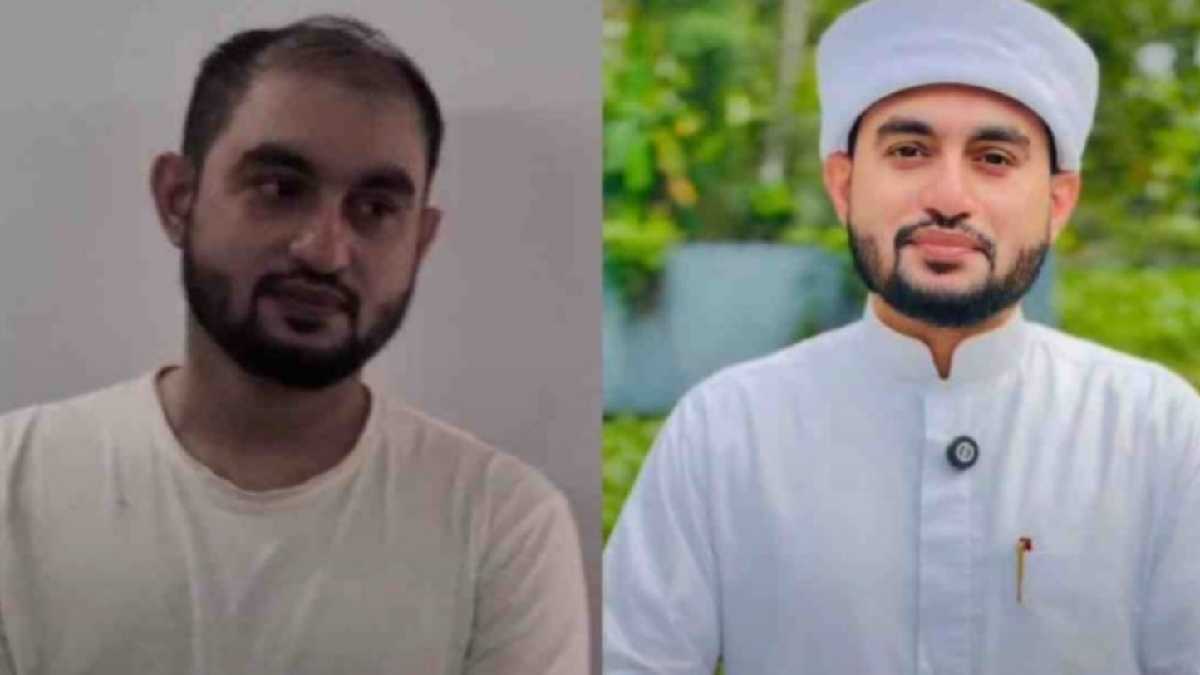
Jouhari, who is also a religious preacher and vlogger, regularly posts motivational, spiritual and religious content across social media platforms, including a YouTube channel which alone had over 2.25 lakh subscribers, Instagram and Facebook.
According to the police investigation, the survivor alleged that the sexual abuse took place during Oct and Nov 2025. Jouhari had reportedly first come into contact with the girl through her paternal grandmother, after allegedly convincing the family that he possessed spiritual healing abilities and could help treat the grandmother's health problems through prayers and religious rituals.
The accused allegedly gained the family's trust by claiming that the grandmother was affected by supernatural forces and required spiritual intervention. The survivor was subsequently allegedly sexually assaulted at different locations, including the academy and premises where the accused stayed.
According to the survivor's statement, Jouhari took her to different locations under the pretext of conducting prayers and healing rituals, while the family believed that he was helping them.
The case came to light after the survivor confided in her friends about the alleged abuse. Her friends reportedly helped her approach the police and disclose the incident to her family. Following her complaint, the police registered a case and arrested Jouhari on Nov 1. He was subsequently remanded to judicial custody.
Further Investigation and Other Possible Victims.
The police investigation has since expanded, with preliminary findings raising suspicions that the survivor might not be the only person subjected to similar exploitation.
Investigators are reportedly examining the accused's mobile phones and other electronic devices to establish whether there are additional victims or evidence of further offences. Police are also looking into the financial transactions and functioning of the Islamic academy.
Reports have also detailed alleged threats made against the survivor to prevent her from speaking about the incident. An audio message reportedly attributed to Jouhari has surfaced, in which a voice tells the girl not to disclose what happened to anyone.
The accused has been booked under provisions of the POCSO Act and the Bharatiya Nyaya Sanhita (BNS), including provisions relating to sexual offences and criminal intimidation, according to reports.
His institution is also under investigation after the arrest, as heavy financial transactions have been noted. Reportedly, the institution was closed, and 40 residential seminary students enrolled at the institute were placed under administrative care by the child welfare committee.
Religious Authority, Trust and Child Protection.
Cases like this raise serious questions about the misuse of religious authority and the exploitation of people's faith. We should never blindly trust individuals who claim to possess supernatural or spiritual healing abilities, particularly when they use religion to gain access to vulnerable people and exploit the trust placed in them.
An individual may publicly present themselves as deeply religious, spiritual or devoted to a particular faith, but that public image should never place them above scrutiny or accountability. When individuals use religious institutions and their positions of authority to exploit others, it becomes necessary to ask what religious communities and institutional authorities are doing to prevent such incidents.
Families and communities must also ensure that children are protected and have safe spaces to speak about abuse without fear of being blamed, questioned or silenced.
In cases registered under POCSO, the accused is often someone already known to the survivor or someone who has been trusted by the family and the adults around them. This familiarity can make it particularly difficult for children to recognise exploitation or come forward with their experiences.
In this case, the alleged abuse took place in 2025, but the survivor reportedly confided in her friends before approaching the authorities and her family. This highlights the importance of building an environment in which children feel comfortable seeking help from people they trust.
We must be careful about whom we introduce into our children's lives as trusted adults, while also ensuring that children know they can speak up if someone crosses their boundaries. Families should be able to listen, support and protect survivors rather than allowing fear, shame or social pressure to prevent them from coming forward.




Comments