
Iran said the 2026 US midterm elections were a rejection of war after Democrats made major gains and took control of both chambers of Congress. Trump admitted that the conflict with Iran was behind Republican losses in the November 3 elections.
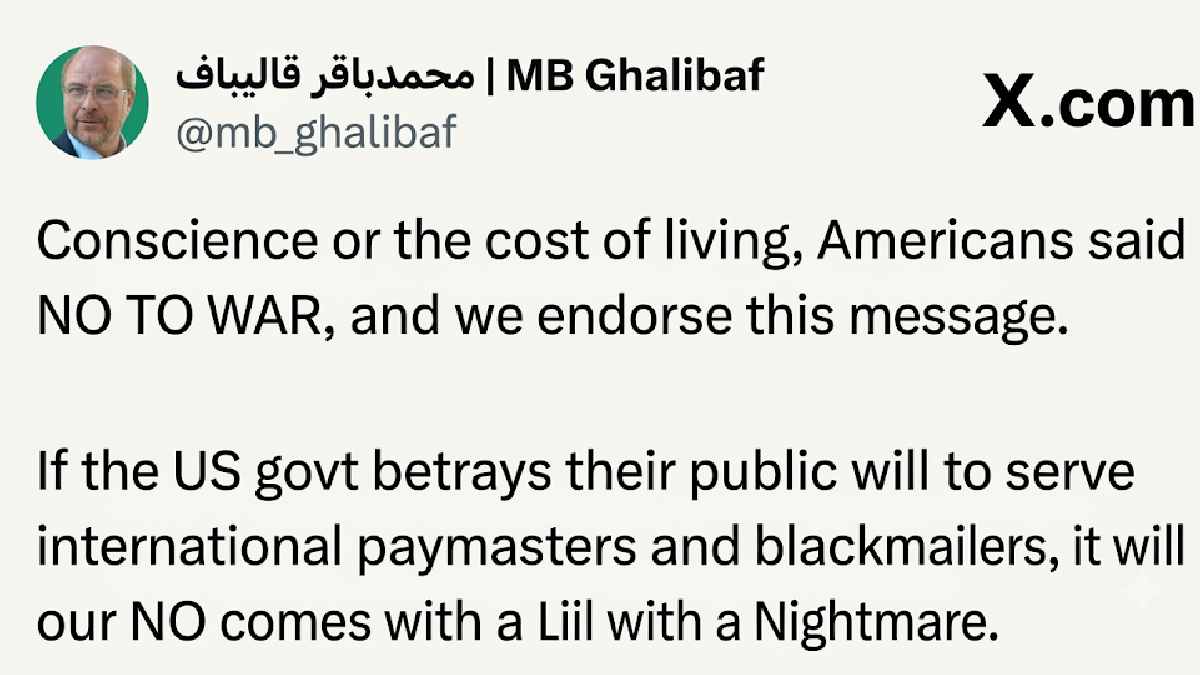
Iran’s chief negotiator and Parliament Speaker Mohammad Bagher Ghalibaf said the election results had sent a clear message from American voters against military conflict.
“Conscience or the cost of living Americans said NO TO WAR and we agree with them,” Ghalibaf wrote on X Wednesday, November 4.
He also warned the US administration not to ignore public opinion. Ghalibaf said if Washington acted against the wishes of its people in order to serve international interests it would face serious consequences.
His comments came after Democrats won control of the House and Senate in the midterm elections. It is a major blow to Trump and the Republican Party which entered the elections hoping to hold onto their legislative majorities as Democrats took control of the House and Senate for the first time since 1994.
Trump acknowledges Iran war's impact
Trump also mentioned the election setback when he said “the conflict with Iran was a factor in the Republican Party’s performance.”
“I think part of it was Iran,” the US President said in an interview with Fox News when asked about the reasons behind the election results.
But Trump defended his administration’s military actions by saying voters knew why Iran shouldn’t get nuclear weapons. He also said the importance of his actions would become clearer over time.
In a separate interview with The Wall Street Journal, Trump also said Iran was one of the reasons Republicans lost. He didn’t regret starting the military campaign.
Iran conflict and rising economic concerns
The conflict between the US, Israel and Iran began on February 28, 2026 after US-Israeli strikes against Iranian targets. Iran responded with attacks spreading tensions across the Middle East.
The prolonged conflict has also had economic effects as well, particularly in global energy markets. Disruptions around the Strait of Hormuz an important route for international oil shipments led to higher energy prices.
Fuel prices rose and household expenses became important issues for American voters in the run-up to the midterm elections. The effect of the war on everyday living costs was also a political issue for Republicans.
The election outcome reflected broader voter concerns inflation, economic conditions, government policies and how the administration handled international conflicts.
Democrats gain control of Congress
The Democratic victories will change Washington politics for the next two years of Trump’s presidency.
With control of both chambers Democrats will have more influence over legislation, congressional investigations, government funding and oversight of the administration.
The results could also make it harder for Trump to push his domestic policy priorities without negotiating with Democrats in Congress.
Iran’s response gives another international dimension to the election result and shows how the conflict has become part of the wider political debate in the United States.
Ghalibaf framed the result as a rejection of war but the election result does not prove that military policy was the issue for voters. Economic issues and other domestic issues were also part of political contest.
For now Trump’s acknowledgement of the conflict’s electoral consequences and Iran’s response put the future of the war back on political agenda.




Comments