When you think of oxygen sources on Earth, big forests like the Amazon rainforest come to mind. While forests are fundamental to life on Earth, there is another (sometimes overlooked) oxygen powerhouse that quietly supports every living creature on Earth.
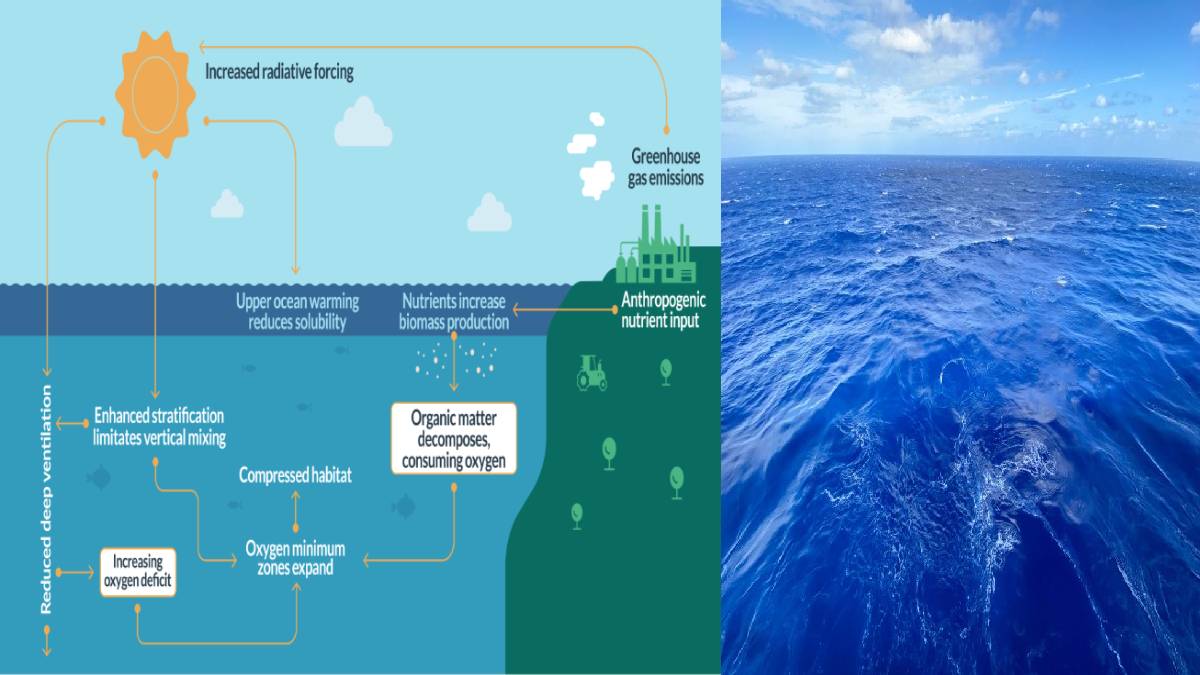
And as much as 50 percent of oxygen on earth is produced by the ocean, so that almost every second breath we take is made possible by marine life. That is a hard fact to ignore and shows how the oceans play an enormous role in life and in maintaining the delicate ecological balance the planet has to offer.
Every second breath you draw comes from the ocean.
— Massimo (@Rainmaker1973) July 15, 2026
While forests are frequently hailed as the “lungs of the Earth,” they are not the main source of our planet’s oxygen. That distinction belongs to the ocean—specifically to the countless trillions of microscopic marine organisms… pic.twitter.com/s62KceszeH
The real heroes of this oxygen production are not whales, fish, or coral reefs but microscopic organisms called phytoplankton. These tiny, plant-like creatures float near the ocean’s surface and produce energy from sunlight, carbon dioxide and water to produce oxygen as a byproduct.
Each phytoplankton organism is invisible to the naked eye, but they are one of the largest biological systems on Earth. The billions of microscopic organisms living in those microscopic cells constitute the bulk of our oceans and produce oxygen while absorbing huge amounts of carbon dioxide from the atmosphere.
Apart from phytoplankton, marine algae and cyanobacteria also play a very important role in oxygen production worldwide. All of them are the basis of marine food webs that feed everything from tiny zooplankton to the largest whales.
Oceans are important because, in addition to oxygen production, they are one of the most important climate regulators on Earth. They absorb more than 90% of the excess heat from global warming and account for about a quarter of the carbon dioxide produced by human activities every year. Without oceans, global temperatures would rise far faster than they already are.
Healthy oceans also support biodiversity on such a large scale. Scientists believe that more than 80% of all life on Earth lives in or depends on marine ecosystems (both directly and indirectly). Coral reefs, mangrove forests, seagrass meadows, and open ocean habitats provide food, shelter, and breeding sites for many species.
Humans are also dependent on healthy oceans. Three billion people depend on seafood as one of the largest sources of protein worldwide, and billions of people depend on the ocean for their income through fishing, shipping, tourism, and coastal work. Oceans also influence rainfall patterns that support agriculture worldwide.
At present, this life-support system is under threat. Climate change is warming ocean waters with coral bleaching and changing marine ecosystems and phytoplankton populations. Ocean acidification is making it difficult for many marine organisms to produce shells and skeletons due to a buildup of carbon dioxide.
Pollution is a serious problem. Millions of tonnes of plastic waste are washed into our oceans every year, destroying marine wildlife and also contaminating our ecosystems. Agricultural runoff, chemical pollution, and waste we leave untreated all adversely affect water quality and marine organisms, as well as human beings.
Overfishing has also put a lot of pressure on fish populations and disturbed the marine ecology. Unsustainable fishing practices not only undermine biodiversity but also the resilience of ocean food webs that depend on healthy ecological interactions.
With environmental science and development at the forefront, governments, scientists and environmental organisations are looking to establish marine protected areas, promote sustainable fisheries, reduce plastic pollution in the oceans and invest in ocean science and research. National programs like the United Nations Decade of Ocean Science for Sustainable Development are at the forefront to help us understand the ocean and make conservation efforts better around the world.
People have a role to play in the protection of marine ecosystems, and we do that through the elimination of single-use plastics and the promotion of sustainable seafood, water conservation, carbon emissions reduction, and beach cleanups.
Every second breath we take from the ocean is the most potent symbol of the very deep relationship humans have with the ocean. Every breath we take is connected to millions of microscopic organisms that live in the ocean beneath the waves.
With climate change and human action continuously changing the environment, protecting the world’s oceans is not just about saving the wildlife but also about the things that make human life on Earth possible. Clean air, healthy climates, and an economically sound future are what healthy oceans look like in the future.