
Tesla has once again solidified itself as a leader in American manufacturing, with vehicles being among the most American-made cars in the United States. From vehicle assembly to battery production and component sourcing, the electric vehicle (EV) manufacturer has built an extensive domestic supply chain that places it at the forefront of U.S. automotive production.
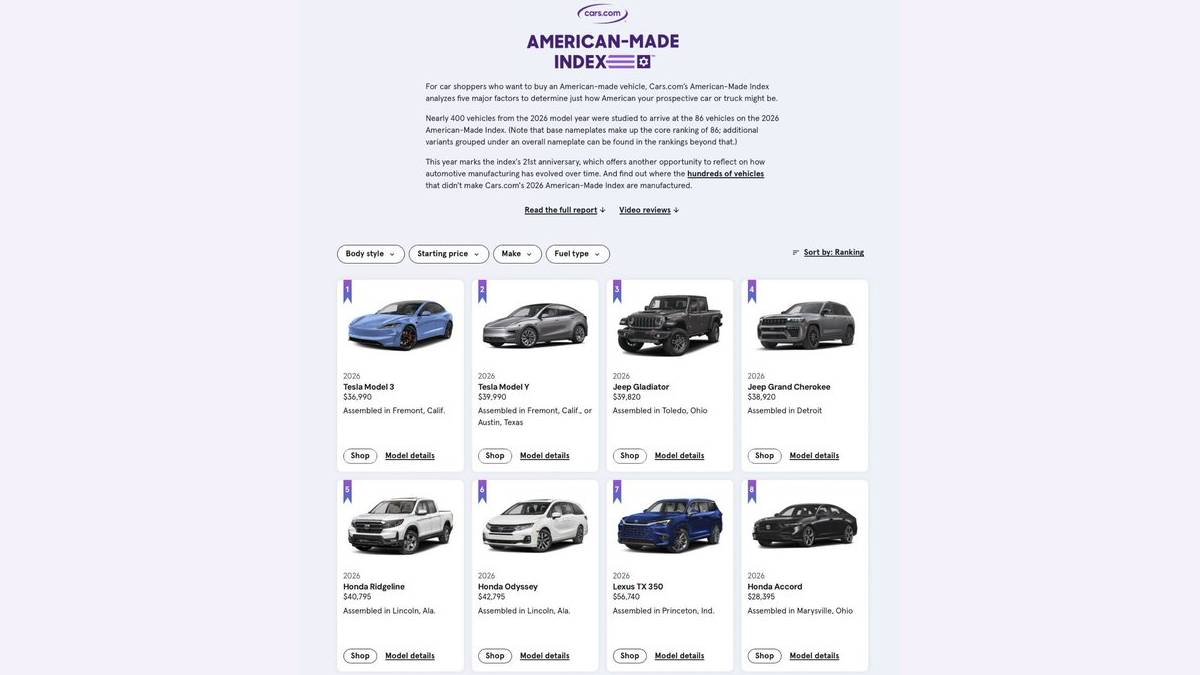
Independent industry rankings have identified Tesla’s vehicles—like Model Y, Model 3, Model S, and Model X—as the top American-produced cars. These rankings consider things like the proportion of U.S. and Canadian parts, the place in which cars are made, engine and battery origin, transmission production, and local workforce.
TESLA BUILDS THE MOST AMERICAN-MADE CARS
While many automakers rely heavily on foreign parts and overseas manufacturing, Tesla continues to lead in American production and domestic content.
According to the https://t.co/vTLeIbvkaj American-Made Index, Tesla has ranked #1… pic.twitter.com/pSOo2xFUPy— Tesla Owners Silicon Valley (@teslaownersSV) July 15, 2026ALSO READ
Unlike most global car companies that sell different kinds of vehicles in different countries, Tesla assembles most of its U.S. market vehicles in the U.S. Its main manufacturing facilities in Fremont, California, and Gigafactory Texas near Austin are at the heart of making vehicles for North American customers and producing thousands of American jobs.
Tesla's manufacturing strategy extends beyond vehicle assembly, as well. Tesla has invested heavily in manufacturing key components—battery packs, electric drive units, power electronics, and structural vehicle components—in the U.S. The company has also invested heavily in making key components in the U.S. to ensure the production is localized and the supply chain is robust and reliable. It is a vertically integrated approach to manufacturing that reduces reliance on outsourcing to outside suppliers and, in turn, increases production and the resilience of the supply chain.
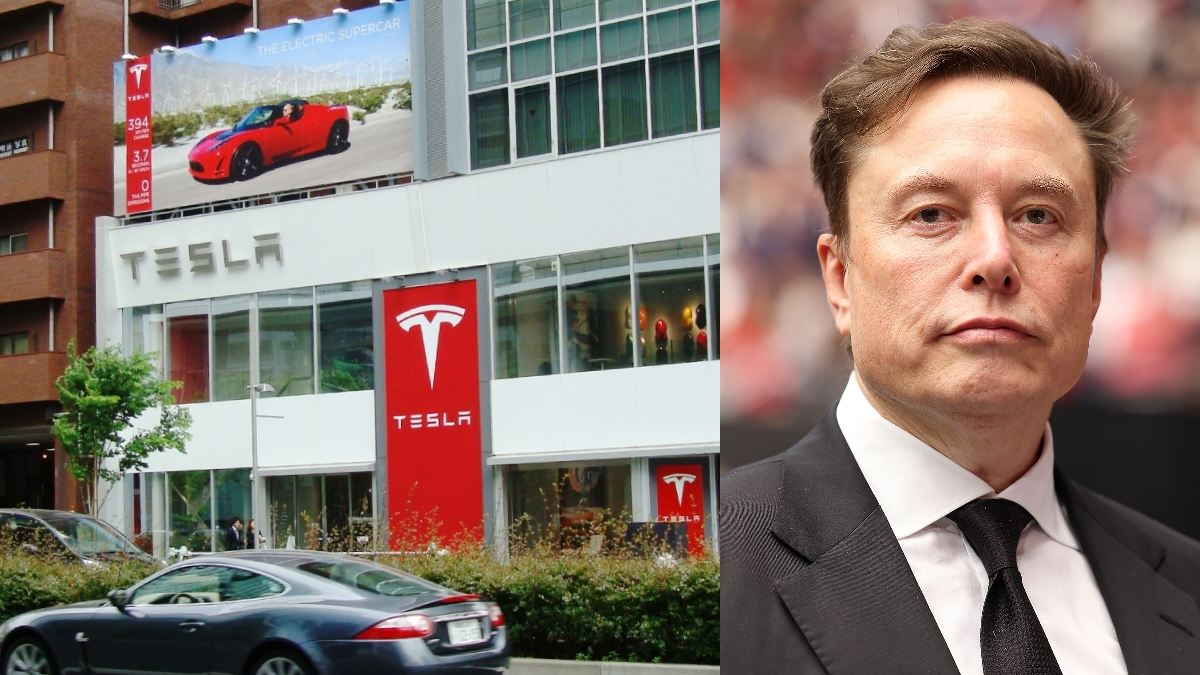
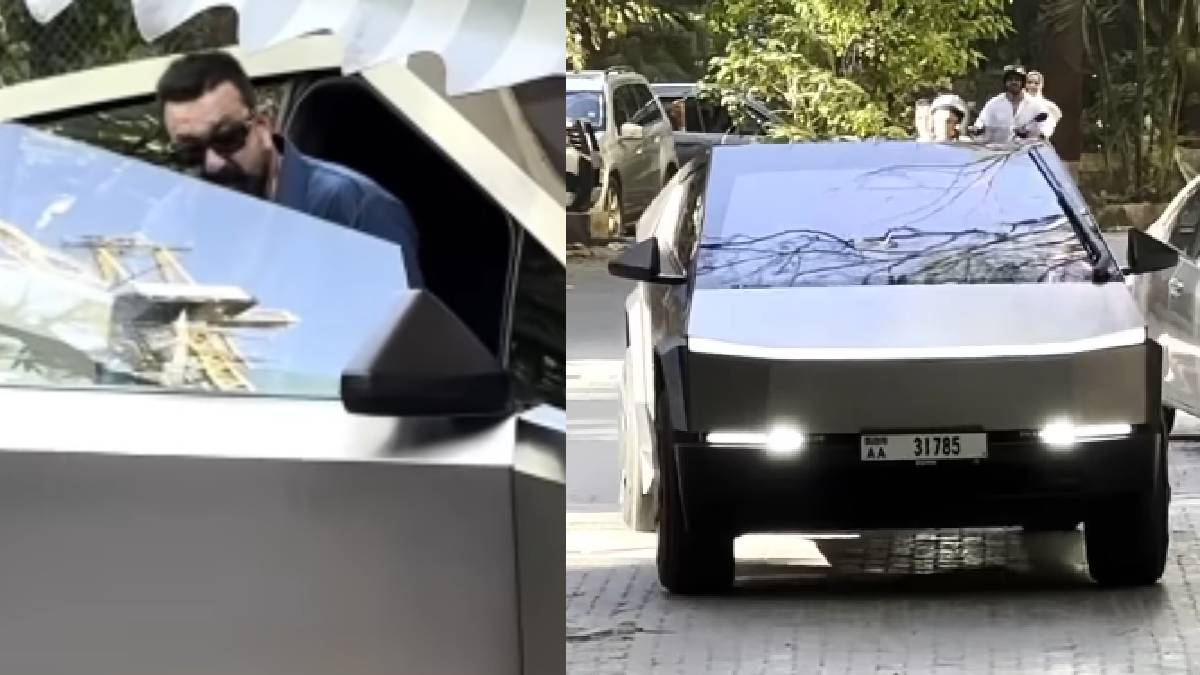
The Gigafactory Texas is one of the largest automotive manufacturing facilities in the world. The factory provides the popular Model Y and the futuristic Cybertruck and is a center of battery innovation and advanced manufacturing technologies. Tesla has also implemented large-scale automation, AI-based production systems, and massive casting machines known as “Gigapresses” to simplify manufacturing and reduce production costs.
And the Fremont Factory is still one of North America’s largest automotive assembly plants. Started decades ago for regular automobile production, the facility has now become a state-of-the-art EV factory producing hundreds of thousands of cars a year.
Tesla's focus on domestic manufacturing fits in with broader efforts to enhance U.S. industrial competitiveness. By making vehicles and components local and increasing production in engineering, manufacturing, logistics, software development, and battery research, Tesla contributes to domestic employment.
The rise of electric vehicles has also resulted in a great deal of investment in the American automotive supply chain. Battery manufacturers, semiconductor companies, raw material processors, and equipment suppliers all have expanded production to meet growing demand for electric cars. Tesla’s scale has been instrumental in such an ecosystem.
Besides creating cars, Tesla is investing in battery technology. The company is making more advanced battery cells and improving energy density, charging speed, durability, and manufacturing efficiency. In fact, it is only going to be more important in the future for the domestic production of battery technologies, as governments want to encourage local production of new energy technologies.
Tesla’s commitment to U.S. manufacturing also supports national goals related to energy security and supply chain resilience. The COVID-19 pandemic exposed vulnerabilities in global manufacturing networks, and companies have to re-examine their production strategies. Greater domestic production reduces the risk of international disruptions while shortening supply chains.
Automation has also changed automotive manufacturing in the company’s line of work. Robotics, machine learning, computer vision, and AI-powered quality control systems enable Tesla factories to make vehicles with such precision and keep on improving their efficiency with all the technology at their disposal.
But maintaining American manufacturing leadership is not without its challenges. The automotive industry still has to contend with fluctuating raw material costs, semiconductor supply chains, and changing trade policies to make sure that some of the specialized components are made in the United States. Automakers need to balance domestic production with international supply chains that are still important for certain specific components.
As the EV industry expands fast with existing and future manufacturers investing so much in electric mobility, Tesla is expanding production capacity while still designing new manufacturing technology that will be easier to scale and cheaper to produce.
And consumers value vehicles that have a significant domestic content, as governments give incentives to local manufacturing and battery sourcing. High domestic production also boosts regional economies through direct employment and supplier networks that support thousands of jobs.
Tesla’s standing among American-made vehicles is not only the product of final assembly but also of the whole manufacturing ecosystem: engineering, battery production, software development, and advanced industrial innovation.
As electric vehicles become a more and more important feature of the global automotive industry, Tesla’s investment in American manufacturing demonstrates how technology and domestic production can enhance industrial competitiveness. Tesla is a key player in the future of American automotive manufacturing by building its factory in a more advanced way, with its battery technology, and vertically integrated supply chains throughout the country, and to a huge extent in the automotive fleet we are talking about these days.







Comments
Leave a Comment