
Diwali in India has always been synonymous with sweets kaju katli and motichoor laddoos, barfi, peda and kalakand. Festive dessert preferences are changing though as younger consumers experiment with new flavours, ingredients and presentation styles.
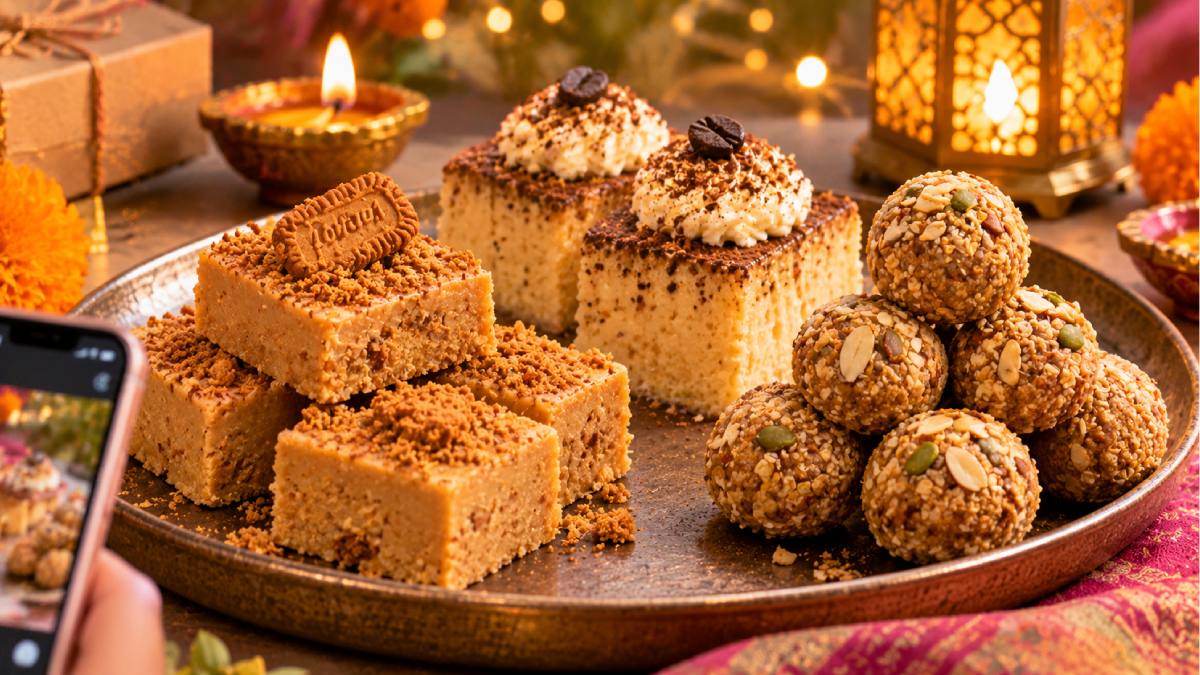
Gen Z is giving mithai a modern twist this Diwali with combinations like Biscoff burfi, coffee milk cake, fusion kalakand and protein-rich laddoos.
The trend reflects an interest in desserts that marry familiar Indian flavours with international ingredients. Traditional mithai still has cultural significance but modern bakeries, homegrown dessert brands and sweet shops are introducing new varieties to attract younger customers.
Biscoff Burfi: A Modern Take on Traditional Indian Mithai
Biscoff has become a favourite ingredient in contemporary desserts and its combination with traditional Indian mithai is making it into festive sweet collections.
Biscoff burfi has the familiar texture of Indian milk sweets but the caramelised flavour of Biscoff spread and biscuits.
The result is a fusion dessert combining two different dessert traditions. Biscuit crumbs, chocolate layers or decorative toppings may also be added in some variations to present the dessert better.
Younger consumers who like to try international dessert flavours will love Biscoff burfi which is a familiar yet different version of barfi.
Coffee Milk Cake Brings a Cafe-Inspired Flavour to Diwali
Coffee milk cake is another dessert that younger sweet lovers notice.
Cafe style desserts are popular so this preparation has the soft texture of milk cake with coffee flavours.
The dessert is usually a sponge or cake made with milk, soaked in flavoured milk and coffee gives it a slightly bitter aromatic note that offsets the sweetness.
Coffee desserts have become popular with consumers who don’t like chocolate and vanilla combinations.
Putting this flavour in Diwali dessert collections shows how cafe culture is influencing India’s festive food preferences.
Protein Laddoos Appeal to Health-Conscious Consumers
Traditional laddoos are part of many Indian festivals. But consumers today are looking for alternatives that suit their dietary needs.
Protein laddoos are emerging as one such option.
You can prepare these sweets with nuts seeds dates oats roasted gram flour protein rich additions etc.
Depending on the recipe some versions also have whey protein or plant-based protein powders in them.
Unlike sugar-heavy sweets, some protein laddoo recipes use dates or other ingredients for sweetness. But their nutritional value depends on the recipe, ingredient quantities and portion size.
For fitness-conscious consumers, these alternatives are another way to enjoy festive treats while making nutritional choices.
Fusion Kalakand Combines Traditional Recipes With Global Flavours
Kalakand (Indian milk based sweet) is also getting creative twists.
Modern versions combine its soft and grainy texture with Biscoff, chocolate, coffee, pistachios and other flavourings.
Some sweet makers are layering kalakand (adding different textures and colours to the basic milk-based preparation).
These changes make traditional sweets more attractive and give consumers more options when shopping during the festive period.
Fusion kalakand also shows how established Indian recipes can change with changing tastes but without losing their traditional identity.
Why Is Gen Z Choosing Fusion Mithai Over Traditional Sweets?
The popularity of fusion mithai reflects several changes in consumer preferences.
1. Influence of Global Food Trends
Social media, international food chains and online food content have exposed younger consumers to dessert flavours from different parts of the world.
Biscoff, matcha, coffee, chocolate and caramel are ingredients that now make their way into Indian festive desserts.
2. Preference for Unique Flavours
Many younger consumers prefer trying new combinations rather than choosing the same sweets each festive season.
Fusion mithai gives familiar textures with unexpected flavours traditional desserts become more experimental.
3. Social Media-Friendly Presentation
Food presentation has become an integral part of the modern dessert experience.
Colourful layers, decorative toppings, customised packaging and eye-catching desserts make fusion mithai popular for festive photos and social media sharing.
4. Growing Interest in Dietary Choices
Health and fitness awareness is changing how some consumers eat festive food.
Protein laddoos, nut-based sweets and reduced sugar alternatives are being eyed by people looking for something different.
However healthy, sugar-free and protein-rich should be judged by actual nutritional composition rather than marketing claims.
Traditional Mithai Still Holds Its Place in Diwali Celebrations
Although fusion desserts are becoming more popular, Indian sweets are still an important part of Diwali celebrations.
Kaju katli, gulab jamun, besan laddoo, motichoor laddoo, peda and soan papdi are still favorites for family gatherings and festive gifting.
For many households these sweets evoke childhood memories, family traditions and cultural celebrations.
Fusion mithai is therefore not replacing traditional sweets. It’s just widening the range of choices consumers have.
Sweet shops and dessert brands can cater to different generations by having familiar festive favourites as well as modern flavour combinations.
Diwali 2026: A New Chapter in India's Festive Dessert Culture
The popularity of Biscoff burfi, coffee milk cake and protein laddoos shows how the relationship between traditional Indian food and modern consumer preferences is changing.
Younger consumers feel more comfortable experimenting with recipes but still retain the cultural importance of festive occasions.
For sweet makers it opens up opportunities to introduce new products, reach younger customers and create combinations of traditional ingredients.
Diwali dessert trends keep changing and so does mithai culture at the festival. Nostalgia, innovation and personal choice combine in the festival’s mithai culture now.
It could be a box of kaju katli or fusion dessert assortment the main idea is the same: sharing sweetness with family and friends during festival.






Comments