
Karwa Chauth is a festival celebrated by many Hindu women and is considered auspicious for the longevity and well-being of their husbands. It is a symbolic and beautiful ritual that reflects love, devotion and care of women towards their husband, (a theme rarely seen the otherway around) with the day's fasting and evening moon-viewing ceremony forming the centrepiece of the observance.
There are several mythological stories associated with this auspicious day, each offering a different explanation of the festival's significance and the devotion associated with it.
One story, associated with the Mahabharata, recounts how Draupadi was advised by Lord Krishna to observe a fast to help Arjuna and the Pandavas overcome their hardships. Popular retellings place this episode during Arjuna's period of meditation in the mountains, although details differ between versions of the story.
Another legend tells the story of a woman named Karwa, who rescued her husband from a crocodile and used her spiritual devotion to confront Yama, the god of death, to save her husband's life. The story is associated with the devotion and determination traditionally linked to Karwa Chauth.
However, the story that most directly helps explain the popular ritual of viewing the moon through a sieve is that of Queen Veeravati.
The Story of Queen Veeravati and the False Moon
According to a popular Karwa Chauth legend, Queen Veeravati had seven brothers. After her marriage, she observed her first Karwa Chauth fast, abstaining from food and water while waiting for the moon to rise so that she could break her fast.
As the day progressed, Veeravati became extremely hungry and weak and eventually fainted. Seeing their sister's suffering, her seven brothers decided to devise a plan to end her ordeal.
They created the illusion of a moon, making it appear as though the moon had risen. When Veeravati regained consciousness, her brothers told her that the moon was visible.
Believing them, Veeravati performed the ritual and broke her fast before the actual moonrise. According to the legend, this was followed by the news that her husband had died.
Devastated, Veeravati returned to her husband's palace and prayed for his life to be restored. to which, Goddess Parvati responded and explained what had happened and gave Veeravati an opportunity to redeem herself by observing the fast again with greater dedication. Veeravati followed the instructions, and her husband was eventually brought back to life.
The details of this story vary across traditional and regional retellings, including the identity of the divine figure who helps restore the husband's life.
Why Do Women Look at the Moon Through a Sieve?
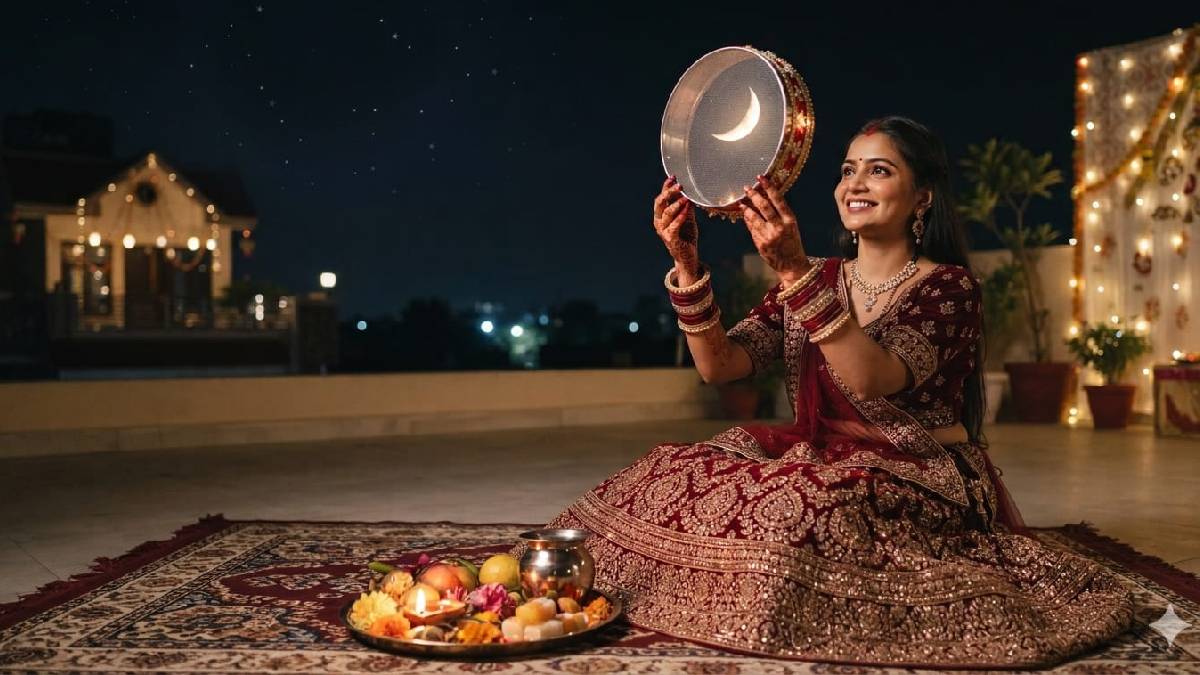
The story of Veeravati is often connected with the practice of viewing the moon through a sieve, known as a channi, during Karwa Chauth.
In the traditional ritual, women wait for the moon to appear, view it through the sieve and then look at their husbands through it. They offer prayers and water to the moon before breaking their fast, often with their husbands offering them the first sip of water and a morsel of food.
The sieve has become one of the most recognisable symbols of Karwa Chauth. The Veeravati legend offers a cautionary explanation for why the actual moonrise matters: in the story, an illusion of the moon leads to the premature breaking of the fast.
However, the sieve's meaning is not limited to this interpretation as Hinduism often has many different version of thhe tale. The ritual is also associated with devotion, prayer and the traditional customs surrounding marriage. Explanations of its symbolism differ among families and communities, and there is no single universally accepted explanation for why the sieve is used.




Comments
Leave a Comment