Mobile devices are a common practice in contemporary life. They help people communicate, educate themselves and have fun. However, children’s mobile phone use is increasing and looks like a problem in today’s fast-paced world.
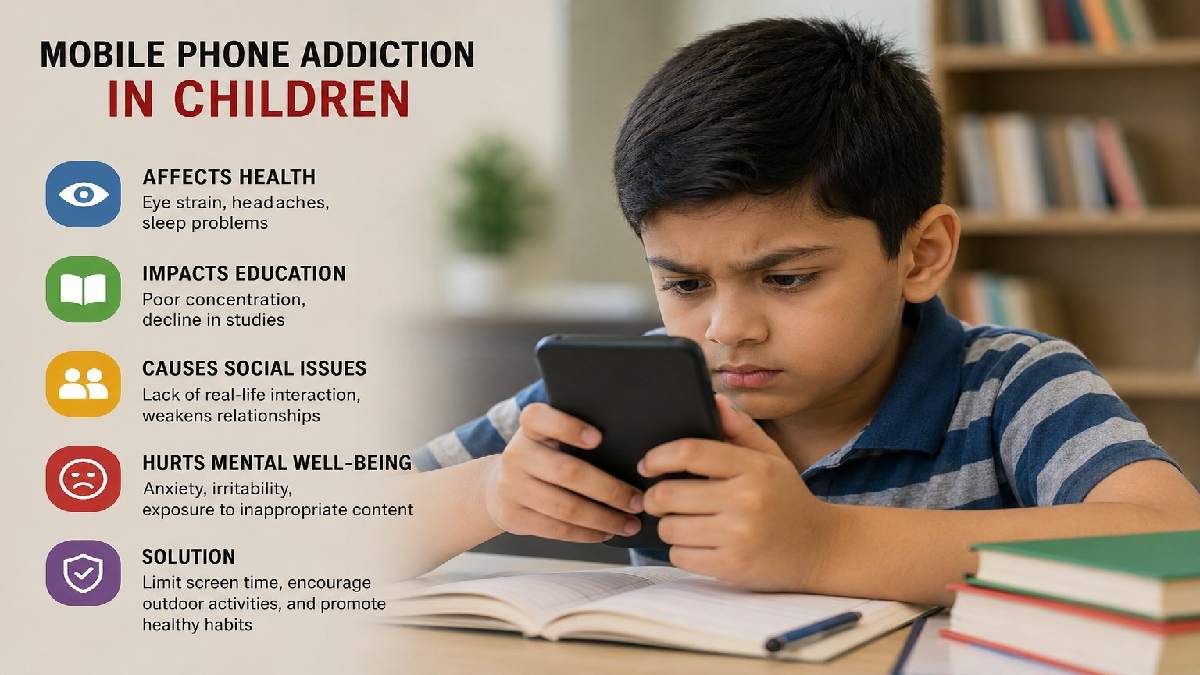
Most children spend so many hours mindlessly scrolling through their smartphones, playing games, watching videos and reading on social media apps, many hours a day.
They can develop into a mobile phone addiction, one that seriously damages their health, education and relationships with friends and family. The importance of smartphones and internet connectivity among the same age group for some parents as the source of parent mobile phone dependency is also a big part of their own influence generation-wise on mobile phone addiction.
Many parents are giving their children mobile phones. Mobile phone games, cartoons and social media websites are all designed to ensure people come in long, long hours to be entertained and enticed. Over time, children spend more time on their mobile phones than necessary for trips, either over the holidays or at home after school hours, giving them little time to take excursions outside of home or leisure pursuits that can keep them occupied.
A second major factor is peer pressure. Children today want to use the same apps, games and social media platforms as their friends do. Or parents can’t control their children's phone use with much vigour, as a result, hours spent inside the confines of screens go by daily.

One of them is the overuse of mobile telephones, which hurts the physical health of youth, as the overuse of mobile phones among youth is the most serious issue. Excessive screen time, hours dedicated to looking at a screen, can cause eye strain and headaches, neck pain, and poor posture.
Late-night phone users will have bad sleep too; hence, they will have sleep problems and may also have energy level, focus and concentration problems during the daytime. Apps and phone use also have a counterproductive effect: mobile phone addiction is also detrimental to children’s academic performance.
When children learn that creates distractions that interfere with their studies, reading books or homework, they cannot devote themselves to them. The use of gaming and social media on a regular basis will make people lose focus and affect their memories in countless ways as well.
But even amid this transition period, students may seem to have a great support system, and this will help, but quite often, students are caught on their phones a ton. Apart from being physically ill and not succeeding in school, mobile phone addiction leads to psychological problems.
On the whole, if kids are glued to their phones for too long, they just won’t catch real-life action. They might also learn better in communication using a virtual form, they can't, or they don't feel it is right to do live talking, etc., which is bad for socialisation too. Other children, by contrast, can feel anxious, irritated or upset if they’re not using their phones.
Negative cyber content and cyberbullying affect their mental health, self-image and emotional development. Parents, educators, and society would all have a major role in dealing with these problems for this job. Parents should set limits on screen time and support children to play outside, play sports, read and do creative things.
Spreading good family time in these areas will help improve the communication and quality of a family's relationship (even if it is through mobility communication). For a society at large, schools need to encourage increased communication about the social consequences of excessive screen use among students and guide them to use technology in a responsible way, when they are learning, and when using technology not just as a device but as a way to communicate.
Our mobile phones are among the most useful gadgets used all over the world today, and are the only ones worth paying attention to. But overuse has a damaging impact on children’s health, education and social life.
The healthy habits parents and teachers can instil in their children are going to help them take advantage of the benefits of technology, as they have not yet gone the way of spending the whole day on mobile phones, which is to keep their lives in balance.