
Everything is governed by the road.
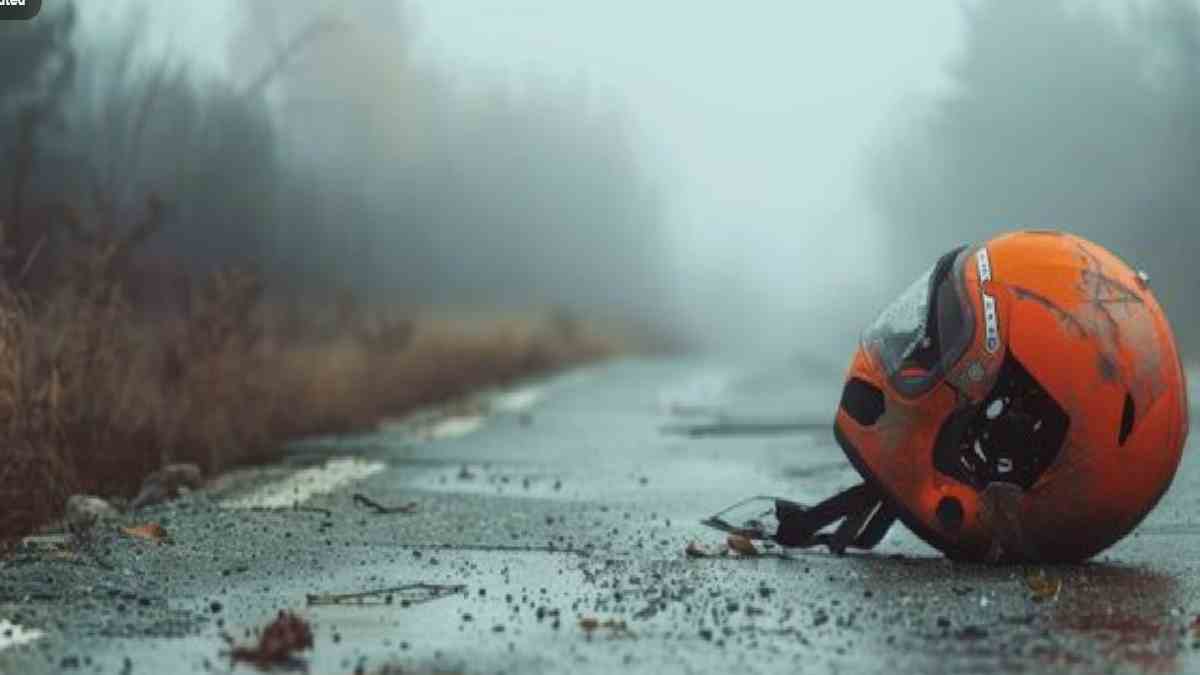
Wear a helmet. Fasten your seat belt. You have vehicle documents. Renew your insurance. Get a pollution certificate. Obey traffic lights. Never drink and drive. Don’t use a mobile phone while driving.
If you break these rules, then the consequences are immediate. A traffic camera captures the violation, an e-challan is generated, and a fine arrives on your phone within minutes.
That is how the law works— and rightly so.
Road safety begins with responsible citizens.
But there is another question that deserves equal attention.
Who is to be held responsible when the system fails?
The law will come out if a motorcyclist rides without a helmet.
If the vehicle is parked illegally, there is a fine.
If insurance has expired, there is a penalty.
If someone jumps a traffic signal, legal action follows.
These rules exist to protect lives, and every citizen has a responsibility to follow them.
But what happens when a person loses their life because a road has been left full of potholes for months?
Who is fined then?
Who is responsible when a damaged road causes a fatal accident?
Who answers to the broken traffic signals that remain unrepaired for weeks?
Who is responsible when flooded roads become death traps during every monsoon?
Who takes responsibility when streetlights fail and accidents occur in the darkness?
Who answers when pedestrians are forced onto busy roads because footpaths have been encroached upon?
These questions seldom get clear answers.
The usual response is familiar:
The concerned department will take necessary action.
But when?
Traffic violations can be caught in seconds by means of advanced surveillance systems.
The high-definition cameras can see vehicle numbers immediately.
Technology tracks offenders with remarkable efficiency.
If technology can enforce traffic rules so effectively, shouldn't it also be used to identify dangerous potholes, malfunctioning traffic signals, illegal encroachments, overflowing drains, and damaged public infrastructure before they claim lives?
Technology should not be there to punish citizens.
And it should also improve administrative accountability.
Every citizen contributes to public revenue.
By fuel taxes.
GST.
Income tax.
Property tax.
Road tax.
Registration charges.
These are not voluntary donations.
They are mandatory contributions that fund public infrastructure and essential services.
Is it unreasonable for taxpayers to expect safe roads, reliable drainage, functioning streetlights, clean public spaces, and properly maintained infrastructure in return?
This is not an argument for or against any particular government or political party.
It is a larger question about governance and democracy.
Road accidents are certainly caused by reckless driving in many cases.
Drivers who speed, drive under the influence, ignore signals, or violate traffic rules must be held accountable.
But not all accidents are caused by driver error.
Poor road conditions, lack of warning signs, open manholes, poor maintenance, waterlogged streets, and damaged infrastructure also contribute to serious accidents and fatalities.
When someone dies after falling into an unmarked pothole, should it be called an unfortunate accident?
Or should it also make us consider whether administrative negligence was involved?
Pedestrians also have similar problems to overcome.
Footpaths for public use are often blocked by encroachments, parked vehicles, vendors, or construction material.
People have no other way to go in the city.
If an accident occurs, much of the blame is on the pedestrian.
Is that fair?
Democracy is based on a common responsibility.
Citizens have duties.
They must obey the law.
Pay taxes honestly.
Drive responsibly.
Respect public property.
Governments also have functions.
They are responsible for roads.
Repair potholes.
Ensure streetlights are working.
Maintain drainage systems.
Public spaces are safe and accessible.
Remove illegal encroachments.
Deliver essential civic services promptly.
These are not acts of generosity.
They are obligations financed by taxpayers.
As long as responsibility flows only in one direction, democracy is not a healthy democracy.
Citizens should certainly be held accountable for violating the law.
But public authorities should also be responsible when repeated negligence puts lives at risk.
I believe that questioning governance is not rebellion.
It is an essential part of democracy.
The citizens should wear helmets.
They must abide by traffic rules.
They should pay taxes honestly.
But they also have every right to ask:
- When will dangerous roads be repaired?
- When will broken streetlights be fixed?
- When will flooded roads be safe?
- When will footpaths be cleared?
- When will public infrastructure get timely maintenance?
Good governance is not only about enforcing penalties but about earning public trust.
The strength of a democracy is not measured by the number of challans issued or fines collected.
It is measured by how well institutions protect the lives, safety, and dignity of the people they serve.
Citizens must act, and they should be doing so.
Governments must fulfill theirs.
When accountability exists on both sides, democracy can truly function as intended.
Wearing a helmet is our duty.
Following the law is our duty.
Paying taxes is our duty.
Providing safe roads, reliable infrastructure, and accountable governance is the government's duty.
The question billions of citizens continue to ask is simple:
We are fulfilling our responsibilities. When will the system do its own?




Comments
Leave a Comment