
Skywatchers in India will be treated to a spectacular celestial event on November 24, 2026 when the Beaver Supermoon rises in the night sky. This month’s full moon will be slightly larger and brighter than an average full moon because it occurs at a relatively close point in the Moon’s orbit around Earth.
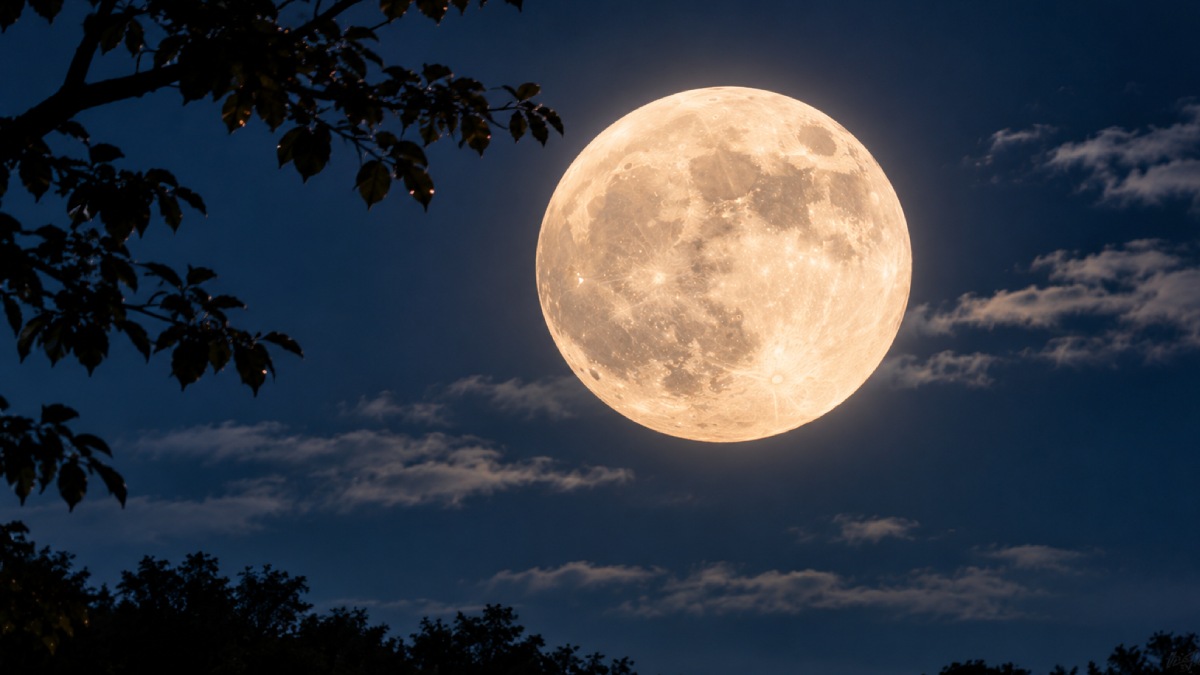
The November full moon is traditionally called the Beaver Moon. This year it will also be a Supermoon one of the astronomical events to look forward to in 2026!
You don’t need special equipment to see this event just clear weather and Moon visible from where you are watching.
Beaver Supermoon 2026: Date and Time in India
The November 2026 Beaver Supermoon will be on Tuesday, November 24. According to astronomical calculations the Moon will reach its exact full phase at 2:53 PM UTC (8:23 IST).
Here are the important details:
- Event: Beaver Supermoon
- Date: Tuesday, November 24, 2026
- Exact peak time in India: 8:23 PM IST
- Full Moon distance from Earth: Approximately 360,768 kilometres
- Visibility: Evening and night, depending on local moonrise and weather conditions
The exact peak time is the astronomical moment when the Moon reaches full phase. Local moonrise time varies with observer location (see local moonrise time).
For example, Moon will rise in New Delhi at around 4:56 PM on November 24. People living in other Indian cities will see slightly different moonrise times.
Why Is the November Full Moon Called the Beaver Moon?
Beaver Moon is a name that comes from North American seasonal naming traditions.
November was when beavers prepared their lodges and gathered food before winter; it was also when beaver trapping was traditionally done (before lakes and rivers froze).
Over time, the November full moon came to be known as the Beaver Moon.
It’s not an official astronomical classification. Different cultures have their own traditional names for full moons based on seasonal changes, agriculture activities and local customs.
November full moon is also sometimes called the Frost Moon because of the colder conditions associated with this time in the Northern Hemisphere.
Why Is the Beaver Moon a Supermoon in 2026?
A Supermoon is when a full moon occurs close to perigee (the point in the Moon’s elliptical orbit where it is closest to Earth).
Because the Moon’s orbit is not perfectly circular, its distance from Earth varies throughout the month. If a full moon happens to fall when the orbital position of the Moon is relatively close (rather than farther away), it will appear larger and brighter than usual.
The Beaver Supermoon on November 24 will be about 360,768 kilometres from Earth at full phase.
Astronomers estimate that it may appear about 6.5% larger in diameter and about 13.5% brighter than an average full moon.
While the difference is not that great to the naked eye, the closer distance makes it more interesting for astronomy lovers and photographers.
The November Supermoon is also the first of three consecutive Supermoons from November 2026 to January 2027.
How to Watch the Beaver Supermoon in India
One of the best things about this celestial event is that people don’t need a telescope or expensive equipment to observe it.
The Moon will be visible to the naked eye and if you choose a site with a clear view of the horizon that can enhance the experience.
Here are some simple viewing tips:
1. Find an Open Location
An open terrace, rooftop, beach, lakeside or somewhere else with a view of the sky is ideal.
2. Watch Around Moonrise
The time right after moonrise can be pretty. The Moon may appear orange or yellow near horizon because its light passes through a thicker layer of Earth’s atmosphere.
3. Check the Weather
Cloud cover, rain and atmospheric conditions all affect visibility. Check the local weather forecast before planning your viewing.
4. Use Binoculars or a Telescope
Special equipment is not required but binoculars or a telescope will reveal some of the additional lunar details (craters and surface features).
5. Try Night Photography
A smartphone can take pictures of the Moon but a tripod and manual camera settings might make them better. Don’t use digital zoom excessively because it degrades image quality.
Will the Beaver Supermoon be visible across India?
The November 24 Supermoon will be visible from various parts of India provided local weather and atmospheric conditions are favourable.
A Supermoon isn’t something that needs specialized viewing equipment or locations (as some astronomical events do). A Supermoon can be seen from urban as well as rural areas.
However visibility will depend on local moonrise timings, cloud cover, pollution and obstructions near horizon.
People in cities can also view the event from rooftops, balconies, parks and open public spaces.
What Happens After the November Beaver Supermoon?
The November 24 event will be followed by another Supermoon on December 24, 2026 (traditionally known as the Cold Moon).
December full moon is even closer to Earth so it’s another great skywatching opportunity.
The series continues through January 2027 so astronomy buffs will have three consecutive months to see Supermoons.
For those interested in celestial events, November’s Beaver Supermoon is a simple way to see how Earth changes its relationship with its natural satellite.



Comments