A good night’s sleep underpins a healthy physical state, good presence in the mind, and emotional regulation. That’s unfortunate; too many people, often without any awareness, fall into nighttime routines that disrupt their sleep schedule. If you wake up tired a good chunk of the day or have it hard to get to sleep, your nighttime routine may account for that. Here are six habits that you know have been quietly sabotaging your sleep and can be popular at night.
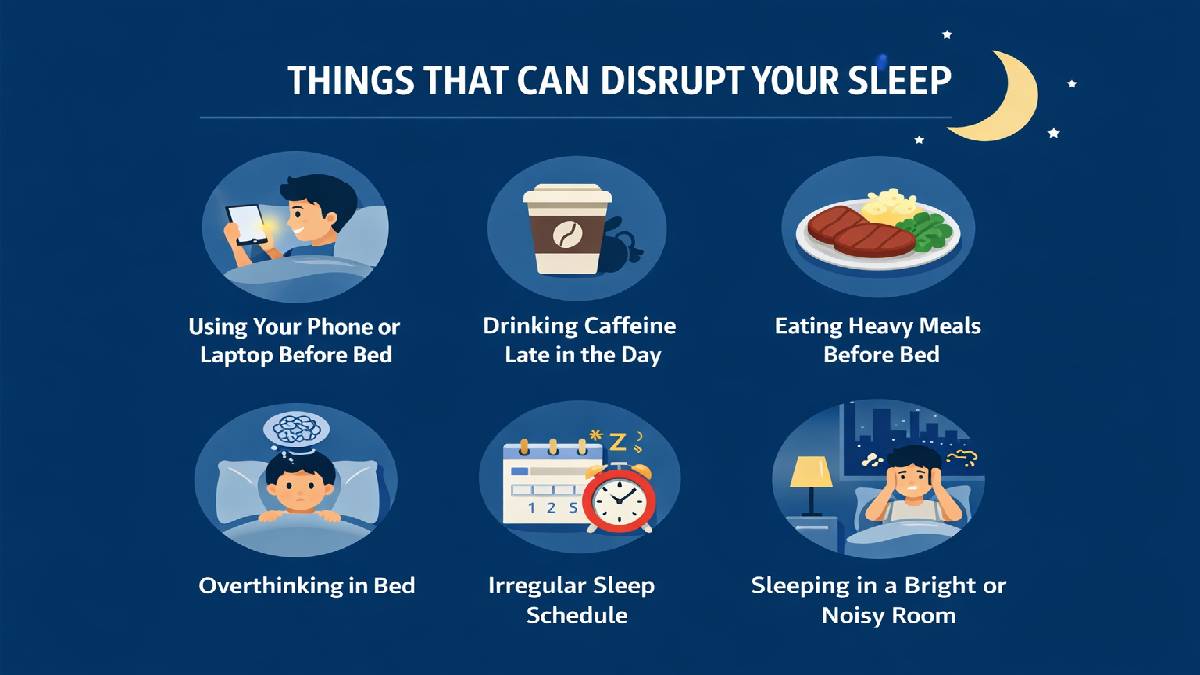
Using Your Phone or Laptop Before Bed
Pre‑bedtime screen time is one of the biggest disruptors of sleep with the increase in demand over the past few decades. Smartphones, tablets, and laptops generate blue light which inhibits the release of melatonin, which is a hormone that regulates sleep. Low melatonin levels cause your brain to think it’s still time to wake, making it harder to fall asleep once we go to sleep. Prevent screens before bed with at least 30 to 60 minutes a day. Instead, it can either be a book or calming music.
Caffeine Is One of the Most Powerful Stimulants That Keep Your Mind Drilled
Most people underestimate how long it will be a presence in the body. Actually, it will be active for 6 to 8 hours. The evening feedings of coffee or tea, energy drinks, and even chocolate can prevent falling asleep at night. A tip: Don’t do caffeine after the afternoon.
Eating Heavy Meals Before Going to Bed
Tasting big or bulk meals right before sleep prompts your body to pay more attention to digestion rather than resting. This might induce pain, bloating, and acid reflux. Spicy, fat‑laden foods may also affect the quality of sleep and disturb sleep at night. Tip: Do dinner two to three hours before bed.
Overthinking in Bed
Some remain in bed contemplating work, money, or future plans. And if your brain is engaged with thoughts and stress, it becomes more difficult to relax and slumber. Chronic stress increases cortisol levels, too: Too much can impede sleep. Soak your mind up or take some time to quiet your mind and start writing.

Irregular Sleep Schedule
Different times during each day disrupt your body's internal clock (or circadian rhythm). And when your schedule keeps switching, your body can't keep a stable sleep schedule. This is often very bad sleep for the poor, and can lead to daytime tiredness. Tip: sleep and wake up at the same time every day, try to go to bed and wake up at the same moment of the morning.
Sleeping in a Bright or Noisy Room
Effects are enormous: what your sleep environment does to the quality of sleep. Bright lights, TV sounds, or noises from outside may actually stop your brain from reaching a fully relaxed state. Even small sources of light can distract people from the natural signals from their sleep state. Solution: Keep your bedroom dark, quiet, and cool for better sleep.
An effective bedtime routine and regular bed‑morning schedule help to achieve the physiological health boost that will enable better motivation during the day.