Soil is recognized as the cradle of life. Little seeds planted in rich soil might sprout into a tree, a crop or a flower, for food, shelter or beauty. But, a human body grown within the soil does not give birth to another human. It begs the question, why soil nourishes plant life and not human life? The answer lies in biology.
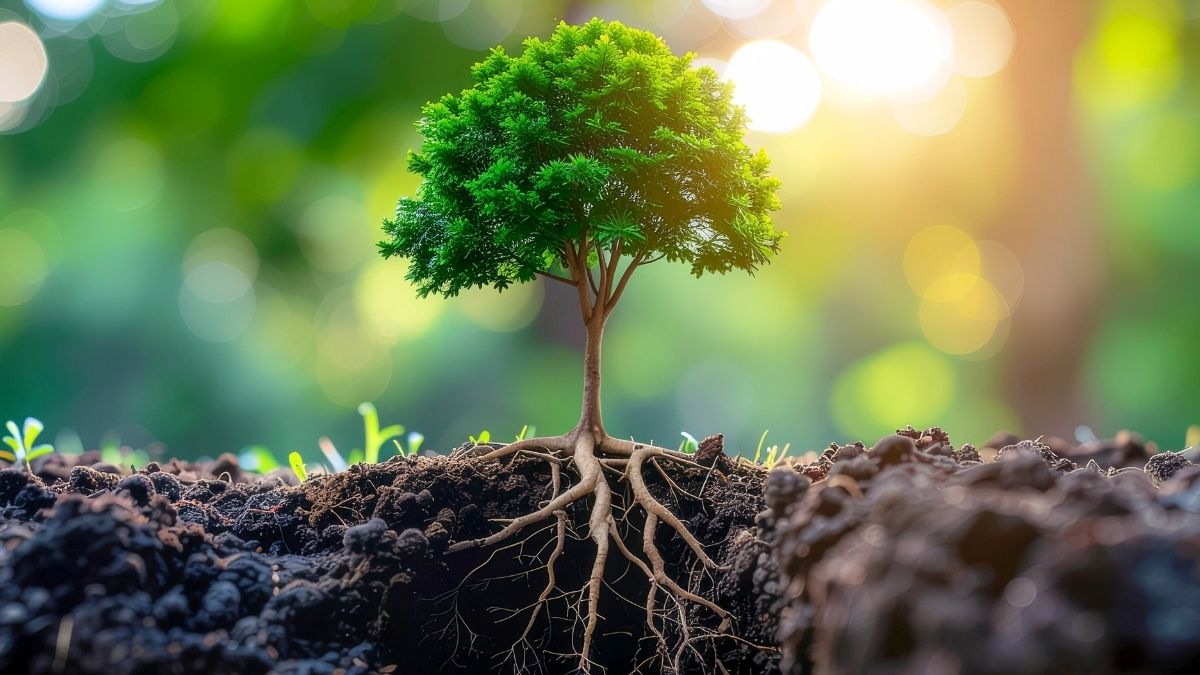
A seed is alive
Inside it is an embryo a tiny plant with its own genetic blueprint and the nutrients that it has long stores for growth. When planted, it supports itself by drawing water, minerals, and oxygen from the soil. The soil doesn't produce the plant, but rather the environment is optimized for it.
Life grows out of the seed
But a human body is altogether different. Once dead, cells cannot divide. Inside there is no embryo to turn into a human. Instead, the body is broken down, eventually decomposing into nutrients. These nutrients nourish the soil, feeding microbes, plants but also, over time, other living things, but they never replicate a human being.
This distinction harbors a universal truth: Only living things can supply life. Soil is required for growth, but it is a medium, not a maker. Seeds have life but they grow; humans become dead and cannot grow. But, in nature there is continuity. From this earth to go back again, human bodies feed further life.
We can yet be said to be on infinite circle of growth and changing. But in this, and similarly in many other ways, there is, in death the part played by humans; it is a reminder that life never dies (it continues its own movement, its forms, its continuance). From life sciences to philosophy, there is no doubt: life is a circle, and soil is its own stage or rather, the one in which life quietly germinates in the seed, or in which life unfolds in a wide-open path across the face.