Is Space Really Silent and Empty? We are constantly told noise cannot propagate within space as there is no air. From a scientific point of view, this is accurate. Sound, as humans hear it, requires a medium — some form of air or water to move. But does that make the universe wholly quiet and empty? Different kinds of knowledge traditions — ancient and current alike — want us to think through this question further.
Sound Beyond What We Hear. And in everyday life, sound refers to vibrations that hit our ears. Some ancient traditions differentiate between audible sound and subtle vibration — an underlying rhythm that humans believe transcends physical hearing. This subtle vibration is what we experience as an ordering, moving, harmonizing vibration. Seen this way, silence is no excuse for inactivity. That silence is not the equivalent of nothing. No one is saying that nothing is happening.
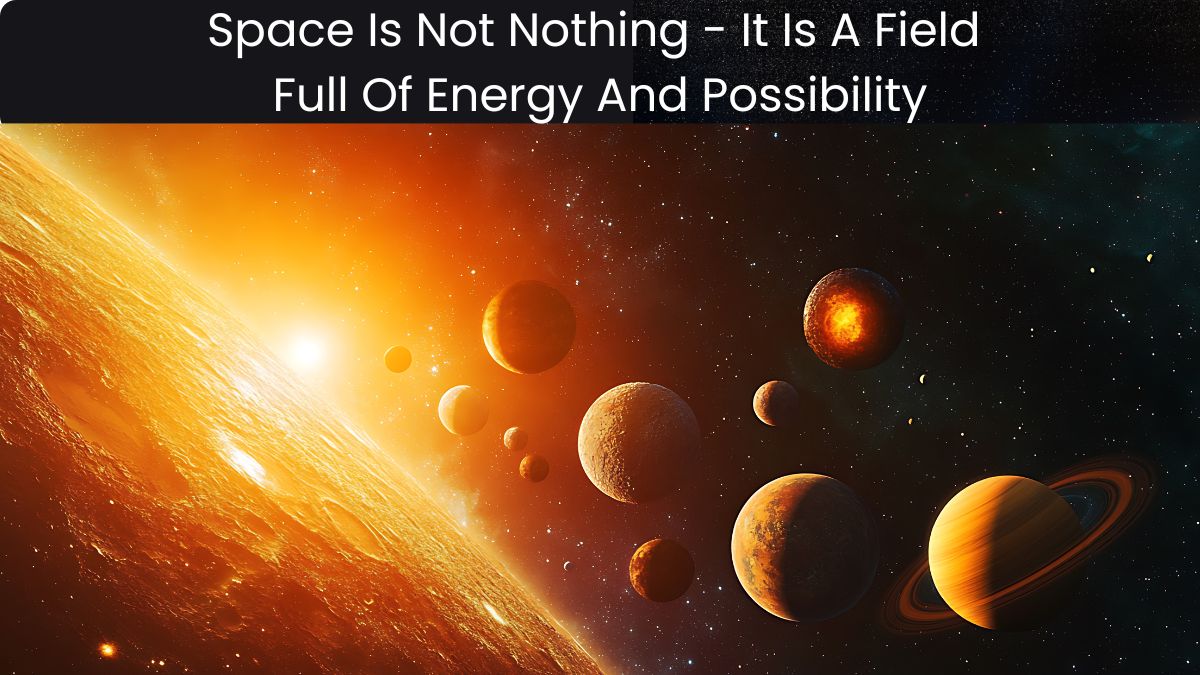
Space Is Not Just “Nothing”. Space, as modern science has demonstrated, is not entirely devoid of meaning. Even inside a vacuum, there are quantum fields and background energy at near microscopic scales. Space as an underlying field that sustains existence was also an ancient philosophic concept. The explanations differ but suggest a common idea. An empty thing can be potential.
Planets as Symbols of the Human Experience. In traditional systems, planets were not viewed as things that governed people’s lives. Instead, the symbolism came to represent, to an extent, parts of the human experience such as identity, emotion or action, learning, growth, or responsibility. These symbolic constructs were designed to elicit introspection as opposed to instilling doubt or adherence to a fixed belief.
Two Perspectives on the Universe. Humanity has always been inquisitive about the universe in more than one manner:
By observation, measurement, science (which elucidate our understanding of how things function). Through reflection and philosophy, which address meaning and interior experience. Either method is instructive, in its own manner -- one expands or deepens our knowledge of the physical world, at the same time it gives self-understanding.
How Does the Universe Influence Us? There is no scientific evidence that the universe controls actual thinking. Yet psychology tells us that the environment, beliefs, attention and consciousness highly influence how people think and feel. In these examples, when older traditions mention cosmic influence, they often use the language of patterns, cycles and awareness, as opposed to physical forces acting on the brain.
Key Takeaways. Space is not truly empty. Silence is not an absence, though. Science tells us about the outer universe. Philosophy and reflection ask how your inner experience might work. When respected, both provide a more well rounded view of life.
Final Thought. The universe, while the universe may appear huge and silent, is imbued with mobility, connection and significance. It is through the act of examining it — in science, a reflective essay, a curiosity — that we come to know ourselves better.