When people think of fitness, they think about building bigger biceps, a stronger chest or a more defined back. While these visible muscles are important, they are only part of the equation. And the true foundation for strength is in the body’s core the muscles of the abdomen, hips, pelvis and lower back that stabilize nearly every movement we make.
A good core contributes to posture, balance, athletic performance and daily functioning. Swiss ball training is a good way to strengthen core strength. Swiss balls were invented to help rehabbers and gyms in the first place.
What is core training?
Core training focuses on strengthening the muscles that support the spine and pelvis. Core exercises are not one muscle group isolating each other so that coordination and movement efficiency are enhanced.
In contrast to traditional weight machines that support the body during an exercise, core training often puts the body in unstable environments, forcing stabilizer muscles to be active throughout.
One of the most popular tools for generating this instability is the Swiss ball, also known as a stability ball or Resist-A-Ball.
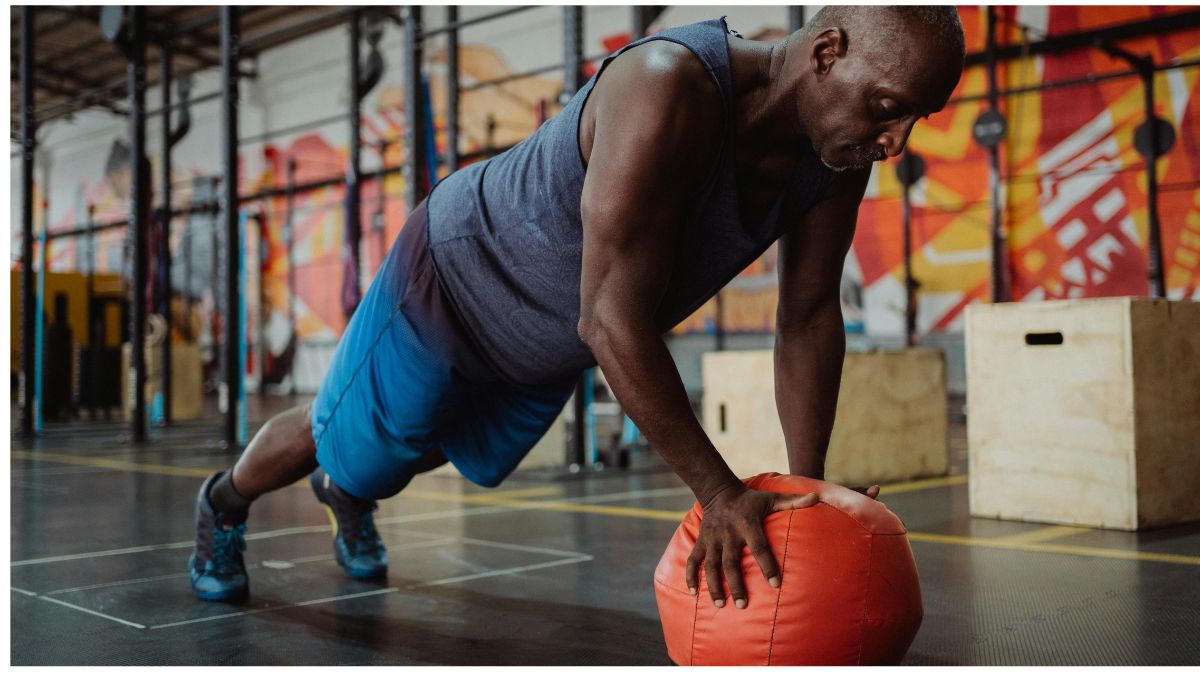
Swiss balls can be used in so many ways:
- Bodyweight exercises
- Free-weight workouts
- Resistance band exercises
- Rehabilitation programs
- Functional athletic training
Their versatility makes them suitable for beginners, experienced athletes and anyone who wants to improve overall fitness.
Why train on a Swiss ball?
At first glance you’re sitting or exercising on a giant inflatable ball. In reality, though, the surface keeps shifting under you, so you have to keep your body at arm's length to keep balance.
This ongoing change in training method is to build muscles that are often not used in the usual strength training program.
The benefits are not only related to the strengthening of the abdominal muscles.
Improved Posture
Good posture is crucial for effective movement and injury prevention. Poor posture places unnecessary stress on joints, ligaments and muscles and in doing so, causes the body to consume more energy in daily life.
Swiss ball exercises promote proper spinal alignment because the body needs to be balanced during every movement. Postural muscles strengthen and good posture is easier both for exercise and everyday life.
Athletes are generally better at the movement mechanics and efficiency of competition with better posture.
Better Balance and Stability
The human body moves in multiple planes of motion but not in straight lines. Traditional weight machines direct movement along specific routes in an attempt to avoid the body having to stabilize itself.
Swiss ball training is different.
Every movement on an unstable surface requires constant engagement of stabilizing muscles to maintain balance. This improves over time:
- Coordination
- Balance
- Joint stability
- Body awareness
- Functional movement
And those improvements are good for athletes as well, as well as everyday life (walking on uneven surfaces, climbing stairs, carrying groceries, etc.).
Golfers, for example, have much better control and power because better stability maintains balance during the swing even on uneven terrain.
Enhanced Nervous System Activation
Strength is more than muscle size. It is also how efficiently the nervous system communicates with the muscles.
Swiss ball training helps neuromuscular coordination by continuously adjusting throughout the movement process. This better communication enables the body to recruit muscles much more efficiently in sports and daily life.
As a result, strength that is more functional and transferable outside the gym.
Core and Supporting Muscles
Almost every Swiss ball exercise requires constant activation of the core muscles.
The body needs to keep the body in balance throughout the movement, be it crunches, push-ups, chest presses, or dumbbell exercises.
This continuous engagement helps to build:
- Stronger abdominal muscles
- Improved lower back strength
- Greater hip stability
- Better spinal support
Many exercises also strengthen the arms and legs simultaneously, so Swiss ball workouts are very efficient.
Using a Swiss ball safely
In Swiss ball exercises, though simple, good technique is key to effectiveness and injury prevention.
When moving on to advanced movements, the basics should be taught to beginners with the guidance of a fitness professional.
Key principles include:
- Maintain a neutral spine throughout each exercise.
- Engage your abdominal muscles by gently drawing the belly button toward the spine.
- Keep the pelvis properly aligned.
- Move slowly and with control.
- Focus on balance before increasing resistance.
The goal is not only to not fall off the ball but to be in the right body position in every single repetition.
What are the functional benefits beyond the gym?
Swiss ball training has many benefits outside of fitness centers.
When core stability is enhanced, everyday life is easier and more efficient. Lifting, bending, twisting, carrying objects, and keeping balance are all dependent on stronger stabilizing muscles.
Athletes will see improvements in:
- Power generation
- Movement efficiency
- Agility
- Injury prevention
- Overall sports performance
In fact, because balance and coordinated movement are key for almost every sport, core stability is key for athletic success.
Other Unstable Training Tools
Swiss balls are only one option for instability training.
Additional equipment includes:
- Balance boards
- Wobble boards
- Core boards
- Foam rollers
- Balance discs
Each is challenging and will activate stabilizing muscles while improving coordination and balance.
Including a variety of these tools in the training program can also improve functional strength and athletic performance.
Building a Balanced Fitness Program
Core stability should be part of a fitness routine.
An effective training program also needs to include:
- Cardiovascular exercise
- Muscle strength
- Muscular endurance
- Flexibility
- Balance
- Coordination
Speed, agility and sport-specific drills can also be incorporated for athletes.
If all these components are not easy to fit into a weekly schedule, then a certified personal trainer who can design a program that works according to one’s goals and lifestyle would be really helpful.
Core strength is the foundation of almost all movements the body does. While traditional resistance training builds visible muscles, Swiss ball training strengthens the stabilizing muscles that improve posture, balance, coordination, and overall athletic performance.
Whether you’re a competitor, a golfer who wants to have more stability in your swing, or a person who wants to be able to live a normal life as much as possible, Swiss ball exercises can really help.
The good thing is that Swiss ball training is suitable for virtually every fitness level. From beginner to expert, anyone can start building a strong core and improve health and fitness as a result.