
Fashion is more than a collection of clothes; it embodies cultures, identities, and social progress. The history of women’s fashion reveals how the history of fashion can also be the story of women's transition: how tradition and modernity are linked. Old dresses, draping and hand-made dresses and traditional embroidery, along with global trends informed by film, social media and sustainability in fashion, have been adapted to new times, but in an era when cultural roots continue to grow from there.
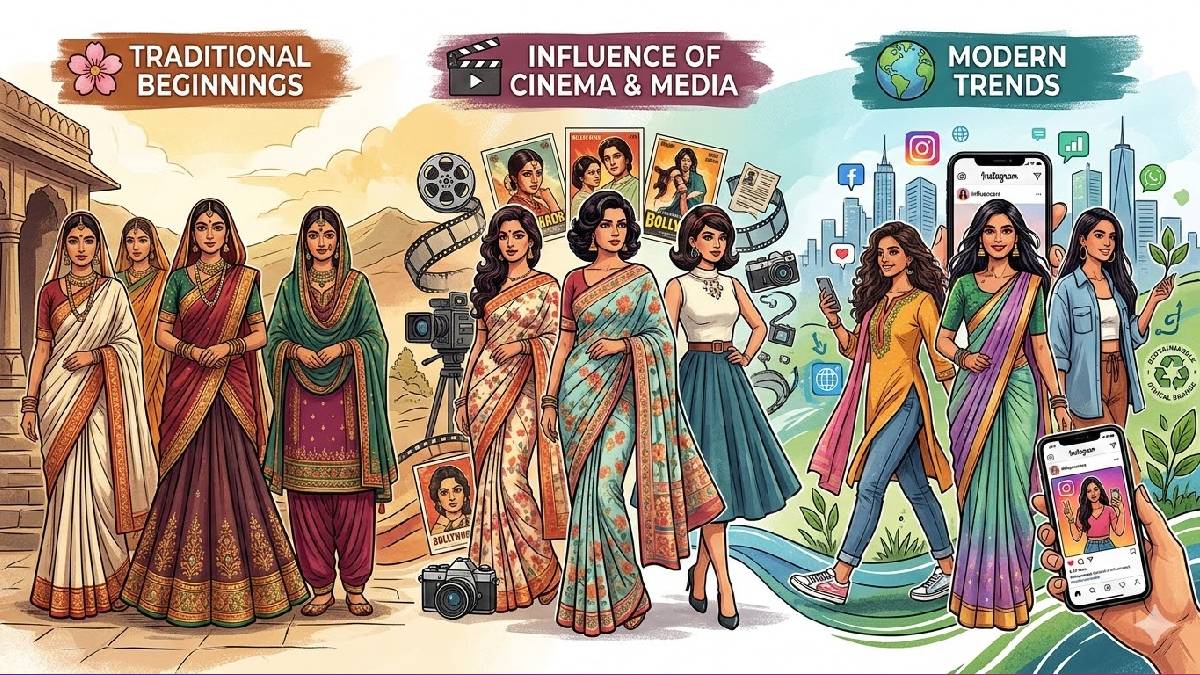
Traditional Beginnings
Women’s clothing was simple but elegant in ancient civilizations. Cotton and silk drapes that looked like sarees were worn, in India, during the Indus Valley period. These were clothes of grace and utility. For centuries, sarees, lehengas and salwar suits soon took center stage in women’s dress, with a variety of the region’s draping styles, embroidery and fabrics emerging by themselves.
Medieval dress reflected modesty and cultural pride. Tamer, more embroidered dresses were an art, while elaborate sarees had delicate borders; lehengas had large embroidery; salwar suits had long flowing dupattas. Colonial impact would eventually lead to the stitched robes, blouses and petticoats, an amalgamation of Western fashion with traditional dress.
Culture of Cinema and Media
Things were radically different in the 20th century. Bollywood helped shape the fashion trend. Well-dressed sarees of actresses gained popularity with the average women. Later, western dresses, skirts and tops became household pieces. Modern looks were widely advertised and pushed through media, broadening the realm and aspirationality of fashion.
Then came globalization, which helped broaden all of those options. Jeans, t-shirts and skirts became much more standard, often wearing classics for fusion wear. Women started exploring Indo-western styles that mixed comfort with sophistication.
Modern Trends
Today’s women’s fashion is about tradition and innovation.
- Fusion Clothing: Sarees with crop tops, kurtas with jeans, Indo-Western dresses signal creativity and uniqueness.
- Streetwear and Casuals: Comfort-based outerwear like sneakers, athleisure and oversized shirts play a significant role in modern streetwear.
- Sustainable Fashion: Young people are also favouring environmentally sensitive materials, responsible brands and the recycled.
- Social Media Influence: Trends are spearheaded by Instagram and influencers and fashion is more experimental and global.
Why Fashion Evolution Is Important
The evolution of women’s fashion is about more than just style. It represents:
- To preserve tradition that also adapts into modernity.
- Giving women the power to make choices that matter to them.
- Cultural link, as styles of fusion combine traditions with international trends.
- Responsibility, while sustainability aligns fashion to the environmental aspect.
Fashion has evolved into an outlet of self-expression, allowing women to express who they are, build their confidence, and express their creativity.
From sarees and lehengas to jeans and sustainable streetwear, women’s fashion is changing to a different extent as the years keep passing by. And yet, tradition will be central to modern trends. Fashion now is about choice, identity and empowerment. I believe people can appreciate and wear traditional styles while celebrating a global world through their style. Women’s fashion journey is proving that clothing is more than cloth; it is also a story of resilience, creativity and evolution. Fashion is going to be the way we see it continue to be, which is changing, and it’s only going to stay the same - the attitude of the women and the time they live in!






Comments
Leave a Comment