Earth Day is a collective worldwide event celebrated every April 22. It is a strong reminder that our planet’s health is determined by the decisions we all make every day. In the last few decades, adverse environmental events like climate change, soil degradation, water scarcity, and biodiversity loss have increased. Such problems are not only environmentally damaging, they have an equal effect on food security, livelihoods, and human health. Earth Day shows the pressing need to adopt sustainable development, which should include respect for nature and sustainable environmental policies.
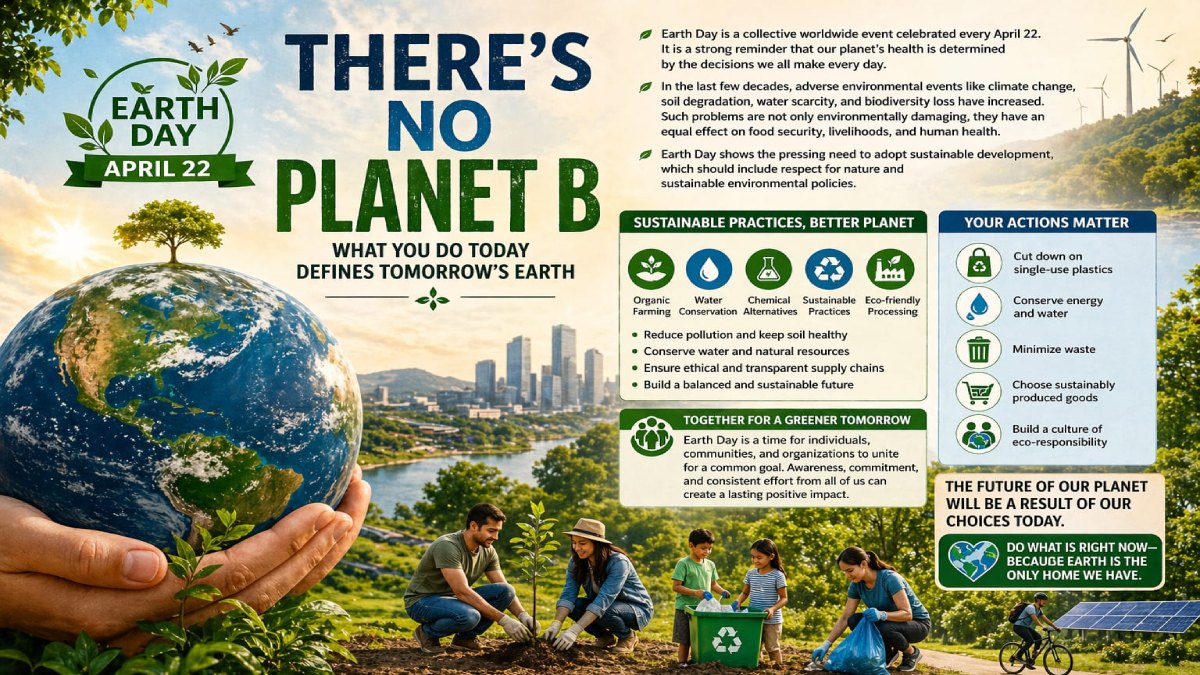
Sustainability no longer requires choice; it is critical. Responsible techniques in farming, industry, and consumption are essential if we are to conserve the natural environment and save its people. Organic farming, water optimization methods, chemical alternatives, and sustainable practices and environmentally friendly processing reduce pollution and are measures that keep soil healthy, conserve water, and reduce the impact and use of natural resources. Ethical and transparent supply chains also contribute towards sustainable long-term ecological equilibrium.
Yet in parallel, people's own actions are just as important. Small, ongoing efforts in persistent ways like cutting down on single-use plastics, conserving resources like energy and water, minimizing waste, and using sustainably produced goods will make all the difference. When you implement these habits broadly, they lead to an eco-responsibility culture.
Earth Day is not simply a symbol of goodwill; it is a time for people, communities, and entities to collaborate towards a common goal. All the members of society need to be aware of protecting the environment, be committed to it, and do their best all the time.
The future of our planet will be a result of our choices today. Do what is right now because Earth is the only home we have.