A lot of a person realizes that the moment they go to bed at night they start to cough. Only the occasional cough might not be a big deal -- if it happens often then it indicates an underlying condition. Night coughing, it’s bad news that it can not only affect sleep but also irritate the throat and decrease overall comfort. You may find the reasons for this issue as it arises in their study group, so understand if you need to know those and do what your needs.
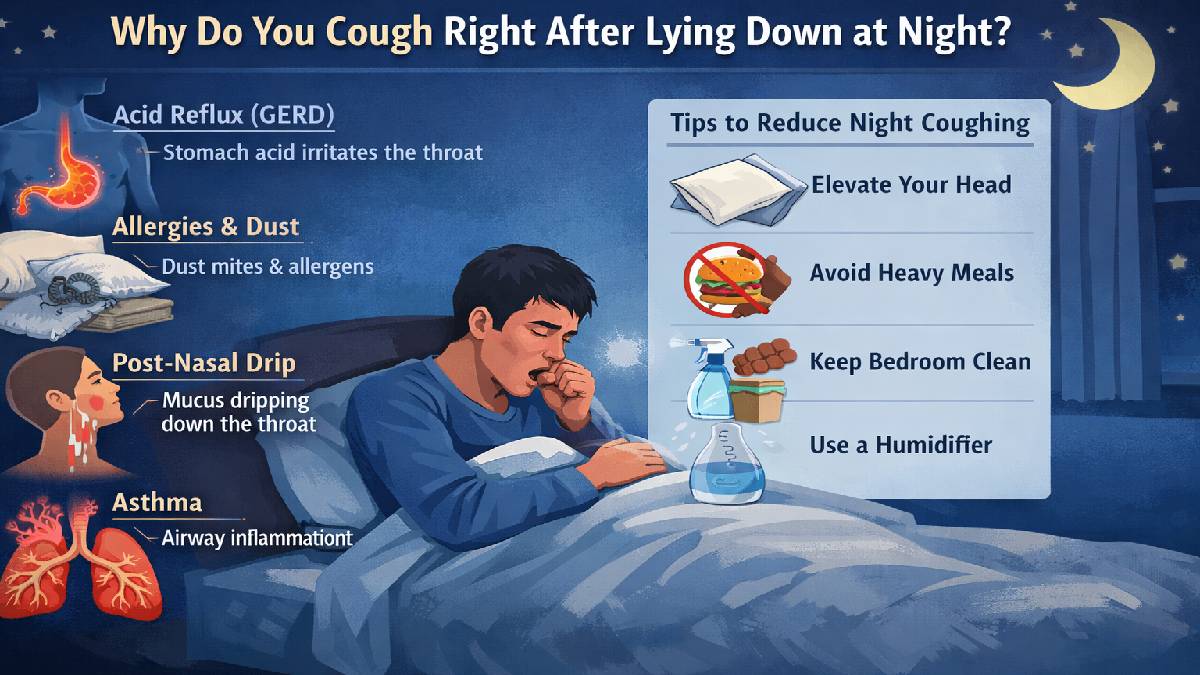
Acid Reflux (GERD)
One of the common causes of cough is acid reflux, or GERD in short. When a person lies, acid in the stomach can refill a food pipe and occasionally make its way back into the throat. This annoys the throat and airways causing the body’s cough reflex. Those suffering from acid reflux might also experience symptoms, including a burning feeling in the chest or throat, a sour taste in the mouth, or pain after eating. Not eating heavy food before going to bed and keeping the head slightly elevated in sleeping can mitigate these symptoms.
Allergies and Dust Exposure
A common cause is allergies or dust exposure. Furniture products like pillows, blankets and mattresses can trap dust, dust mites and other allergens. When you lie down, these particles can irritate your respiratory system and elicit coughing. Sneezing, a blocked or runny nose and throat irritation along with the cough are also common feelings among some people. Keep the bedroom clean and wash bedding regularly to reduce allergic reactions.
Post-Nasal Drip
The second possible reason is post-nasal drip. It happens when the excess mucus from the nose or sinuses slowly trickles down the back of the throat. When a person lies down, the mucus tends to accumulate more readily, irritating the throat and causing reoccurrence of coughing.
Asthma and Dry Air
There’s also nighttime cough, which can be associated with asthma. Asthma symptoms frequently get worse at night as airways become inflamed or breathing patterns change during sleep. And dry air from air conditioners or fans can dry the throat or airways, prompting irritation and coughing.
Practical Tips
Avoid heavy meals and stay on your feet at night, when possible, warm and drink warm water before bedtime to decrease any coughing at night, as well as to keep your sleep environment clean, and slightly lift your head, when sleeping on one side.
When to See a Doctor
If the cough continues to be persistent for more than two weeks, is particularly severe, or arises in response to fever or difficulty breathing, contact to see a doctor. Note that these details are not intended for medical advice. Please see a trained physician for accurate diagnosis and treatment.