Empaths don't appeal to narcissists because of the weakness, naivety and brokenness they possess. You’re not “narcissists,” you’re “means to attract narcissists,” and because they tend to be in the rare cluster of emotional depth, intuition and compassion traits that narcissists crave but hardly have the power to find within themselves they will be the ones who will attract narcissists. This juxtaposition provides a very potent psychological pull. Connection often morphs into imbalance, confusion and emotional damage. Knowing the dynamic is the first step in breaking it.
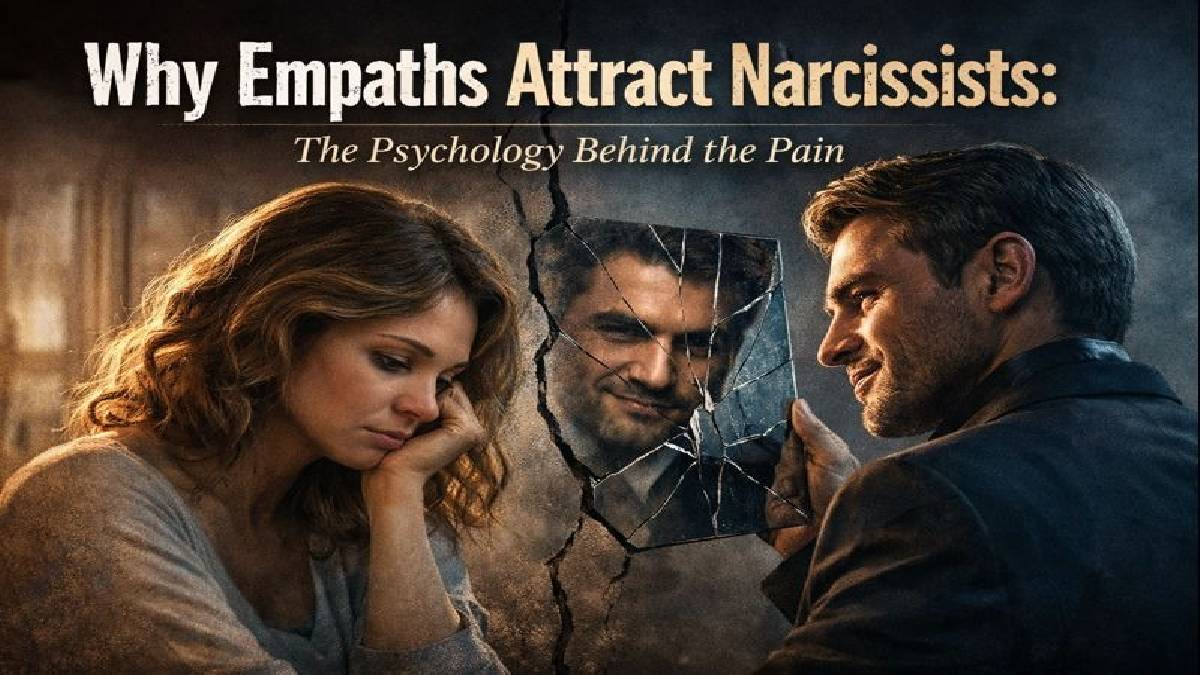
Empaths Read the Wound Under Your Mask. Empaths are so aware of the emotional undercurrents. They also feel even when it is masked in confidence, charm or arrogance. Where others find ego, the empath finds insecurity. Others have eyes on anger and feel abandonment. This insight is not a weakness even if you have a terrible one yet turns against someone if she has no plans to heal. This sensitivity is frequently a cognitive trait that narcissistic personalities recognize, and when inadvertently used to garner attention, validation and emotional labor.
Empaths Give Without Keeping Score Narcissists Take Without Limits. Empaths provide love freely and generously. They put forth emotional costs though that with the mutual care of both sides can the connection that happens grow stronger. The narcissist, however, views relationships as sources of supply -- attention and attention-giving, admiration, assurance, control. The narcissist continues to take as an empath returns because her emotional investment in return tries to restore a happy living situation. As time passes, the relationship moves from collaboration to extraction.
What the empath experiences as love, the narcissist experiences as opportunity. Intensity Is Misunderstood to Be Depth. Narcissists in the early stages of a relationship tend to love-bomb: they use overwhelming attention, passion and idealization. To an empath, this intensity feels like emotional resonance, the feeling of being finally seen and matched. But intensity is not intimacy. When admiration turns to withdrawal, jealousy, criticism or control, the empath is left bewildered, seeking to replicate the emotional high that never represented connection at all at first. It was not deep. It was controlled in the costume of love.
There is an Imbalanced Cycle Between Nurturers and Takers. Empaths are naturally nurturers. They’re sensitive listeners, affirm expressions to one another, validate feelings, and strive for understanding. Narcissists, by comparison, tend to monopolize conversation, invalidate others’ wants and needs and need unending emotional support. This produces a predictable pattern:
The empath becomes the healer. The narcissist emerges as the consumer. Through time, these emotional resources are depleted for the empath, while they feel entitled to more for the narcissist. Peace Versus Power. Empaths prioritize harmony. They’ll soften their attitude, apologize immediately, and attempt to resolve any dispute. Narcissists tend to employ conflict strategically to reassert themselves and reinstate authority, provoke responses, or regain control. The empath thinks they want peace.
Power is the goal, the narcissist believes. If a partner is motivated by control rather than connection, any amount of empathy cannot make someone into an emotionally mature partner. Hope is an Instrument of Control. Empaths have an innate fondness for potential for who someone would be, if they heal, feel safe or try harder. Narcissists ride under this hope, occasionally glimpsing kindness, or being weak. These moments keep the empath invested: remembering who the narcissist was at first. believing love will suffice. waiting for promised change.
Hope, in this kind of dynamic, turns into a leash. Why Narcissists Pursue Empaths and Fear Losing Them. Narcissists often choose empaths because they know they will:forgive repeatedly. over-explain their feelings. doubt themselves. stay longer than they should. But empaths are also the most difficult to replace. That is, once an empath becomes self-aware when they stop trying to heal someone the self benefits from hurting they leave, quietly and totally. They do not argue; they do not seek closure. They do not return. And when they depart, they bring something that the narcissist cannot replicate: real empathy, emotional depth and real connection. Final Thought. If you identify with and recognize yourself in this dynamic, know this: You were not “too sensitive.” You were not too demanding. You were providing authenticity to someone who eked out a life through mimicry. That is: Awareness is not bitterness, it is freedom. And learning to safeguard your empathy is not selfish, it is essential.