There is a tendency for most people to assume that changing someone’s mind is a matter of presenting better facts, stronger evidence, or more logical arguments. But changing your beliefs is so much more complicated. Most of our beliefs, values, and worldviews are very much inextricably linked to the communities we belong to. And when you call people out on a belief and ask them to quit it, they might feel that they’re being asked to give up their social identity as well.
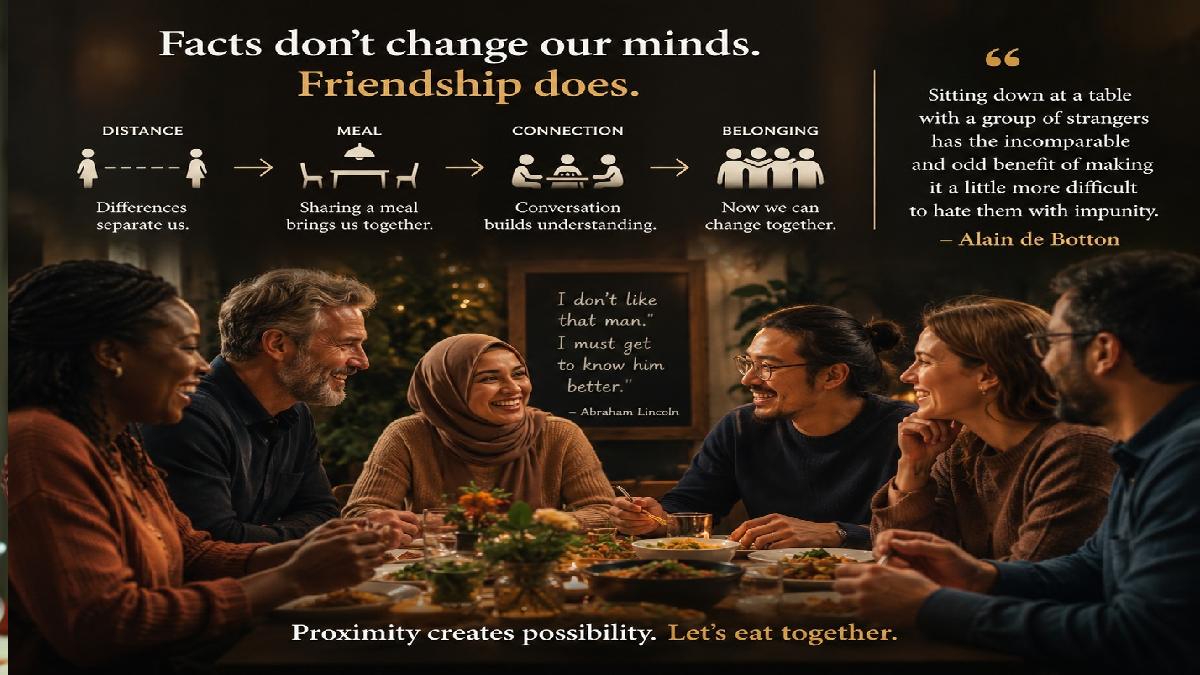
In politics, religion, culture, or lifestyle, people's beliefs are connectors between their families, friends, and social networks, so that changing their minds can be seen as undermining their sense of belonging. Fear of losing relationships and social acceptance is often more important than acceptance of new information.
The Hidden Cost of Changing Beliefs.
If you hold some very strong beliefs that people disagree with you on, that is not only a matter of intellectual disagreement; they can also be criticised and rejected, and even separated from people they care about. This social cost is what makes people hold to them when they have evidence that they are not.
Human beings are social beings. Members of a group have been important for humans to survive for centuries. The psychological need for connection is also very much present in modern society. You are naturally reluctant to embrace ideas that may separate you from your tribe or community.
It is why debates rarely change minds. Direct attacks on someone’s beliefs are stressful and can leave them feeling defensive and threatened. And so rather than reconsidering their stance, they might become even more firmly committed to it.
Friendship as a Path to Understanding
If facts do not change opinions very often, then what does work?
Psychologists and social theorists say that meaningful relationships are some of the most powerful ways to influence beliefs. When people feel accepted and respected, they are more open to new perspectives. Trust creates a safe environment where ideas are open to exploring without fear of being rejected.
Changing minds usually starts with friendships rather than arguments. Bringing people into a community, being empathetic, and creating genuine connections can help them reconsider their views and feel that they are not alone.
In this sense, persuasion is not only about information. It is about creating a sense of belonging that allows personal growth and change to occur naturally.
The Power of Sharing a Meal
The British philosopher Alain de Botton proposed a rather simple solution to the problem of prejudice and hostility: having meals with people with different opinions.
De Botton says that sitting around a table with strangers creates a sense of human connection that makes it more difficult to see them as enemies. Simple acts like passing food, talking to one another, and spending time together are what transform those abstract stereotypes into solid human relationships.
Prejudice is much more likely to flourish when people are far away from one another. Personal interaction breaks down barriers and facilitates understanding. When people share experiences, they see each other as people and not labels or opposing points of view.
Why Human Connection Matters More Than Ever?
In our digital age, we have so many discussions online, and disputes can quickly turn into arguments and can be quite nasty. Social media often spreads division by dividing people into opposing camps so that meaningful dialogue and understanding are scarce.
Building bridges through conversation, friendship, and shared experiences offers an alternative path. Instead of focusing solely on proving others wrong, people can focus on creating environments where mutual respect exists. Agreement is not guaranteed to be reached, but it increases the chances of understanding.
Conclusion
Changing people’s minds is rarely about winning an argument. In many cases, it is more about making them feel safe to try new things without losing their sense of belonging. Beliefs are much more tied to identity than community, and social acceptance is an important factor in personal growth.
People who create friendships, promote empathy, and spaces for genuine human connection can create an open-minded mind in a way that facts cannot. In some cases, the best way to change someone's mind is not through debate but conversation over food.