
In India, matters of tax law are usually settled through key decisions. One of the famous cases and one of the more discussed ones was of a legendary actor R. Rajinikanth. The case, Rajinikanth vs Commissioner of GST & Central Excise, was heard by the Customs, Excise and Service Tax Appellate Tribunal (CESTAT), Chennai. It focused on whether service tax should be levied as value on the rent made from premises leased for hotel operations.
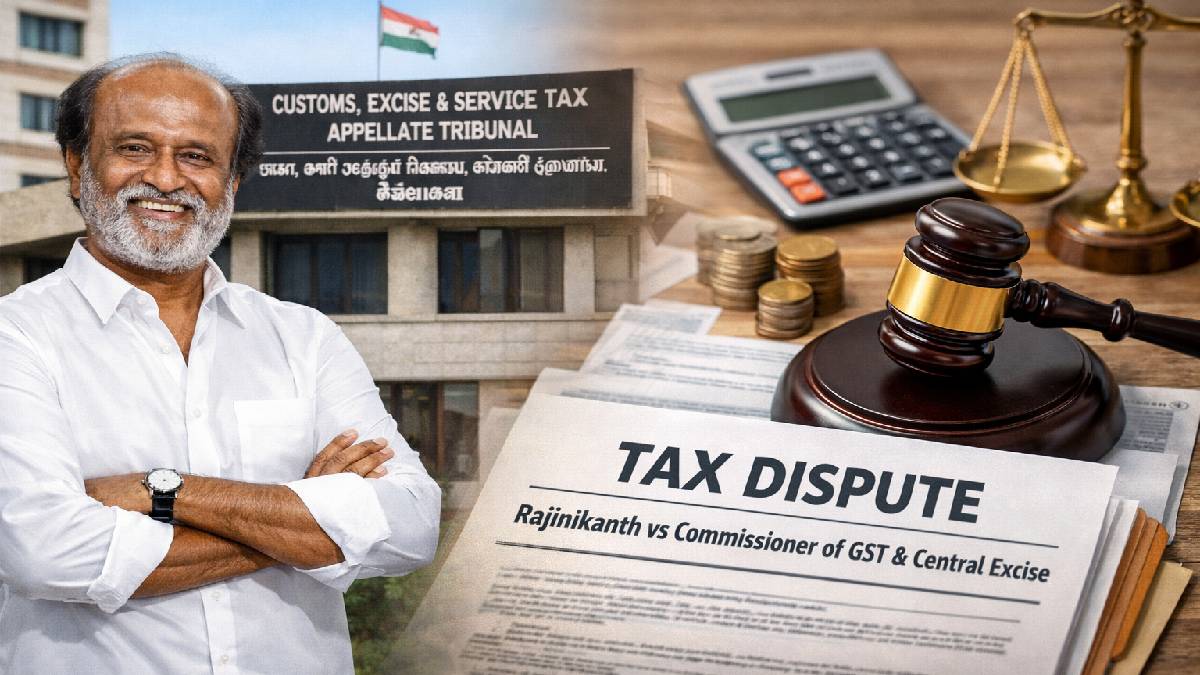
The Case's Superstar
Rajinikanth, aka Shivaji Rao Gaikwad, is one of the most recognizable actors in Indian cinema. Born December 12, 1950, in Bengaluru, he had ascended from humble origins to become a cultural phenomenon. Before going into films, he was a bus conductor. Starting from Apoorva Raagangal, a Tamil film directed by K. Balachander, his acting career began.
Rajinikanth would come to appreciate his stylish screen performance, powerful dialogue, and huge fanbase over the decades. Baashha, Sivaji: The Boss, Enthiran and other blockbuster films earned his global star status. Due to his phenomenal popularity, a lot of fans refer to him as “Superstar Rajinikanth.”

The Tax Dispute
Apart from his career, Rajinikanth also owned a multistorey commercial building. He leased the property to Vasantha Bhavan Hotels India Pvt. Ltd., which had used the premises to run a hotel.
Subsequently, the tax collection department alleged that Rajinikanth did not pay a service tax on the rental income derived from this land. The building was rented for commercial purposes as belongs to “Renting of Immovable Property Service,” which was at the time subject to service tax laws.
Rajinikanth claimed that the property was leased for "a hotel's business operation only and can't be treated as a normal commercial rental." They stressed that the type and purpose of the lease were important arguments to consider if a service tax is to be imposed.


Tribunal’s Deciding Task
The tribunal found that leasing a building to run a hotel operation cannot automatically be considered to be taxable ‘renting of immovable property service.’ For this reason, the tax demand raised by the department was set aside.
Why the Case Matters
This one made an important tax code reference because it allowed the question of how rental income for properties utilized in hotel business should work. It noted that when applying tax provisions, tax authorities need to assess the nature of a transaction before applying tax provisions.
Just as with Rajinikanth, which serves as yet another example of global celebrities having their tax affairs thrown into a legal or tax cloud. More importantly, it highlights the judiciary's role in reading tax statutes and their application as a mechanism of fairness.









Comments