
A video on social media has sparked outrage over the treatment of wild animals after two men were allegedly filmed throwing stones at an elephant in Karnataka’s Nagarhole Tiger Reserve. Calls have been made for action against those involved and about dangers of disturbing wildlife in protected forest areas.
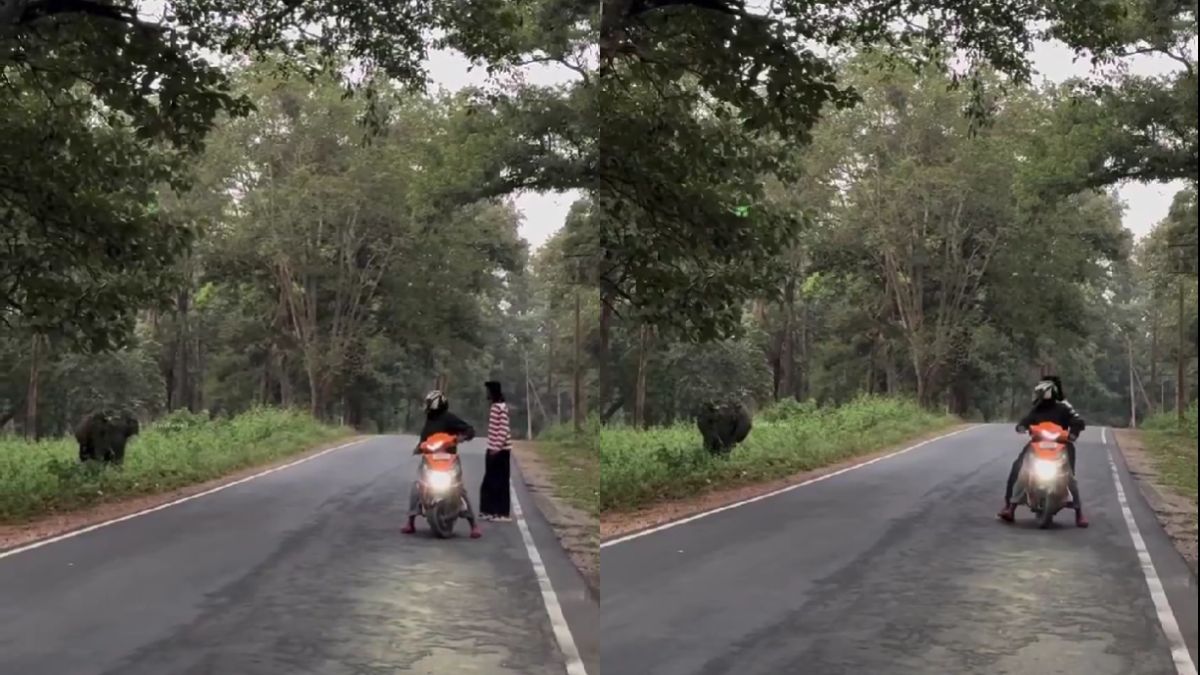
The video was shared by an X user tagging Karnataka Forest Department and Nagarhole Tiger Reserve authorities asking them to identify the people in the video and take legal action against them.
What Happened Inside Nagarhole Tiger Reserve?
Two men were seen throwing stones at a wild elephant while vehicles were parked nearby. The post said they were deliberately harassing the animal instead of letting it move through its natural environment.
The incident has been criticised by wildlife supporters who say visitors entering forest areas must stay at a safe distance from wild animals and not do anything that could provoke them.
This is a lesson in basic civic sense and co-existence. Two men were filmed throwing stones at a wild elephant inside Nagarhole Tiger Reserve, stopping vehicles and deliberately harassing it. The elephant did not enter their home they entered its home and chose to attack it. Wildlife is native to these forests. We are temporary visitors. Throwing stones, shouting or provoking wild animals is both illegal under the Wildlife Protection Act and extremely dangerous. When humans behave like this, conflict increases. When the elephant finally reacts, it is unfairly labelled “rogue”. @aranya_kfd @nagaraholetr Kindly identify and book the offenders so this serves as a strong lesson for all visitors. Leave wildlife in peace. Drive on. Do not stop. Do not throw stones. #Nagarhole #WildlifeAwareness #CivicSense
— ಸನಾತನ (सनातन) (@sanatan_kannada) November 18, 2026
The video has also reignited discussions about responsible behaviour amongst motorists and tourists travelling through wildlife habitats.
Wildlife Harassment Can Have Serious Consequences
Elephants are strong wild animals and when threatened, cornered or disturbed they can be aggressive. Stones thrown, shouting, getting too close or blocking their path increase the risk of an unpredictable reaction.
These types of incidents can also lead to human-elephant conflict. If an animal reacts defensively after being provoked it may be labeled dangerous or rogue even though human behaviour has caused the confrontation.
Wildlife experts and forest rangers tell visitors all the time to stay in their cars, keep a safe distance from animals and not make loud noises or try to draw attention to themselves.
What Does the Wildlife Protection Act Say?
The Wildlife (Protection) Act, 1972 contains provisions for not disturbing wild animals in protected areas.
Section 27(4) says that no person shall tease or molest a wild animal nor litter the grounds of a sanctuary. Section 51 sets out penalties for violations of the Act.
Depending on the offence committed and the provisions under which it is made punishable, violations can lead to imprisonment or fines or both. The charges and penalties would be different depending on what the forest authorities find and what happened in reality.
Calls for Action Against Those Involved
Social media users have since asked the Karnataka Forest Department to identify and take action against the two people in the video.
The post also had a broader message about wildlife conservation forests are natural habitats for elephants and other wild animals. Tourists and motorists are visitors who must respect them.
At the time of writing there was no independently verifiable confirmation of the identities of people in this video or arrests related to it.
How Visitors Should Behave Around Wild Elephants
Visitors travelling through forest reserves should observe basic wildlife safety rules:
- Never throw stones or objects at wild animals.
- Avoid shouting, honking or making sudden noises.
- Don’t approach elephants for pictures or videos.
- Keep a safe distance and don’t block an animal’s path.
- Follow instructions issued by forest officials.
- Don’t get out of vehicles to approach or provoke wildlife.
The incident is a lesson in responsible behaviour for protecting people and wildlife: wild animals need to be allowed to move unhindered through their natural habitat so human-wildlife conflict can be reduced.





Comments