
New Delhi: Prime Minister Narendra Modi on Friday called on young Indians to acquire skills and become more capable and adapt to new technologies as rapid technological advancement is changing the face of workplaces and job opportunities in India and what opportunities are available to them.
He also stressed the need to build the skills needed for future jobs as the job market and the changing business environment call for skill development to match global skills and the skills that are required to meet the market.
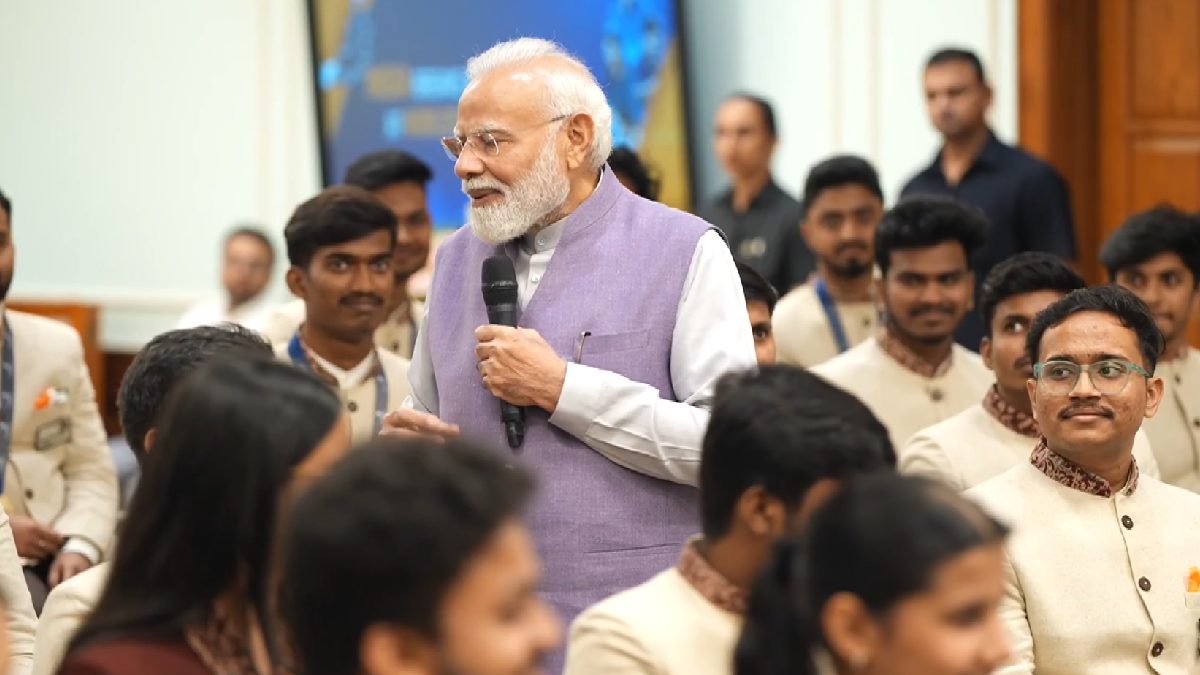
Modi spoke at the WorldSkills Competition in Shanghai to representatives of Indian participants. The interaction focused on the role of vocational training, specialised skills, and young professionals in improving India’s skills sector in the global skilled workforce.
As reported by sources, the Prime Minister stated that a coordination of young people, the government, and training institutions would be required to make India the global center of skilled human resources. He counseled students to continue learning, enhance the skills they have, and open up to new technologies throughout their lives.
PM Modi Emphasises Upskilling To Work For Future Jobs
In a speech that made Modi’s point of view about how technology is changing rapidly, young people need to continuously update their knowledge and skills in order to work in a way that is relevant to the changing world of work and be responsive to the changing work demands in the workplace.
Technologies are evolving, and new technologies are taking shape in industries, so workers are hungry for new tools and software and for specialist technical systems.
Young people need to develop skills that match international industry requirements, the Prime Minister said. He also encouraged them to be aware of the changing expectations of employers and prepare for opportunities in technology-driven sectors.
Upskilling has become increasingly important as businesses adopt automation, artificial intelligence, digital platforms, and advanced manufacturing processes. The skills of workers who are constantly updating their skills will be better prepared to adjust to new responsibilities and changing job roles.
Modi’s message was that skill development should continue to develop as an ongoing process, not just a form of formal education. Young people should be ready to learn new methods and technologies as industries change, he said.
Skill Training Institutions As Important As IITs And IIMs
Modi stressed the importance of vocational and technical training institutions in India's education and job ecosystem in the meeting. He emphasized that skill training institutions are no less important than the IITs and IIMs in terms of setting up a Ministry for Skill Development, and that the goal is to improve the quality of education and skill development.
The emphasis is that practical, job-oriented education is now more important than academic qualifications. While universities and professional colleges provide theoretical knowledge to develop skills, vocational training can also help students develop the practical skills for certain jobs and sectors in a hands-on way.
Skill development programmes can prepare young people for careers in manufacturing, construction, information technology, healthcare, automotive services, hospitality, and other technical fields. Training for industry needs can also help bridge gaps between the qualifications of jobseekers and the capabilities employers require.
The Prime Minister put vocational education in the context of a wider thrust to prepare India’s workforce for changing economic and technological conditions. Better training institutions and the relevance of their courses could help bring young people a larger range of jobs.
Participants Asked To Share Their Experiences
Modi encouraged Indian participants in WorldSkills to share their experiences and suggestions with the government. Their feedback, according to the official statement, could improve India’s skill training ecosystem and make training programmes more responsive to the needs of learners and employers.
Participants told of their experiences at the international competition and how new tools and software are to be integrated into the training. In terms of international standards and working methods, the ability of the professionals to compare to their competitors from other countries can help us see how we are better at it.
Such experiences can also offer valuable insights into the practical needs of different industries. Returning from international competitions may be able to share new techniques, training approaches, and professional practices with other learners and institutions.
The Prime Minister’s call for suggestions also highlighted the potential of young professionals in shaping skill development policies. Feedback from people who have done technical training and competed internationally can help identify areas where courses, equipment, teaching methods, or assessment systems may need improvement.
What is the WorldSkills Competition?
WorldSkills is one of the leading international skills competitions and involves young professionals at different levels of vocational and technical skill development. In what could be seen as an international event, the participants are able to share practical skills, learn from each other, and benchmark on an international level.
The technical proficiency, accuracy, problem-solving, flexibility, and adaptability of competitions like these are critical. They also focus on jobs that require intensive training as well as practical experience and contrast with the academic qualification-based focus.
For Indian participants, taking part in WorldSkills is an opportunity to gain exposure to international training and industrial work and learn from them. If these experiences can be shared with teachers, institutions, and policymakers in India, it can be useful for training to be better.
Building a Future-Ready Skilled Workforce
India’s ability to respond to technological change will be largely dependent on how well its workforce can acquire new capabilities. As industries develop new systems and tools, training programmes will need to keep pace with changing job requirements.
Modi’s interaction with WorldSkills participants highlighted the need for collaboration between young professionals, the government, and training institutions. Stronger links between training providers and industry will help train learners in practical skills that are relevant for available and emerging jobs.
For young Indians, the message is to be curious, embrace new technology, and invest in continuous learning. For training institutions, it is to provide relevant and high-quality education that responds to industry needs. Together, these efforts could enhance India's skilled workforce in the future and improve its position in the global market.






Comments
Leave a Comment