An ancient Egyptian hat has been re-erected as a museum piece in a century-long museum collection, a 2,000-year-old Egyptian hat dating back to the Ptolemaic or early Roman period that conservationists have carefully restored to reveal its intricate craftsmanship and shed light on everyday life in ancient Egypt.
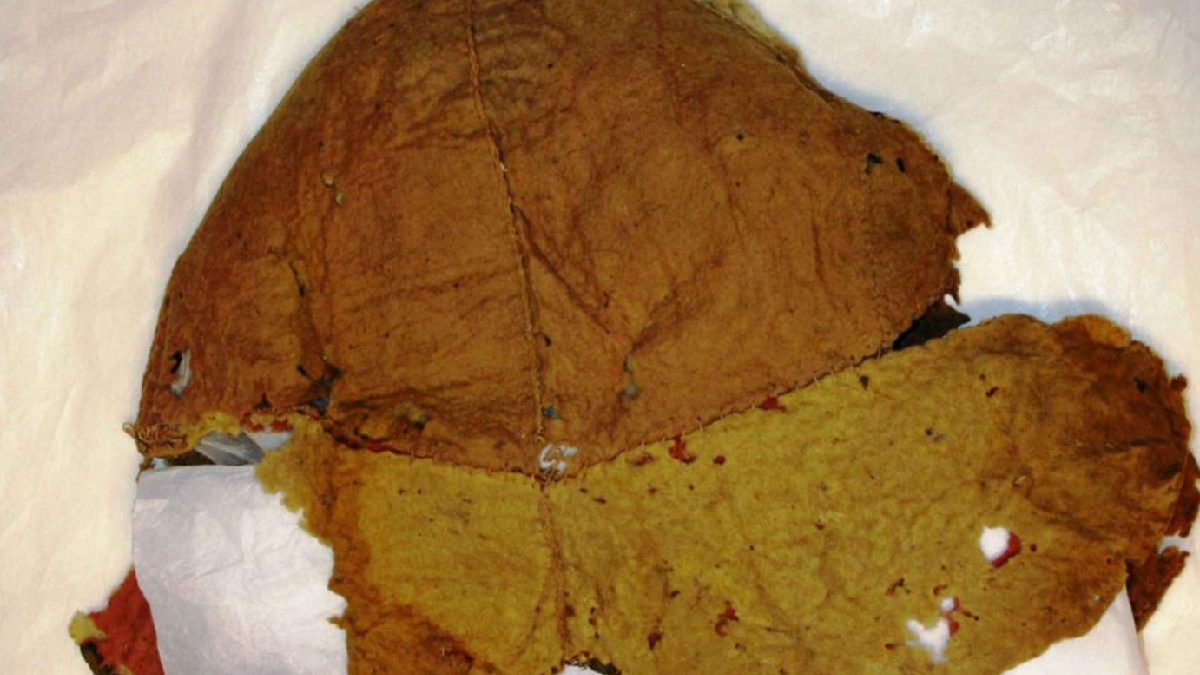
The rare object was kept in museum storage for over 100 years after it was acquired during archaeological excavations in the early 20th century. Because it was so fragile and exhibited such a bad condition, it never really received much scholarly attention.
However, conservation efforts have turned the neglected object into a valuable historical treasure.
Hence, experts used sophisticated restoration techniques to stabilize the delicate fibers, remove accumulated dirt, and preserve the hat without damaging its original structure. The painstaking process allowed researchers to study the artifact in detail and reveal that the weaving process and natural materials have survived nearly two millennia.
The hat is believed to have been made from plant fibers that were readily available in ancient Egypt. It is thought that it may have been worn for protection from the hot desert sun and also to be useful as a tool of daily life.
And yet the style of the hat, though simple and utilitarian, shows that ancient Egyptians were very skilled weavers in the production of textile materials long before the invention of modern tools.
Archaeologists say the discovery underscores the necessity of revisiting museum collections in the modern age of conservation technology.
Almost all of the thousands of artifacts kept in museums worldwide are still uncollected as they were catalogued decades ago when scientific study methods were so limited.
Today’s state-of-the-art imaging and restoration techniques are helping researchers to discover long-forgotten stories within these collections.
The restored hat does give us some information about how people used to dress during the Greek and Roman times and how they adapted to the cultural and political climate as a nation.
Museum officials hope that the restoration of the artifact will make people recognize the importance of conservation work. Though such huge jewels like golden masks and royal tombs can get national attention, everyday objects such as hats, sandals, baskets, and textiles tell a lot about people’s lives.
Conservation experts stressed that preserving ancient organic materials is particularly challenging because plant fibers naturally decay over time. The restoration shows that modern conservation science can extend the lifespan of fragile archaeological finds for future generations.
The unveiling of the 2,000-year-old hat is another reminder that museums hold untold stories that we have yet to discover.
With new technologies around us and new researchers able to study archived materials, more ancient artifacts are going to be unearthed, and our understanding of those ancient civilizations might change.
This restoration is not only great but also reconnects the modern world with the art and innovation of people who lived along the Nile River thousands of years ago.