Bengaluru-based electric two-wheeler manufacturer Ultraviolette Automotive has announced an ambitious growth strategy: an investment of ₹1,000 crore over the next five years to build industrial capacity to develop its production capacity, expand its supply chain, grow exports, and to have more electric vehicles. The company is preparing for the next phase of growth with new products and production platforms, and large-scale manufacturing in the form of new products and big-scale production is in the works.
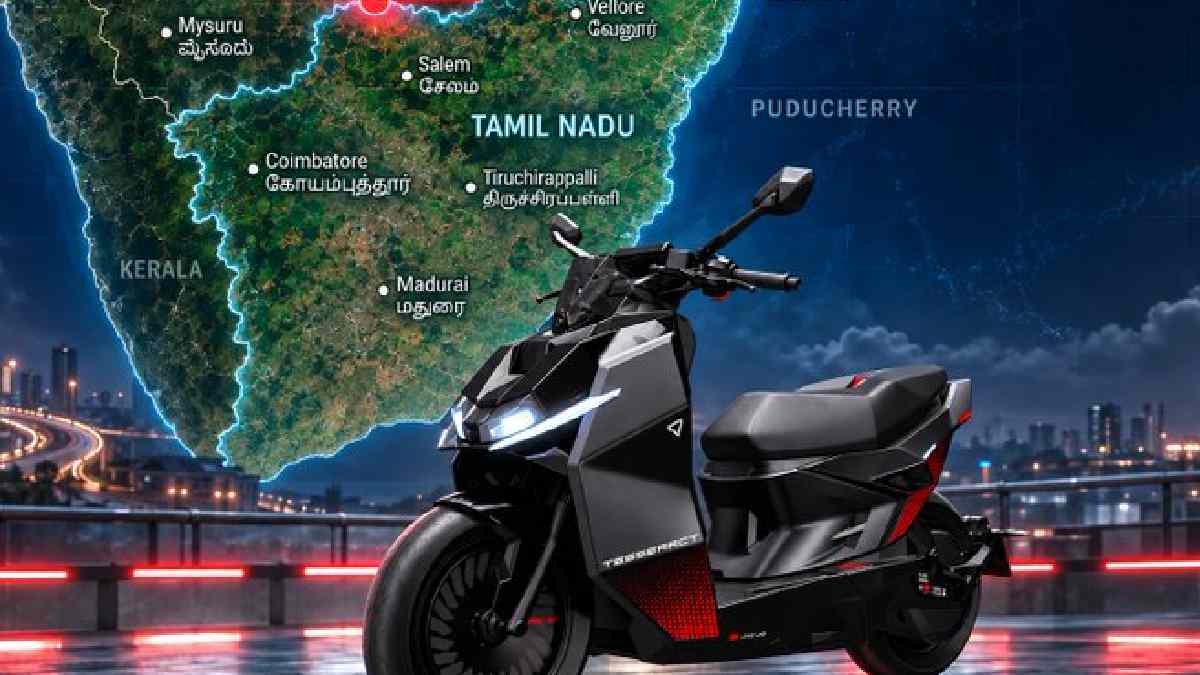
According to company officials, about ₹200 crore of the proposed investment will be devoted to the expansion and upgrading of Ultraviolette’s existing manufacturing facility. The remaining ₹800 crore will be invested in a new production plant in Tamil Nadu. This is by far the biggest expansion plan of an Indian electric two-wheeler manufacturer in recent years.
The plant will be located at SIPCOT Industrial Park, Shoolagiri, Tamil Nadu. When fully operational, it is expected to produce 500,000 electric vehicles annually. Ultraviolette Co-founder and CEO Narayan Subramaniam said the company’s current facility is also being upgraded to support annual production of about 50,000 units.
This first phase of the Tamil Nadu manufacturing facility will have the capacity to produce 250,000 vehicles per year. The company expects the plant to gradually ramp up and eventually reach its full annual production capacity of 500,000 units. It will help meet the mounting demand for electric two-wheelers in India and the world.
Ultraviolette’s investment strategy is closely related to its plans for a six-product electric vehicle portfolio. The company is currently producing the F77 and X47 electric motorcycles, but it is going to grow its product portfolio considerably soon. The Shockwave, a light electric motorcycle, and the Tesseract, Ultraviolette’s first electric scooter, are going to be announced in the future.
The company’s long-term vision is to have four electric motorcycles and two electric scooters. With two motorcycles already available in the market and more products on the way to be developed, Ultraviolette is positioning itself as a major player in India’s rapidly growing electric mobility sector. A diverse product range will help the company attract a wider customer base and accelerate EV adoption.
Exports are also expected to become a bigger part of Ultraviolette’s business. Exports will be closer to 15 percent of total production at first and then about 25 percent. The company is targeting international markets such as Europe, North America, and Latin America, and pilot programs in Southeast Asia. Ultraviolette has already been in nearly 20 European countries and believes that is only the beginning of its international ambitions.
The new manufacturing facility will have an automated battery-pack assembly line that will manufacture battery packs of different capacities. The company will be able to produce batteries for multiple vehicle platforms and battery packs - from smaller packs for scooters like the Tesseract to larger battery systems for premium motorcycles such as the F77 and X47.
Ultraviolette has emphasized that entering the scooter space is not an investment but a matter of strategy that is not new to the company but is part of a long-term vision in which the company has been at the forefront since it was created in 2017. But that is too late - and it is now about time for its product portfolio to expand.
The Tesseract electric scooter has already generated huge attention. Based on early bookings and demand indicators, Ultraviolette believes the scooter could reach monthly sales volumes of around 10,000 units. This demand has been generated with minimal spending on traditional advertising and marketing campaigns.
Ultraviolette is also looking to improve localization in its supply chain, they say. Currently, some critical components such as battery cells, microcontrollers, semiconductor chips, and magnetic materials are imported. But Indian suppliers are increasingly developing capabilities to produce these components locally, the company says.
Ultraviolette will significantly reduce the dependency of its supply chain on imported components in the next 3 to 4 years and establish a highly localized supply chain. This approach is expected to enhance cost efficiency, strengthen supply chain resilience, and aid India’s larger manufacturing goals.
Although very ambitious in expansion, the company is still focused on sustainable profitability. Ultraviolette will keep developing its core technologies and services at home to maintain more control over product development, less dependency on external suppliers, and to be competitive in the EV industry.
Ultraviolette is one of India’s most ambitious electric vehicle startups as it looks to convert from a premium electric motorcycle manufacturer into a full-fledged electric mobility brand that has a broad range of customers in various vehicle segments and wide global markets.