It is the birthday of Amelia Earhart, one of the most celebrated aviators in history and an icon of courage, determination and adventure, whom we can always celebrate on the 24th of July.
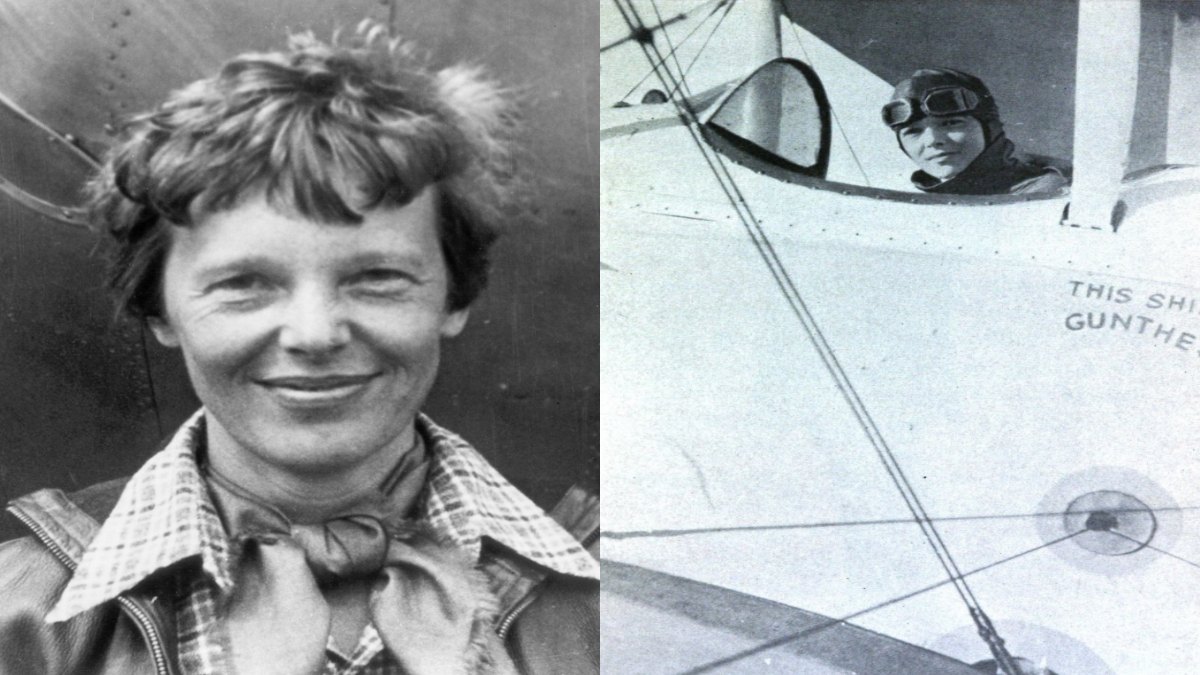
Born in Atchison, Kansas on July 24, 1897, Earhart broke barriers in aviation when the whole field was still a fledgling one and women faced many obstacles going into careers in science and technology. She has inspired millions of people worldwide and many young women who dream of going to the sky and beyond.
Amelia Earhart's interest in aviation began in the early 1920s when she took her first airplane ride. She was fascinated with the experience and got to learn to fly and soon become a pilot's license holder. She soon found fame for her extraordinary flying skills and her determination to push the bounds of what was possible.
In 1928, Earhart became an international celebrity when she became the first woman to fly across the Atlantic Ocean as a passenger. She never even flew the plane on her way to this day’s first passenger flight but was one of the most famous pilots she was able to fly with in the world and became an international figure in aviation.
Her greatest accomplishment was in 1932 when she became the first woman to fly solo across the Atlantic Ocean, successfully completing the challenging journey from Newfoundland, Canada, to Northern Ireland. This remarkable accomplishment earned her numerous awards and recognition, including the Distinguished Flying Cross, making her the first woman to receive the prestigious honor.
In the course of her career, Earhart set a number of aviation records, including speed and altitude. She was also a vocal advocate for women’s rights and advocated for women in aviation, engineering and other professions that have historically been dominated by men. Her achievements demonstrated that determination, skill and courage were as important as gender.
Amelia Earhart was a great author, speaker and teacher as well as a pilot. She wrote books and spoke, motivating people to dream big and challenge society. Her message of persistence and self-confidence is still alive and well.
One of aviation history’s greatest mysteries is the last flight of Earhart. In 1937 she was on her way to be the world’s first woman to fly around the equator when she and her navigator, Fred Noonan, both disappeared over the Pacific Ocean. Her fate is still one of the greatest mysteries of the twentieth century: despite efforts to find her and decades of search, her existence is not known.
Even though Amelia Earhart’s life ended in mystery, her legacy has only grown stronger over time. Museums, educational institutions, scholarships and aviation organizations around the world continue to honor her achievements. Her story is taught in schools as an example of resilience, leadership, and fearless exploration.
Women still make great contributions in aviation, aerospace engineering and space exploration. Many astronauts, pilots, scientists and engineers credit pioneers such as Amelia Earhart for inspiring them to take careers that were once impossible for women. She is now very much a part of the rise of female commercial pilots, military aviators, aerospace professionals and astronauts all over the world.
As the aviation industry embraces innovation with new aircraft, sophisticated aerospace technologies and commercial space travel, Earhart’s pioneering spirit is more relevant than ever. She is the ultimate proof that curiosity and courage can overcome even the greatest challenges.
Amelia Earhart is also remembered in all nations, but her achievements and love of what she did in her life can be written down as a legacy that will remain.