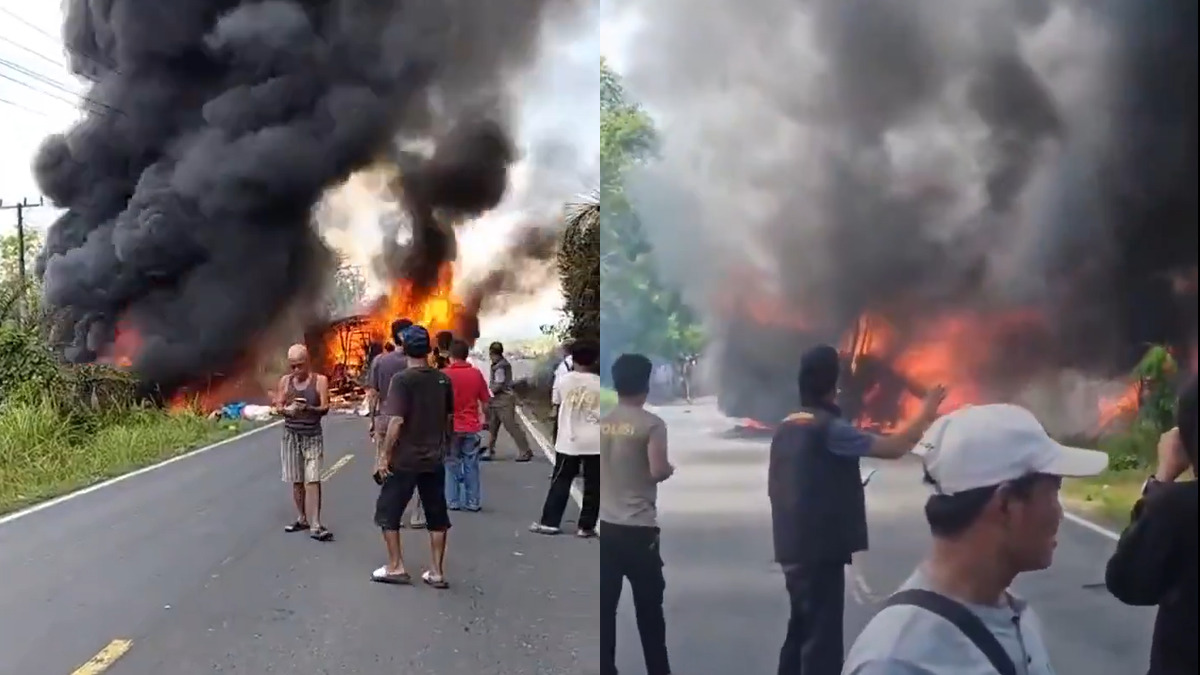
Indonesia’s Mount Anak Krakatau, one of the world’s most active volcanoes, continues to spew ash clouds and lava fountains into the sky in the Sunda Strait, disrupting air travel across the region.
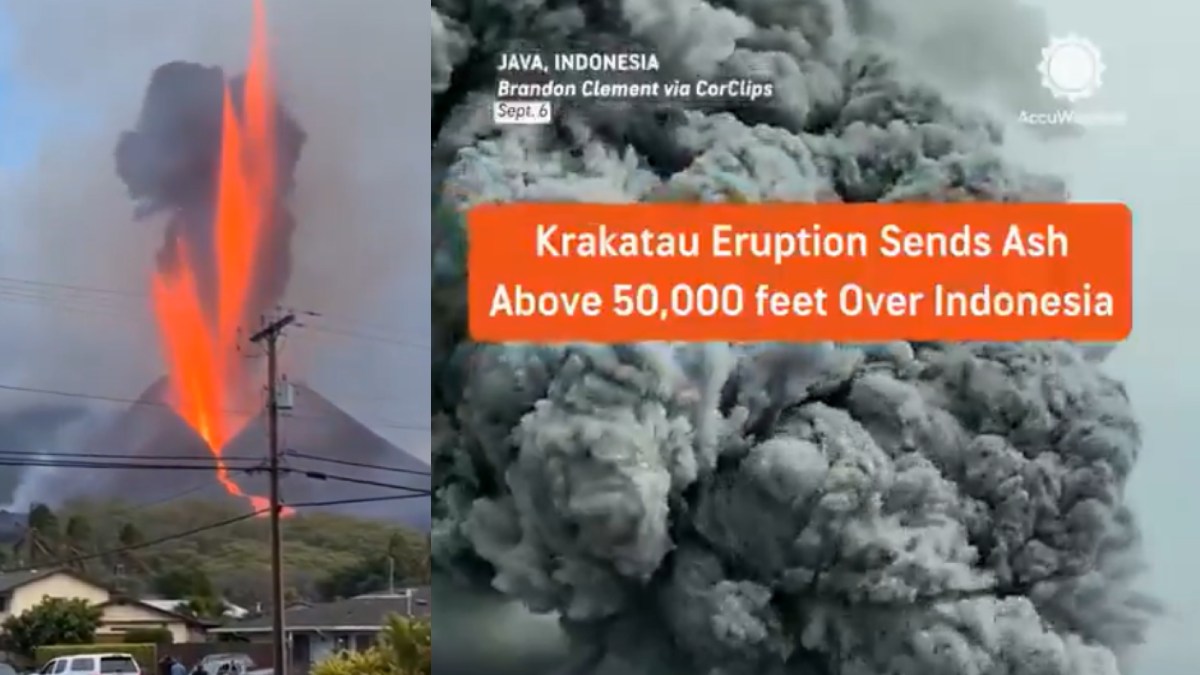
The volcano has been put under Alert Level III (high volcanic activity and monitoring needed), and reports from the area say loud roaring sounds have been coming from the volcano as lava continues to erupt and large quantities of volcanic ash are rising into the atmosphere.
The eruption has also made residents and aviation authorities nervous because volcanic ash can seriously endanger aircraft operations and public safety.
Massive Ash Cloud and Lava Activity
Anak Krakatau is between the Indonesian islands of Java and Sumatra. It has been very active over the past few days, with witnesses and monitoring agencies reporting spectacular but dangerous scenes where glowing lava was being ejected from the crater while thick ash clouds spread across the surrounding region.
The volcano has also produced a huge ash column that rises about 15 kilometres (50,000 feet) into the sky. That puts volcanic ash directly into air routes used by commercial aircraft.
The volcanic activity has been continuous, so ash clouds have been drifting toward populated areas (around Jakarta, the capital city of Indonesia).
Major Impact on Air Travel
The eruption has had an impact on Indonesia’s aviation industry.
Authorities closed eight airports as a precautionary measure because of volcanic ash. About 3,000 flights were disrupted, and more than 341,000 passengers were inconvenienced.
Volcanic ash is one of the most dangerous hazards for aviation because it damages aircraft engines, reduces visibility and interferes with critical flight systems.
As a result, airlines have had to cancel flights, delay departures and divert aircraft away from the airspace affected.
Several international and domestic flight routes have been disrupted, including services to Jakarta from Singapore, Kuala Lumpur, Sydney, Doha and Seoul.
Jakarta Airport Resumes Operations
After ash levels started dropping in some places, Indonesia reopened several airports on Tuesday.
Among the facilities that reopened was Soekarno-Hatta International Airport, the country’s busiest airport and gateway to Jakarta.
Five airports were able to restart operations after aviation authorities determined conditions had improved sufficiently for safe flight activity.
However, officials have said that the situation is fluid. Wind direction changes could yet again send volcanic ash into major flight corridors, causing further disruption.
Airlines and airport authorities continue to monitor volcanic activity and weather conditions before making operational decisions.
Authorities Maintain Alert Level III
Indonesia’s geological authorities have kept Anak Krakatau at Alert Level III because of the volcano’s activity and potential for further eruptions.
Restricted zones are still in place around the volcano, and people have been told to stay away from the danger zone. Emergency management teams and volcanic monitoring agencies are conducting round-the-clock surveillance for any significant change in activity.
They are looking for increases in explosive eruptions, ash emissions and structural changes in the volcano.
A Volcano With a Dramatic History
Anak Krakatau (Child of Krakatau) grew from the debris of the cataclysmic 1883 Krakatoa eruption — one of the most powerful volcanic events ever recorded.
The 1883 eruption produced massive tsunamis, destroyed nearby islands and changed global weather patterns. The modern volcano gradually formed in the years that followed and has been active ever since.
More recently, in 2018, part of Anak Krakatau collapsed into the sea, causing a deadly tsunami that hit coastal communities around Sunda Strait and killed hundreds.
Even though there is an eruption going on right now, no tsunami warning has been issued for the latest volcanic activity.
Situation Remains Under Close Watch
The immediate threat is volcanic ash and aviation safety, but officials are still watching the volcano closely. Scientists are measuring how intense eruptions are and where ash clouds move so they can assess any changes in risk.
For now, Indonesia’s disaster management agencies are on alert because Anak Krakatau keeps showing why it is one of the most active and closely watched volcanoes in the world.
The days ahead will tell if the volcanic activity starts to ease or get worse, which could mean more travel disruption and safety precautions.