The BRICS group is about to enter a critical phase as leaders gather in New Delhi for the September 12-13 summit. That is at a time when global politics is mired in crises in Ukraine and the Middle East, rivalry among major powers as well as uncertainty over the place of the United States in the global system.
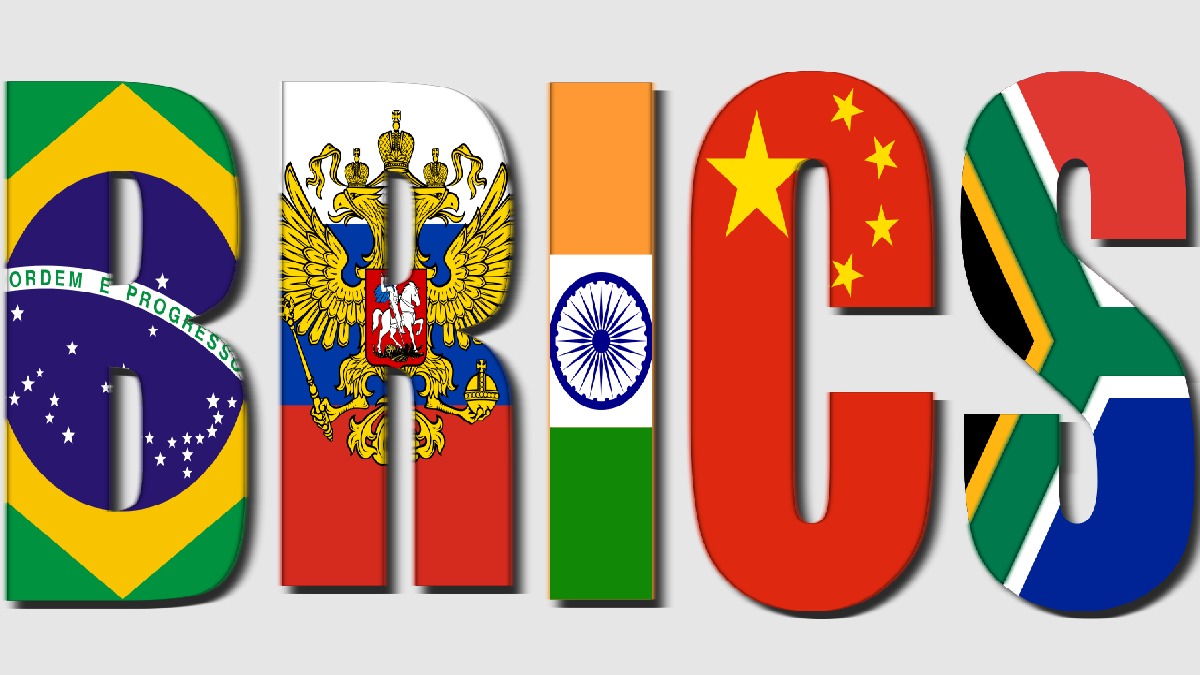
The New Delhi summit also has an important symbolic significance: it is about two decades since Brazil, Russia, India and China began to work together as the BRIC group. The first informal meeting of the four countries' foreign ministers took place on the sidelines of the United Nations General Assembly in 2006, followed by the first leaders' summit in Yekaterinburg, Russia, in 2009. South Africa joined in 2010 and BRIC grew to become BRICS.
The grouping has since changed drastically. Instead of being a cohesive political and economic platform, BRICS has been expanding mostly in terms of membership with Egypt, Ethiopia, Iran, the United Arab Emirates, Indonesia and Saudi Arabia joining the group and a number of other countries have been designated as partner countries.
This expansion has expanded BRICS’s geographic reach and strengthened its claim to represent emerging economies and the whole Global South. It has also made consensus more difficult, however. The members have drastically different political systems, economic structures, strategic interests and relations with major global powers.
China’s Growing Influence
One of the big questions for the expanded BRICS is how it will be able to keep its own identity and not be so much dominated by China. China has been the driving force behind the expansion and Russia has also been supporting it in general. India and Brazil have been more reluctant to expand a grouping for which the four founding countries had a central place at the heart and the four countries were the most influential of all to start with.
China's economic weight has increased greatly since BRICS was formed. Its economy is now considerably larger than those of the other founding members, providing Beijing with strong influence in the organisation. Russia's economy has been hurt by its war in Ukraine and sanctions imposed by Western countries, and Brazil has structural challenges even though the agricultural, mining and energy sectors are strong.
India has emerged as another major economic power with a growing economy and the largest population in the world. But its economy is still smaller than China’s. This imbalance of economy means India’s role in BRICS is less about strategic autonomy and more about the organisation not becoming part of Chinese geopolitical interests.
Also the border dispute between India and China is still unresolved which has put a strain on relations between India and China and has led to occasional military incidents. Trade, regional influence and competing strategic interests make relations more tense.
Can BRICS Represent The Global South?
BRICS has become increasingly a forum for countries from the Global South to seek influence in international institutions. Its members have repeatedly called for reforms in the United Nations and the International Monetary Fund.
However the bloc faces a fundamental contradiction. India and Brazil have been seeking permanent membership of the UN Security Council and Russia and China already have permanent seats and veto powers. So the four founding members don’t always see the same vision of how the global governance system should be reformed.
The situation is similar within global financial institutions. Calls for greater representation for emerging economies have continued for years but big change in voting rights and quotas at institutions like the IMF have been slow to materialise.
BRICS has made some progress in creating its own institutions. The New Development Bank, headquartered in Shanghai and headed by former Brazilian President Dilma Rousseff, is still the most important financial institution of the group. It is a source of development financing for member countries and is not as big as the World Bank.
The bloc also established the Contingent Reserve Arrangement, a $100 billion mechanism to provide financial support to members with short-term balance-of-payments or currency pressures. But the facility has not yet been tested during a major crisis.
Another initiative called BRICS Pay, is also on the rise as members are interested in reducing reliance on Western-dominated financial infrastructure. US dollar dominance and financial sanctions have driven a number of countries to look for alternatives to current international payment systems. But replacing well established systems such as SWIFT is a big challenge.
Geopolitical Divisions Remain A Major Hurdle
When the geopolitical conflicts in BRICS are considered, the diversity of BRICS is especially apparent. Russia’s invasion of Ukraine has shown that the group's presence in Ukraine has left it unable to come up with common foreign policy positions. Since Russia is a founding member of BRICS, it has largely avoided taking a united stand that has held a firm stance against Moscow.
At the same time, the organisation has found more common ground on issues of Israel and Palestine and the humanitarian crisis in Gaza. These examples show BRICS can issue collective statements when member interests overlap, but consensus becomes far more difficult when the core national interests are involved.
Newer members of the group add another layer of complexity. Iran's membership brings the organisation closer to one of the most contentious geopolitical confrontations in the Middle East. Meanwhile, the tension between Egypt and Ethiopia over the Nile’s waters shows that there are already tensions among BRICS members themselves.
What To Expect From The New Delhi Summit
New Delhi summit's official theme is to focus on building resilience, innovation, cooperation and sustainability, and the people-centred approach is central. To be fair, the final declaration is likely to cover very broad areas of cooperation rather than dramatic change to the international system.
However, the most important developments may take place outside of the formal sessions.
Now it is the summit that has the chance for leaders to have bilateral meetings and discuss sensitive topics from the sidelines of the conference. For India, the possibility of meeting the Chinese president Xi Jinping is important and his visit will be his first since 2019.
India and China will discuss border disputes, trade, regional security and much wider world issues. Stability between the two Asian powers might be especially important if both countries want to have a more prominent role in the world’s developing countries.
Russian president Vladimir Putin’s participation could also bring attention to the Ukraine conflict. Moscow will likely be able to highlight its longstanding relationship with India and its economic and defence relationship with New Delhi, but India could continue to insist that there must be dialogue and an end to hostilities. The Middle East situation will also come up as a major concern. Iran’s membership in BRICS and close relationship with Russia could make the bloc reluctant to take a firm collective stand. But rising energy costs and unrest in the Persian Gulf have a direct impact on large oil consumers India and China.
And yet even the New Delhi summit is not going to change BRICS overnight. Its significance is in what we learn about the changing balance of global power. The bloc has grown dramatically, but expansion has not necessarily meant more integration.
For India, the challenge will be to make BRICS more attractive to developing countries so that it is not dominated by any single state, but grows more diverse and not only dependent on one power. For China, it is the summit that will be another chance to build traction with emerging economies. BRICS is also a very important diplomatic tool for Russia as it is fighting a war with the West.
The result could be a summit that seems fairly routine in its official declarations but is far more relevant through the private discussions and bilateral meetings around it. As global power becomes increasingly fragmented, BRICS' ability to bridge its internal differences will make or break its stature as a voice for the Global South or remain a loose coalition of countries with overlapping but often competing interests.