Canada is ramping up its defence and economic engagement with Europe as Prime Minister Mark Carney’s government formally applies to join the UK-led Joint Expeditionary Force (JEF), and the European Union has proposed making Canada its first “associate member.” A growing trade tension between Ottawa and Washington is also brewing as US President Donald Trump threatens the EU with heavy tariffs if he perceives Canada-EU to be a hostile move.
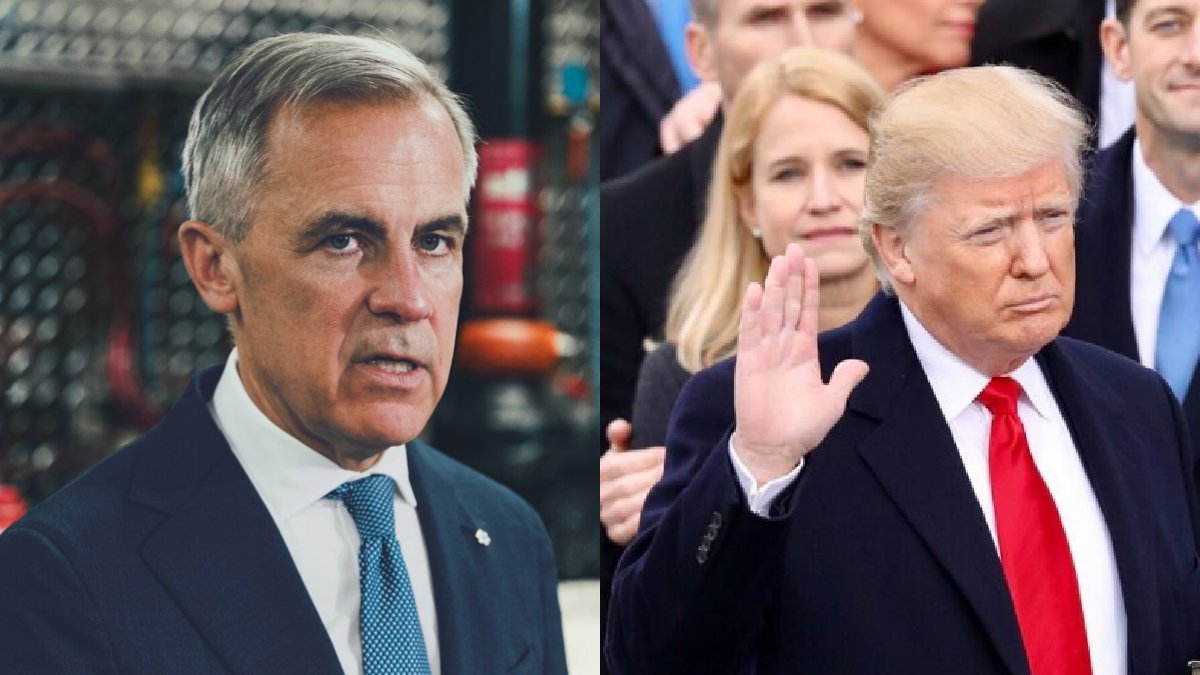
Carney announced Canada’s JEF application during a meeting with UK Prime Minister Andy Burnham in Liverpool on September 16. Canada’s Prime Minister’s Office said Carney welcomed British support for Ottawa’s participation in the defence initiative. The application is a step in Canada’s efforts to expand its security partnerships with European countries.
The Joint Expeditionary Force is a UK-led military cooperation collaboration with 10 Northern European NATO members: Denmark, Estonia, Finland, Iceland, Latvia, Lithuania, the Netherlands, Norway, Sweden and the United Kingdom. Collaborating countries are able to train, plan and conduct operations together and support more general NATO or even international missions. Canada is already a NATO member, but its defence relationships have come to play up more and more.
Canada has previously participated in JEF-related activities. Its forces have participated in exercises like the TARASSIS exercise in 2025, and Canadian representatives also attended a JEF leaders’ meeting as guest participants in March 2026. The new application could potentially give Ottawa a more formal role in the European-led security framework.
Canada Deepens UK Defence Cooperation.
And during Carney’s meeting with Burnham, the two sides also spoke about defence-industrial cooperation through the Global Combat Air Programme (GCAP). Canada joined the programme as an observer in July 2026, with the UK, Italy and Japan and discussions continue to continue about the development of next-generation combat aircraft.
Canada and the UK are also working on the BATUS Future Project to modernise and establish a new permanent arrangement for the British Army Training Unit Suffield in Canada. Ottawa says such a project could help support the development and testing of advanced equipment and technology at Canadian Forces Base Suffield.
The two governments also have highlighted cooperation on frontier technologies like artificial intelligence. Ottawa and London want to strengthen collaboration on the safe and responsible development and use of AI, the Canadian government said.
EU Offers Canada Historic Associate Status.
Canada’s defence push to Europe coincided with a major proposal from Brussels. European Commission President Ursula von der Leyen said during her State of the Union address on September 16 that she wanted to open the door for Canada to become the EU’s first “associate member.”
The proposal would go beyond the existing Canada-EU relationship under the Comprehensive Economic and Trade Agreement (CETA). Von der Leyen outlined an “Alliance for the Future” that will be aimed at establishing a deeper economic and security partnership between Canada and Europe.
Potential areas of cooperation are defence, intelligent manufacturing, artificial intelligence, quantum technology, cybersecurity, energy, critical minerals, batteries and Arctic projects. The European Commission also points out that Canada-EU trade is currently strong because trade in goods is up 75% in less than a decade under CETA.
The associate-member proposal is still in its early stages and they have not yet defined the precise terms. Canada would not be a full EU member, and the proposed arrangement would be a new kind of partnership between the bloc and a non-European country.
The proposal is likely to be further discussed as Canada and the EU have to negotiate their relationship as a whole and Canada and the EU do their work on the longer-term relationship. The proposal is also about how Ottawa wants to improve its economic and strategic ties with the EU because it finds itself stuck with an increasing dependence on the US market and is at a time when the country is in flux over the future of its economic and strategic relationship.
Donald Trump Warns of ‘Very Heavy Tariffs’.
The developments have drawn a sharp response from Washington. Trump warned that the European Union will face “very serious” or “very heavy” tariffs if he determines that closer Canada-EU ties are in fact a hostile act toward the United States. He also raised the possibility of curbing trade with Europe.
Trump’s comments have added to a complicated relationship between Washington and Ottawa. Canada and the United States remain major trade partners but the trade talks and tariffs have cooled down recently and they have been getting more heated.
For Canada, the simultaneous move towards deeper European defence cooperation and a new EU relationship could also offer new opportunities for economic, technological and security cooperation. For Europe, the proposal is a chance to grow closer with a major NATO ally with special interests in areas ranging from Arctic security to critical minerals and advanced technology.
The developments do not immediately establish a new Canada-EU membership arrangement or guarantee Canada's entry into the JEF. Rather, they mark the start of processes that could change Ottawa’s relationship with European partners. In the coming months, more clarity is likely to be provided on the terms of the EU associate status and Canada’s possible involvement in the JEF.