Canada is now launching a new round of retaliatory tariffs against U.S. products and is on the verge of doing more in a decades-old trade dispute with the U.S. The new measures went into effect at 12:01 a.m. on September 8, 2026, and cover products from a wide range of categories.
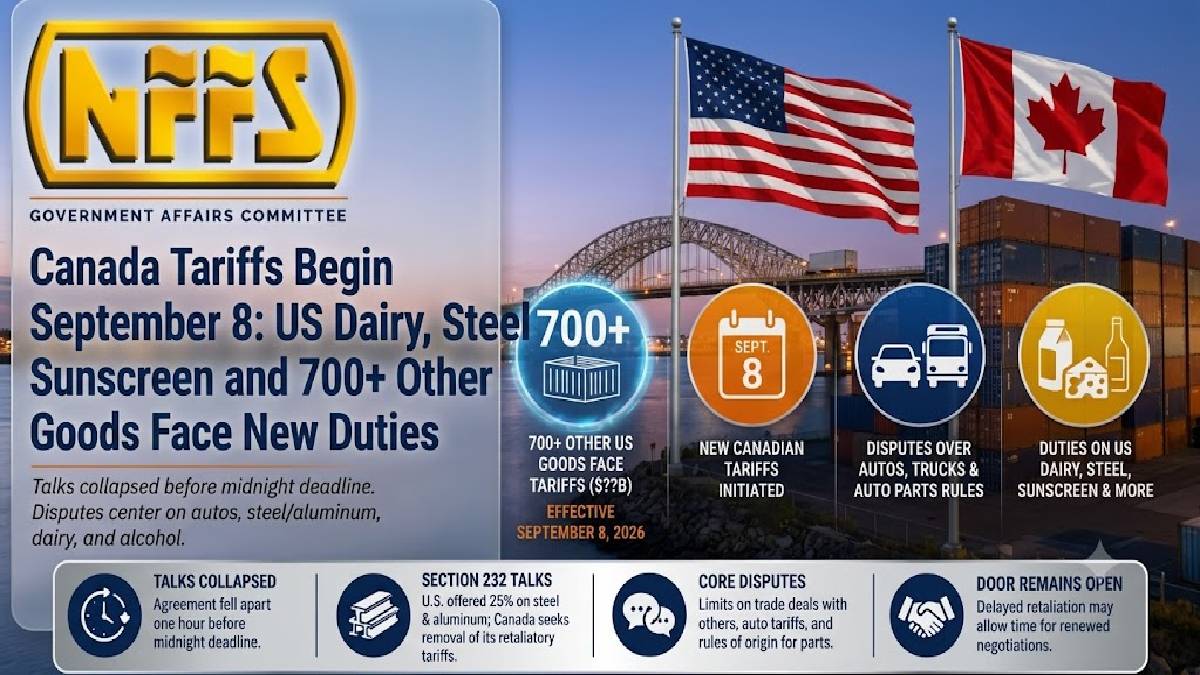
The Canadian government said the counter-tariffs cover about C$27.6 billion of imports from the United States. The measures are meant to match US tariffs on Canadian products after trade talks between Ottawa and Washington failed to produce an agreement.
The latest Canadian tariff list covers more than 700 product categories, bringing a broad range of American goods into the trade dispute. They include steel, dairy, appliances, agricultural equipment, pulp and paper, electronics and other manufactured goods.
Some consumer products that could be affected are sunscreen and personal care products, and American agricultural exports, including dairy products, are also under new duties. Steel and aluminum are among the sectors in which tariffs have led to the highest tariffs.
Canada’s government says the tariff rates are designed to correspond to the US measures. The new duties include 15%, 25% and 50% depending on the product and the US tariff Ottawa is responding to.
Why did Canada develop the new tariffs?
The Canadian government’s new measures are in response to Washington’s decision to impose 50% tariffs on about C$27.6 billion of Canadian goods starting on August 22. Ottawa said it will respond dollar-for-dollar to the US measures.
But the tension is building with Canadian Prime Minister Mark Carney and US President Donald Trump in the trade talks.
The two countries have long been one of the most integrated trading relationships in the world. Every day, millions of dollars of goods cross the US-Canada border, so tariffs affect manufacturers, retailers, farmers, consumers and supply chains in both countries.
The new tariffs could increase the cost of affected American products coming to Canada. Canadian importers could have to absorb some of the additional costs, find other suppliers or pass higher expenses on to consumers.
Steel, Dairy and Electronics.
Steel and aluminum are especially important because both industries are already caught in the wider tariff conflict. Canadian countermeasures include higher duties on products targeted by US Section 232 measures.
Dairy is another big concern. Many American dairy products are included in Canada’s tariff schedule, adding another layer of pressure to agricultural trade between the neighbouring countries.
Manufactured products, appliances and electronics are also in this category, so the effect goes beyond traditional commodities.
For American exporters, the Canadian market is still important. Higher import costs could make US products less competitive against Canadian or other international suppliers.
What is next?
Now that the last few steps have been taken, as well as the recent talks, both governments will be under even greater pressure to turn back to negotiations.
According to Reuters, Canada’s counter-tariffs were brought into force as trade talks stood still and were part of an 18-month-old trade dispute between the two countries.
Even if we’re talking to companies on the merits that there is no retaliation, in the Canadian view, it’s still necessary to keep the country’s economy in order and to give Ottawa leverage in future talks. Companies have also said that in the longer term, uncertainty around tariffs can hurt investment decisions and supply chains.
For consumers, the impact may not be immediate when it comes to every category of products. The final effect will depend on the importers, retailers, exchange rates, sourcing decisions, and the duration of tariffs in terms of the tariffs and how long they stay in place.
With tariffs of 50% on some of the U.S. products and billions of dollars of trade, it is a significant new phase in the Canada-U.S. trade dispute.